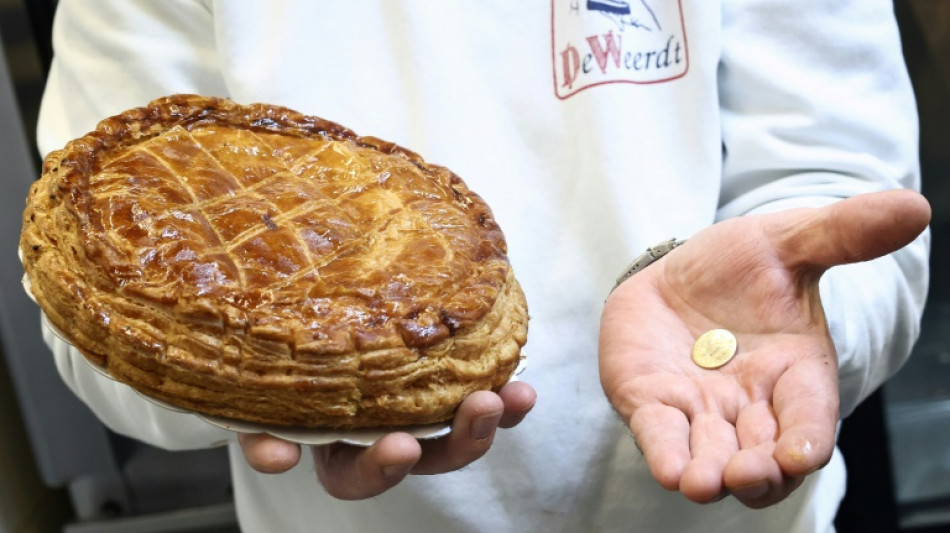
Digging for gold inside an Epiphany cake / Photo: Kenzo TRIBOUILLARD - AFP
 Teatro Mayor Unveils 152-Performance 2027 Season Highlighting Beethoven and García Márquez

 Rutgers Defeats NJIT 101-64 Behind Francis and Mark Scores
 Guardian Metal Resources PLC Announces Proposed Spin-Out of Non-Tungsten Projects

 Fulcrum Metals PLC Announces New Critical Mineral Recoveries Expand Potential

 Thukukile Zuma Resigns from ANC Johannesburg Leadership Amid Disciplinary Dispute

 CM Mohan Yadav Meets Bohra Spiritual Leader to Discuss Simhastha 2028 and Development

 Eli Crane Defeats Jonathan Nez in Tight Arizona Congressional Race

It is a gift fit for a king, or three: a gold coin slipped by a Belgian baker inside a traditional flaky Epiphany Three Kings cake baked to perfection.
Instead of the usual bean, Brussels baker Luc de Weerdt opted for the more luxurious prize of small round 18-carat gold coins, stamped with his bakery's logo.
On Friday, January 6, Epiphany day for Christians, he will place each of four coins worth 500 euros ($530) randomly among the thousands of cakes sold.
"The customers like it, they are very happy, and it brings more people," the 60-year-old says, who has spent 46 years of his life baking.
De Weerdt began using the gold pieces in 2020. This year he plans to produce 3,000 cakes, 500 more than last year -- with just four containing a glittering coin.
The cake is known in French as a Galette des Rois, a reference to the Biblical trio said to have brought gifts to the baby Jesus.
Today the cakes contain a token or figurine -- usually made of plastic or porcelain -- hidden in the frangipane filling.
Whoever finds the bean or toy becomes the king or queen of the feast, and wears a cardboard crown that comes with each cake.
They are then supposed to be blessed with good luck for the New Year.
The festivity attracts crowds outside bakeries in Belgium, especially when there is a real treasure hunt on offer with prizes for a few lucky winners.
De Weerdt said last year the bakery "had two-hour queues, and in the evening we had to tell half of the queue that we could no longer serve anyone".
The buttery, creamy goodness -- and possible treasure -- of the cakes comes at a higher cost this year because of rampant inflation in Europe.
De Weerdt was forced to raise the price of a cake by two euros. "The cost of butter, flour and almonds rose. And electricity bills tripled."
The cake is popular, with millions across Belgium, France, Luxembourg and Switzerland.
The tradition dates back to the Roman empire but is now associated with the celebration of the day the Wise Men came to see the newborn Jesus in his Bethlehem manger.
F.Schneider--AMWN