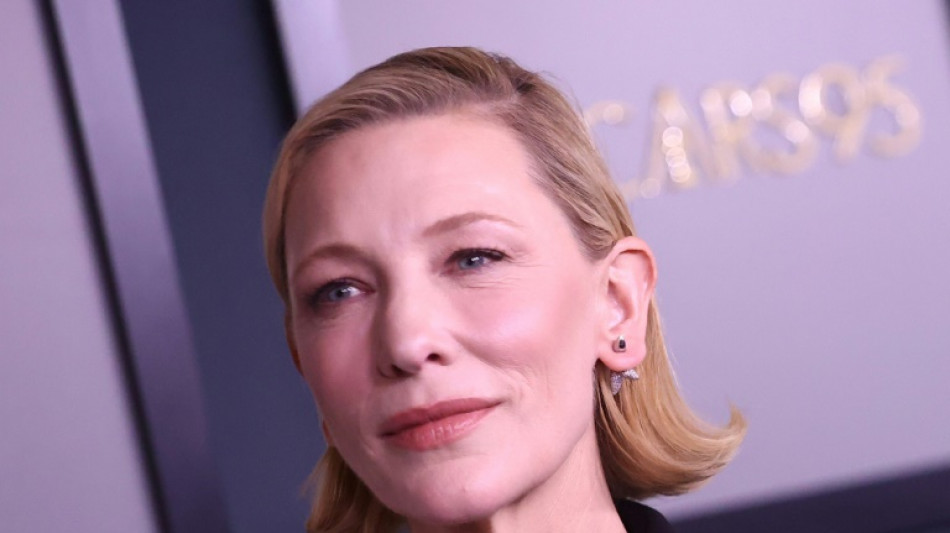
Top woman conductor says Blanchett's 'Tar' is 'misogynistic' / Photo: Tommaso Boddi - AFP/File
 Teatro Mayor Unveils 152-Performance 2027 Season Highlighting Beethoven and García Márquez

 Rutgers Defeats NJIT 101-64 Behind Francis and Mark Scores
 Guardian Metal Resources PLC Announces Proposed Spin-Out of Non-Tungsten Projects

 Fulcrum Metals PLC Announces New Critical Mineral Recoveries Expand Potential

 Thukukile Zuma Resigns from ANC Johannesburg Leadership Amid Disciplinary Dispute

 CM Mohan Yadav Meets Bohra Spiritual Leader to Discuss Simhastha 2028 and Development

 Eli Crane Defeats Jonathan Nez in Tight Arizona Congressional Race

"Tar" is tipped to win Cate Blanchett a third Oscar for her role as a power-hungry conductor, but for one real-life pioneer in the job, the film does a "disservice to women".
Marin Alsop, 66, is chief conductor of the ORF Vienna Radio Symphony Orchestra and has frequently broken new ground for women in the field.
Born in the United States, she was the first woman named as musical director of a major orchestra there (in Baltimore) and the first to conduct London's famous Last Night of the Proms.
"Tar" has been hailed by critics and already scooped several awards for Blanchett, including a Golden Globe this week, as well as one for writer-director Todd Field.
Alsop told AFP that while Blanchett's performance was certainly "marvellous", her concern was this was "yet another misogynistic portrayal of a woman in a leadership role.
"Historically, there have been very few opportunities for women at the top level (in classical music), so to assume that a woman would behave in an abusive, conceited manner similar to many men... does a real disservice to women," she said.
The film is currently being released around Europe and beyond.
- 'Reinforcing stereotypes' -
Blanchett has previously dismissed the importance of having a woman at the centre of the film, which charts the downfall of a fictional conductor following claims of abuse.
After its premiere at the Venice Film Festival in September, where she also won best actress, Blanchett told reporters she "didn't think about the character's gender nor her sex at all" during preparations.
"It wasn't until we started doing the press and they said, 'You have women at the centre of this' and I thought: 'Oh shit -- yeah, we do!' That didn't cross my mind," Blanchett said.
Alsop objects that "Tar" repeats stereotypes about powerful women being abusive, hysterical and unhinged.
"It is reinforcing the same stereotypes, without ever giving women the opportunity to grow into these roles," she said.
"Of course it is fiction, but it is a fiction that is trying very hard to be similar, if not identical, to reality," she added.
The film was a missed opportunity to inspire people about classical music and encourage more women to enter the profession, she said.
"Through my fellowships for women conductors... I meet so many women who are using these positions to create future possibilities for their communities.
"To have a star like Cate Blanchett -- it could have been so much more."
G.Stevens--AMWN