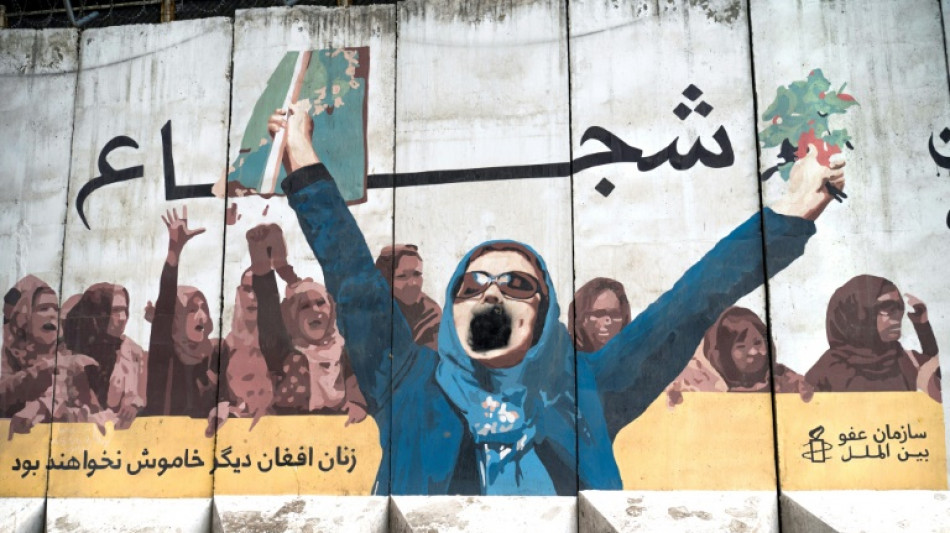
Three foreign NGOs partially resume aid in Afghanistan / Photo: Wakil KOHSAR - AFP
 Teatro Mayor Unveils 152-Performance 2027 Season Highlighting Beethoven and García Márquez

 Rutgers Defeats NJIT 101-64 Behind Francis and Mark Scores

 THIEAUDIO Introduces Clairvoyance MKII: The Evolution of a Signature Sound
 Guardian Metal Resources PLC Announces Proposed Spin-Out of Non-Tungsten Projects

 Fulcrum Metals PLC Announces New Critical Mineral Recoveries Expand Potential

 Thukukile Zuma Resigns from ANC Johannesburg Leadership Amid Disciplinary Dispute

 CM Mohan Yadav Meets Bohra Spiritual Leader to Discuss Simhastha 2028 and Development

 Eli Crane Defeats Jonathan Nez in Tight Arizona Congressional Race

At least three leading international aid agencies have partially resumed life-saving work in Afghanistan, after assurances from the Taliban authorities that Afghan women can continue to work in the health sector.
Hundreds of NGOs have been instrumental in trying to address one of the world's worst humanitarian crises, with half of Afghanistan's 38 million population hungry and three million children at risk of malnutrition.
CARE, Save the Children, and International Rescue Committee (IRC) suspended their operations in late December in protest at a government order banning Afghan women from aid work, the latest rollback of women's rights in the country.
"We have received clear, reliable assurances from relevant authorities that our female staff will be safe and can work without obstruction," Save the Children said in a statement confirming they have resumed work in the health sector in the past few days.
"However, with the overarching ban still in place, our other activities where we do not have reliable assurances that our female colleagues can work, remain on hold."
The IRC and CARE also confirmed they have resumed work with women staff in the health sector.
The international community has been urging the government in a series of high-level meetings to reverse the order banning women in the aid sector, which was expected to have heavy consequences on aid flows coming into the country.
Abdul Rahman Habib, spokesman for the ministry of economy that ordered the ban, told AFP that it was "a need for our society" that women were allowed to work in the health sector.
"We need them to support the malnourished children and other women who need health services. They (women staff) are working in line with our religious and cultural values."
Taliban officials say the ban was imposed because women were not observing the ultra-conservative group's rules on wearing the hijab or being accompanied by a male relative while travelling -- a charge dismissed by NGOs.
Women workers have in the past been vital for on-the-ground aid operations in Afghanistan, particularly in identifying other women in need.
The ban was one of two crushing orders made in rapid succession last month, after authorities had first barred women from university education.
Since the Taliban returned to power in August 2021 they have imposed a slew of restrictions on Afghan women, effectively squeezing them out of public life.
Secondary school education is already banned for girls, and many women have lost government jobs.
Women have also been barred from going to parks, gyms and public baths.
D.Sawyer--AMWN

