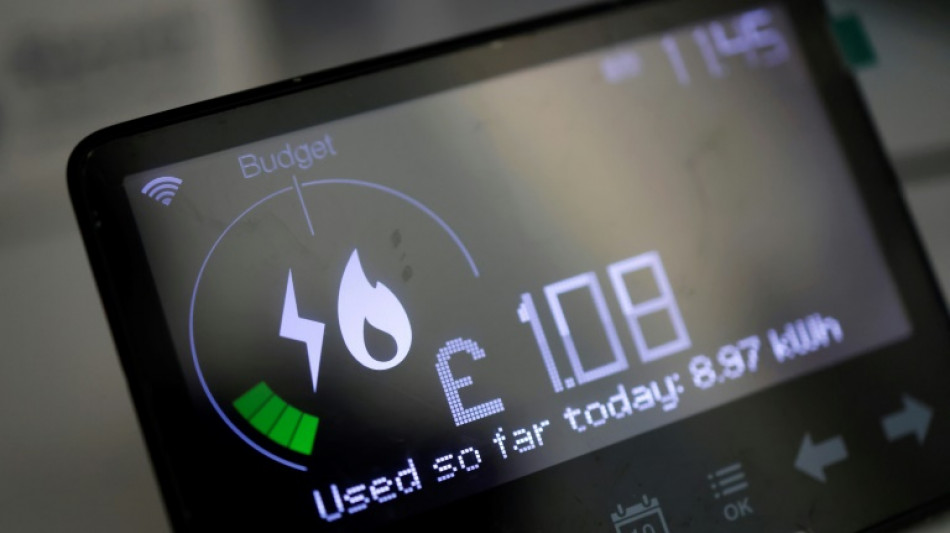
Wholesale energy dives but bills remain sky high / Photo: Tolga Akmen - AFP/File
 Teatro Mayor Unveils 152-Performance 2027 Season Highlighting Beethoven and García Márquez

 Rutgers Defeats NJIT 101-64 Behind Francis and Mark Scores

 THIEAUDIO Introduces Clairvoyance MKII: The Evolution of a Signature Sound
 Guardian Metal Resources PLC Announces Proposed Spin-Out of Non-Tungsten Projects

 Fulcrum Metals PLC Announces New Critical Mineral Recoveries Expand Potential

 Thukukile Zuma Resigns from ANC Johannesburg Leadership Amid Disciplinary Dispute

 CM Mohan Yadav Meets Bohra Spiritual Leader to Discuss Simhastha 2028 and Development

 Eli Crane Defeats Jonathan Nez in Tight Arizona Congressional Race

Plunging wholesale gas prices have sparked speculation of an end to Europe's energy crisis -- but consumers' electricity and gas bills remain sky high, fuelling runaway inflation.
European benchmark Dutch TTF gas price has shed 18 percent since the start of this year as unusually warm winter weather depresses demand and encourages stockpiling.
The price has fallen by more than 82 percent since August, when it had spiked on fears over a lack of supplies from key producer Russia.
The Ukraine conflict highlighted Europe's dependence on Russian gas, prompting a rush for alternative resources and improved efficiency measures as leaders sought to avert a costly supply crunch.
- Replenishing reserves -
This approach, in tandem with mild winter temperatures, enabled European nations to replenish reserves.
"An unusually mild winter has helped reduce heating demand, while record liquid natural gas imports and increased renewable capacity have boosted supplies," said Mirabaud analyst John Plassard.
Europe's gas stocks are hovering at about 82 percent of capacity, up from 50 percent one year ago and "well above" the seasonal norm of 70 percent, he added.
TTF gas sank to a 16-month low this week and stood at 60 euros per megawatt hour on Wednesday, although this was still more than double its pre-pandemic level.
In contrast, TTF gas had rocketed last March to a record 345 euros after Moscow launched its invasion of Ukraine.
German Chancellor Olaf Scholz, whose nation is attempting to wean itself off Russian energy, declared Saturday that gas prices are now falling in Europe.
Yet that has thus far failed to translate into lower bills for businesses and individuals.
With Russia also slashing its gas deliveries to Europe over Ukraine tensions, Norway has become the continent's primary supplier.
- Re-wiring of energy system -
Anders Opedal, chief executive of Norwegian energy giant Equinor, told the BBC that there was "a kind of re-wiring of the whole energy system in Europe, particularly after the gas from Russia was taken away".
And he warned high electricity and gas bills were here to stay -- and cited the huge cost of investment in the transition to cleaner energy.
Those sentiments were echoed by Oanda analyst Edward Moya.
"Energy bills will not be returning to pre-pandemic levels because energy companies are facing surging expenses transitioning from fossil fuels to less alternative energy sources," Moya told AFP.
"It might take years for prices to go back to levels European consumers are more comfortable with."
Domestic energy providers also faced increased transport costs, rising taxation and labour shortages.
Those providers bet against volatile price swings by hedging, or taking a defensive markets position.
This means that the sector is not always boosted by short-term moves in spot, or current, prices.
"Just like there was a lag between gas prices and bills on the way up, there should be a lag on the way down," said RBC Capital Markets analyst Biraj Borkhataria.
Added to the picture, electricity prices are elevated due to a maintenance crisis at France's nuclear power plants.
The country's nuclear energy output is currently 25 percent lower than usual. Yet nuclear normally generates 70 percent of its electricity.
"France ... continues to suck up a lot of excess electricity production in the EU, and as a consequence power prices remain high," noted SEB analyst Ole Hvalbye.
P.Santos--AMWN

