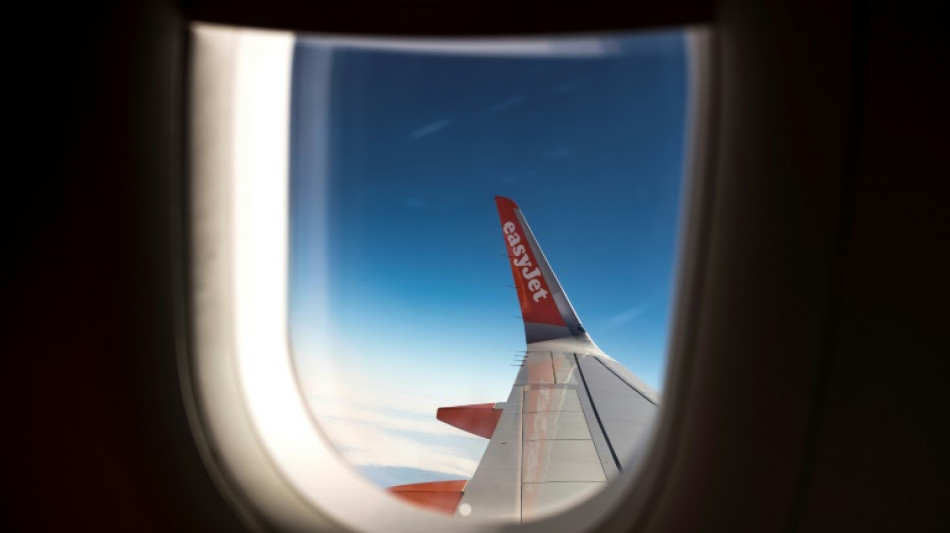
EasyJet hikes profit forecast on demand boom / Photo: Lionel BONAVENTURE - AFP/File
 Teatro Mayor Unveils 152-Performance 2027 Season Highlighting Beethoven and García Márquez

 Rutgers Defeats NJIT 101-64 Behind Francis and Mark Scores

 THIEAUDIO Introduces Clairvoyance MKII: The Evolution of a Signature Sound
 Guardian Metal Resources PLC Announces Proposed Spin-Out of Non-Tungsten Projects

 Fulcrum Metals PLC Announces New Critical Mineral Recoveries Expand Potential

 Thukukile Zuma Resigns from ANC Johannesburg Leadership Amid Disciplinary Dispute

 CM Mohan Yadav Meets Bohra Spiritual Leader to Discuss Simhastha 2028 and Development

 Eli Crane Defeats Jonathan Nez in Tight Arizona Congressional Race

British airline EasyJet hiked Wednesday its annual profit guidance after record demand and falling quarterly losses, as customers prioritise holidays and shrug off the cost-of-living crisis.
The carrier believes it will outstrip expectations for annual pre-tax profit of £126 million ($156 million) for its financial year to the end of September, despite global economic gloom that is rooted in soaring inflation.
"Whilst we remain mindful of the uncertain macroeconomic outlook across the globe, based on current high levels of demand and strong bookings, EasyJet anticipates beating the current market profit expectations" for 2022-2023, it said in a statement.
EasyJet had already been expected to rebound into the black as the industry recovers from Covid fallout, having logged three annual losses in a row.
The carrier posted a reduced 2021-2022 loss in November, but this was far less than during the worst of the Covid pandemic.
- Strong demand -
EasyJet added Wednesday that it trimmed pre-tax losses to £133 million in its first quarter, or three months to December.
That was down sharply from £213 million last time around.
Traffic rebounded 47 percent to 17.5 million passengers in the reporting period.
EasyJet saw a major rebound in traditional New Year holiday bookings, with three record-breaking weekends so far in January.
That means it hopes to curb first-half losses significantly this year.
"We have seen strong and sustained demand for travel over the first quarter," said chief executive Johan Lundgren.
"Many returned to make bookings during the traditional turn-of-year sale where we filled five aircraft every minute in the peak hours, which culminated in three record-breaking weekends for sales revenue this month."
Lundgren noted that customers were seeking to "prioritise spending on holidays for the year ahead".
He added: "This will set us firmly on the path to delivering a full-year profit."
- Sector revival -
Investors welcomed the company's brightening outlook, sending EasyJet shares almost 10 percent higher on London's rising stock market.
The global aviation sector is flying high after a tumultuous period in the wake of the deadly coronavirus crisis, which erupted in early 2020 to ground flights, sparking huge financial losses and job cuts.
Britain scrapped its remaining Covid travel restrictions in March 2022, but airlines and airports have since struggled to cope with resurgent demand.
"Since the end of last year, the shares have soared in anticipation that the airline, as well as the wider aviation sector will be able to finally throw off the shackles of Covid, the soaring cost of living, and the fallout of the Russian invasion of Ukraine," said CMC Markets analyst Michael Hewson.
"Last year the sector also had to deal with the challenges of capacity constraints at major airports as well as staff shortages, which resulted in huge delays and cancellations."
Y.Kobayashi--AMWN