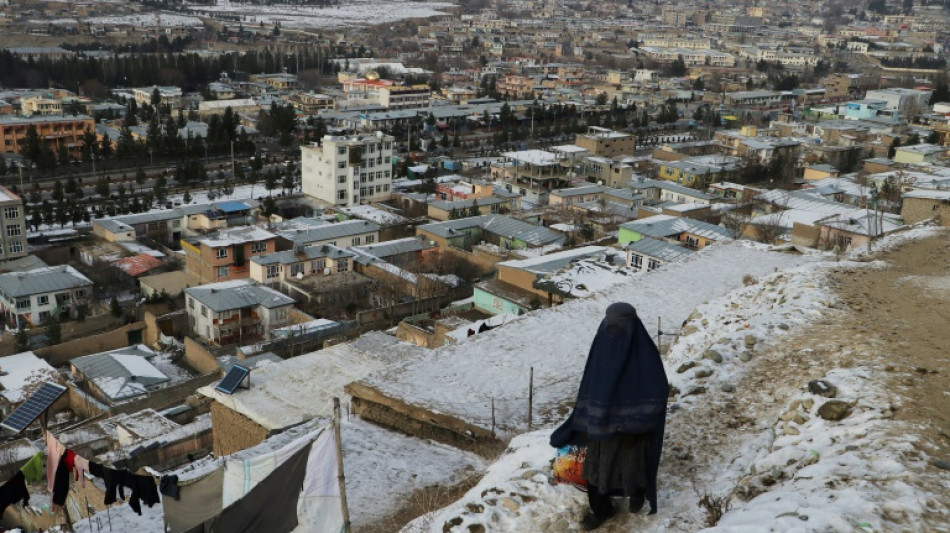
UN calls on Taliban to let women help give aid to desperate Afghans / Photo: OMER ABRAR - AFP
 Teatro Mayor Unveils 152-Performance 2027 Season Highlighting Beethoven and García Márquez

 Rutgers Defeats NJIT 101-64 Behind Francis and Mark Scores

 THIEAUDIO Introduces Clairvoyance MKII: The Evolution of a Signature Sound
 Guardian Metal Resources PLC Announces Proposed Spin-Out of Non-Tungsten Projects

 Fulcrum Metals PLC Announces New Critical Mineral Recoveries Expand Potential

 Thukukile Zuma Resigns from ANC Johannesburg Leadership Amid Disciplinary Dispute

 CM Mohan Yadav Meets Bohra Spiritual Leader to Discuss Simhastha 2028 and Development

 Eli Crane Defeats Jonathan Nez in Tight Arizona Congressional Race

The UN humanitarian chief said Monday he has pleaded with the Taliban to let women participate in a massive effort to support desperate Afghans struggling to survive a "savage" winter.
Afghanistan is facing one of the world's worst humanitarian crises, with more than half of its 38 million population facing hunger and nearly four million children suffering from malnutrition.
At least 166 people died in a recent wave of bitterly cold weather that heaped misery on the poverty-stricken nation.
The crisis was compounded last year when Taliban leadership banned Afghan women from working with NGOs, forcing several aid agencies to suspend their vital work.
In recent weeks, the authorities have allowed women to work in the health sector only.
But "Afghanistan is going through a savage winter," UN Under-Secretary General for Humanitarian Affairs and Emergency Relief Martin Griffiths told reporters.
"Last winter, we managed to survive. I don't know if we can do this indefinitely, not with these bans."
The United Nations has pleaded with the Islamists to expand the exemptions to "cover all the aspects of humanitarian action," Griffiths, who led a delegation of senior NGO officials to meet several Taliban leaders in Kabul last week, said.
He said they were told "such arrangements would be forthcoming."
But when, or what those arrangements might look like was another matter.
"We were told the guidelines are being developed by the Taliban authorities," allegedly providing a role for women in humanitarian operations, Griffiths said.
"Let's see if these guidelines do come through," he said.
"Hopefully we won't wait too long. Because every day that goes by without proper functioning humanitarian aid is not a good day for the people of Afghanistan."
Afghanistan has been frozen by temperatures as low as -33 degrees Celsius (-27 degrees Fahrenheit) since January 10, combined with widespread snowfall, icy gales and regular electricity outages.
Nearly 80,000 livestock, a vital commodity for Afghanistan's poor, also died in the recent cold snap.
Since returning to power in August 2021, the Taliban government has rapidly squeezed women out of public life, banning them also from secondary education, public sector work, as well as parks and baths.
Foreign aid has also declined dramatically since then and key central bank assets were seized by the United States, compounding the humanitarian crisis.
D.Cunningha--AMWN

