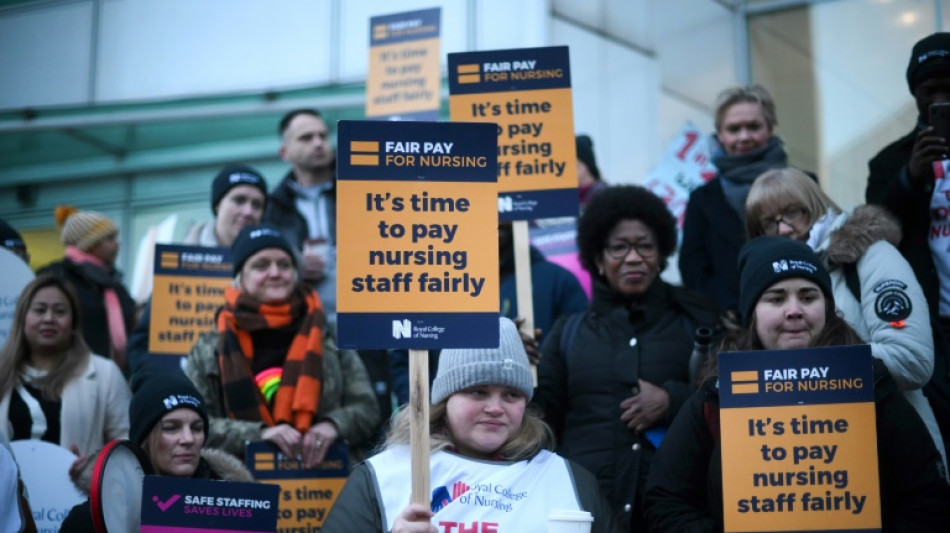
UK faces biggest round of health service strikes / Photo: Daniel LEAL - AFP
 Teatro Mayor Unveils 152-Performance 2027 Season Highlighting Beethoven and García Márquez

 Rutgers Defeats NJIT 101-64 Behind Francis and Mark Scores

 THIEAUDIO Introduces Clairvoyance MKII: The Evolution of a Signature Sound
 Guardian Metal Resources PLC Announces Proposed Spin-Out of Non-Tungsten Projects
 Fulcrum Metals PLC Announces New Critical Mineral Recoveries Expand Potential

 Thukukile Zuma Resigns from ANC Johannesburg Leadership Amid Disciplinary Dispute

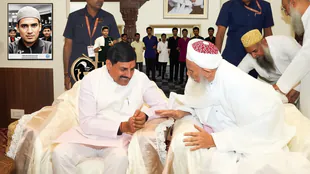 CM Mohan Yadav Meets Bohra Spiritual Leader to Discuss Simhastha 2028 and Development

 Eli Crane Defeats Jonathan Nez in Tight Arizona Congressional Race

Nurses and ambulances staff stepped up their demands for better pay Monday to combat the UK's cost of living crisis with their biggest round of health service strikes.
The stoppages -- part of a wave of industrial action across the UK economy -- will see nurses and paramedics take action on the same day for the first time.
Nurses say their wages have failed to keep up with inflation over the past decade, leaving them unable to pay their bills amid spiralling fuel, food and housing costs.
They warn that qualified nurses are quitting in droves due to the financial pressures resulting in understaffing that endangers patient care.
"We're run off our feet 24/7, breaking our backs doing the jobs of three people," said trainee nursing associate Victoria Busk who works on a trauma ward at the Queen Elizabeth Hospital in Birmingham, central England.
"I love my job, I love the work I do, making a difference to patients. But I can't imagine doing this until I'm in my 60s," she said.
Last week, half a million people including teachers, transport workers and Border Force staff at UK air and seaports also stopped work over pay.
The Royal College of Nursing (RCN) union said Monday's strike would affect nurses in around a third of hospital trusts in England and most of Wales.
- 'Sympathy' -
The ambulance staff strike would only affect England, however, after paramedics in Wales called off their planned action following an improved pay offer.
Health minister Maria Caulfield, who is also a nurse, said she sympathised with striking health service staff but argued that big pay hikes could not be afforded.
"I'm an RCN member myself, so I sit in both camps, if you like. Absolutely, I have a lot of sympathy," she told GB News.
"But we also have a responsibility to the taxpayer... we just can't afford inflation-busting pay rises that the unions are currently demanding."
British Prime Minister Rishi Sunak has called for pay rises to be "reasonable" and affordable", warning that big pay awards will jeopardise attempts to tame inflation.
Health Secretary Steve Barclay earlier urged unions to call off Monday's action.
"The Governor of the Bank of England warned if we try to beat inflation with high pay rises, it will only get worse and people would not be better off," he said.
"I have held constructive talks with the trade unions on pay and affordability and continue to urge them to call off the strikes."
But the Unite union general secretary Sharon Graham accused Barclay of "not telling the truth" as neither he nor Sunak had been are prepared to discuss pay.
"To me, that is an abdication of responsibility (as) the dispute is about pay -– so how can they say they are in talks?" she told the BBC.
Ch.Kahalev--AMWN