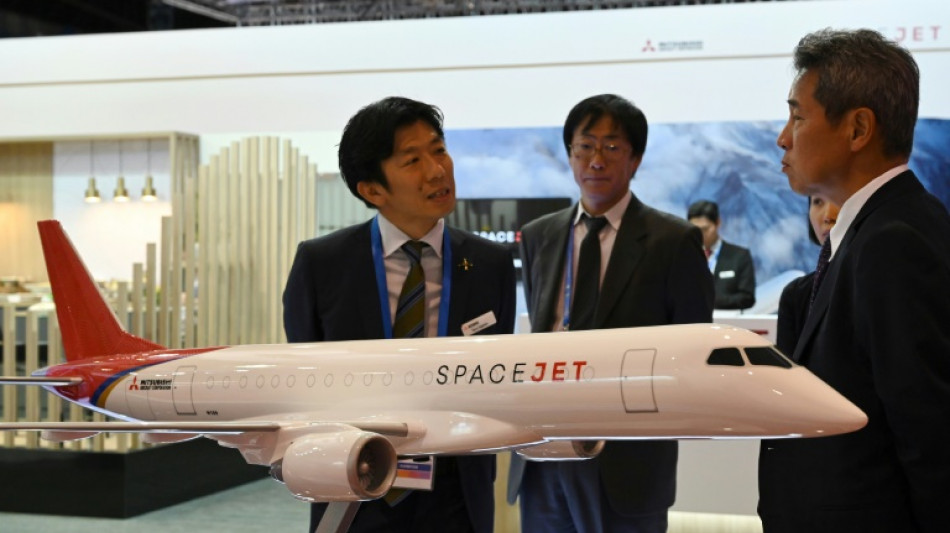
Japan's Mitsubishi Heavy scraps troubled passenger jet project / Photo: Roslan RAHMAN - AFP/File
 Teatro Mayor Unveils 152-Performance 2027 Season Highlighting Beethoven and García Márquez

 Rutgers Defeats NJIT 101-64 Behind Francis and Mark Scores

 THIEAUDIO Introduces Clairvoyance MKII: The Evolution of a Signature Sound
 Guardian Metal Resources PLC Announces Proposed Spin-Out of Non-Tungsten Projects

 Fulcrum Metals PLC Announces New Critical Mineral Recoveries Expand Potential

 Thukukile Zuma Resigns from ANC Johannesburg Leadership Amid Disciplinary Dispute

 CM Mohan Yadav Meets Bohra Spiritual Leader to Discuss Simhastha 2028 and Development

 Eli Crane Defeats Jonathan Nez in Tight Arizona Congressional Race

Mitsubishi Heavy Industries said Tuesday it had abandoned its struggling project to develop a passenger plane, a decade after the jet was due for commercial rollout.
The Japanese company said its SpaceJet, which suffered repeated delivery delays and technical glitches, had "failed to confirm sufficient business viability".
The development of the twin-engine plane for short flights had marked a new chapter for Japan's aviation sector, which last launched a commercial airliner in 1962.
But the project -- started in 2008 under the name Mitsubishi Regional Jet, with the first deliveries planned for 2013 -- had big trouble getting off the ground.
Some test flights were aborted because of air conditioning defects and other software problems, and the delays meant revisions to the original design were required.
It was "difficult to obtain understanding and necessary cooperation from global partners", and "further extensive funding" was needed to get the plane's design approved, Mitsubishi Heavy said.
North American regulations, pilot shortages and the need to find "decarbonisation solutions" also contributed to the project's demise, the company said.
The jet programme, which was backed by the Japanese government and major firms including Toyota, changed its name to SpaceJet in 2019.
Mitsubishi Heavy said its decision "will have no material impact on MHI's financial results".
L.Miller--AMWN