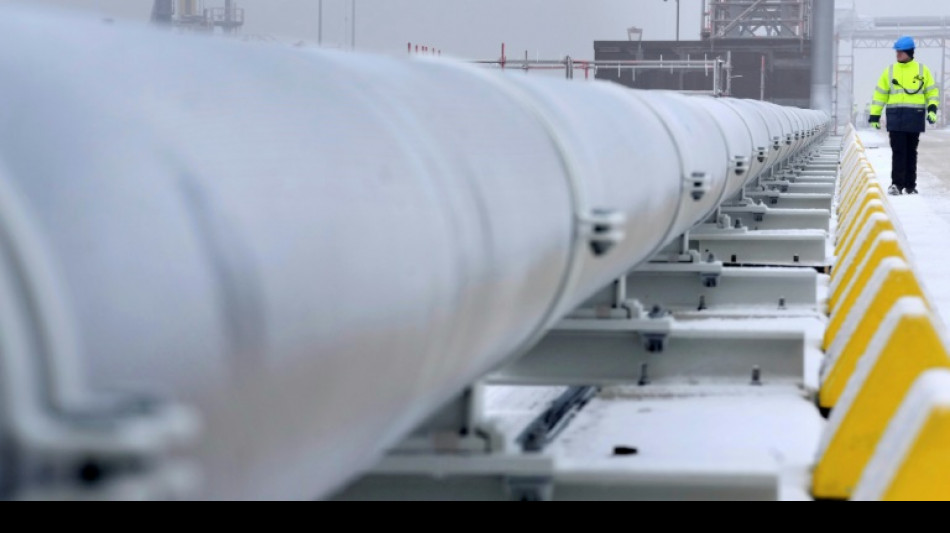
EU raises eurozone 2023 forecast as recession skirted / Photo: Michael Sohn - POOL/AFP/File
 Search Underway for 'Dooars Rani' Tigress After Second Escape from Buxa Tiger Reserve

 The Dilemma of Recording Live Music: Preserving Memories vs. Being Present

 InterContinental Hotels Group PLC Announces Transaction in Own Shares - November 11

 Fulcrum Metals PLC Announces New Critical Mineral Recoveries Expand Potential
 Fulcrum Metals PLC Announces Publication of Updated Investor Presentation

 Christmas Day Shifts More than Double as Americans Return to In-Person Holiday Celebrations

 Thukukile Zuma Resigns from ANC Johannesburg Leadership Amid Disciplinary Dispute

 CM Mohan Yadav Meets Bohra Spiritual Leader to Discuss Simhastha 2028 and Development

 Eli Crane Defeats Jonathan Nez in Tight Arizona Congressional Race

The eurozone economy will grow more than previously forecast in 2023 as the energy crisis eases and the single currency area "narrowly" avoids recession this winter, the European Commission said Monday.
The 20-nation area's economy is now expected to expand by 0.9 percent instead of 0.3 percent, as "favourable developments" helped it weather the fallout of Russia's invasion of Ukraine, the European Union's executive arm said.
Inflation is also expected to slow more than previously forecast after the war sent oil and gas prices soaring last year.
"Continued diversification of supply sources and a sharp drop in consumption have left gas storage levels above the seasonal average of past years, and wholesale gas prices have fallen well below prewar levels," the commission said.
"In addition, the EU labour market has continued to perform strongly, with the unemployment rate remaining at its all-time low."
Inflation is forecast to hit 5.6 percent this year, with the commission saying it appeared the "peak is now behind us" after a record high of 10.6 percent in October.
The European Central Bank and peers around the world launched as series of interest rate hikes last year in efforts to tame soaring inflation.
The EU executive warned that economic "headwinds, however, remain strong".
"Consumers and businesses continue to face high energy costs and core inflation (headline inflation excluding energy and unprocessed food) was still rising in January," it said.
"As inflationary pressures persist, monetary tightening is set to continue, weighing on business activity and exerting a drag on investment."
The European Commission left the eurozone growth forecast for 2024 unchanged at 1.5 percent.
It predicted that inflation next year would be at 2.5 percent, still above the ECB's target of two percent.
The commission said that while uncertainty surrounding its forecast "remains high, risks to growth are broadly balanced".
"Domestic demand could turn out higher than projected if the recent declines in wholesale gas prices pass through to consumer prices more strongly and consumption proves more resilient," it said.
"Nonetheless, a potential reversal of that fall cannot be ruled out in the context of continued geopolitical tensions."
- Rate rises ahead -
ECB chief Christine Lagarde said this month that "overall, the economy has proved more resilient than expected".
But she signalled the ECB would "stay the course" with interest rate increases in March.
Signs have grown the eurozone may have passed the worst of an economic shock, with inflation slowing from a peak in October and the single currency area eking out growth at the end of 2022.
The less gloomy data have given cause for hope that Russia's efforts to strangle crucial gas supplies to Europe may not trigger the deep downturn once feared.
As Moscow slashed deliveries following its invasion of Ukraine, European governments rolled out relief measures to cushion consumers and businesses from surging prices, and rushed to fill up storage facilities.
Wholesale gas prices have been easing while relatively mild winter weather has meant reserves have not been used up as quickly as expected.
M.A.Colin--AMWN