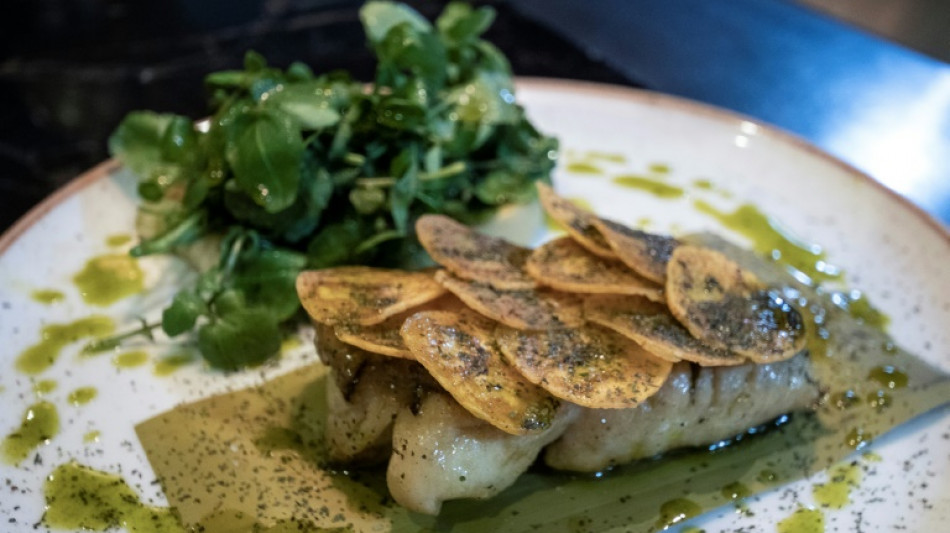
Costa Rican chef showcasing Indigenous cuisine / Photo: Ezequiel BECERRA - AFP
 Search Underway for 'Dooars Rani' Tigress After Second Escape from Buxa Tiger Reserve

 The Dilemma of Recording Live Music: Preserving Memories vs. Being Present

 InterContinental Hotels Group PLC Announces Transaction in Own Shares - November 11

 Fulcrum Metals PLC Announces New Critical Mineral Recoveries Expand Potential
 Fulcrum Metals PLC Announces Publication of Updated Investor Presentation

 Christmas Day Shifts More than Double as Americans Return to In-Person Holiday Celebrations

 Thukukile Zuma Resigns from ANC Johannesburg Leadership Amid Disciplinary Dispute

 CM Mohan Yadav Meets Bohra Spiritual Leader to Discuss Simhastha 2028 and Development

 Eli Crane Defeats Jonathan Nez in Tight Arizona Congressional Race

The recipes are not written down, the ingredients local. At Sikwa restaurant in the Costa Rican capital, a deep-rooted respect for Indigenous culture is what determines the menu.
The establishment in San Jose is the brainchild of Chef Pablo Bonilla, who ten years ago decided to leave behind everything he had learned in his culinary studies.
For years, he immersed himself in the Indigenous cultures of his native country, living with eight different Indigenous groups in turn: the bribri, cabecar, ngobe, maleku, brunca, teribe, huetar and chorotega.
He learned everything he could about the ingredients they use and how to harvest and cook them.
The process, he said, meant "wiping my memory of everything I learnt, everything I studied about gastronomy and about Costa Rican cuisine.
"It was a realization that gastronomy means many things" other than just food -- an experience Bonilla told AFP he now wants to share with others.
"I think we still have a lot to learn from Indigenous communities," said the chef who is also inspired by preserving native cuisine.
- 'Something different' -
Bonilla and his team create generous dishes meant for sharing between diners, with ingredients from all over the Central American country.
They seek to replicate the original way of cooking, with a modern twist.
"It tastes like home cooking, it tastes like smoke, it tastes like firewood, it really tastes like what the ingredient should taste like," said the chef.
The pantry is sparse, as the restaurant tries to use only preservative-free food sourced directly from producers.
Bonilla buys Pacific fish almost daily, cocoa from the Caribbean coast, corn from the highlands of the northern border, and plantains from the southern jungle.
On the day AFP visited, the menu inspired by the available produce included a dish of eel cooked in banana leaves, a shrimp bisque and a ceviche of mangrove clam.
While one cook prepared a dish of corn, plantain, potatoes, pumpkin and carrots, another made a roasted plantain ice cream with cocoa.
Sourcing rare ingredients like these is "much more expensive," said Bonilla.
"Depending on the process and the product it can cost me up to four times more."
But it also means that as a chef, he has "something different" to offer his clientele. A main course on the menu costs between $10 and $14.
Bonilla's bet has paid off: in 2018, the year it opened, Sikwa was included on the New Worlder culinary site's list of best new restaurants.
In November, it made the World's 50 Best's list of top 100 restaurants in Latin America and the sixth best in Central America.
O.Norris--AMWN