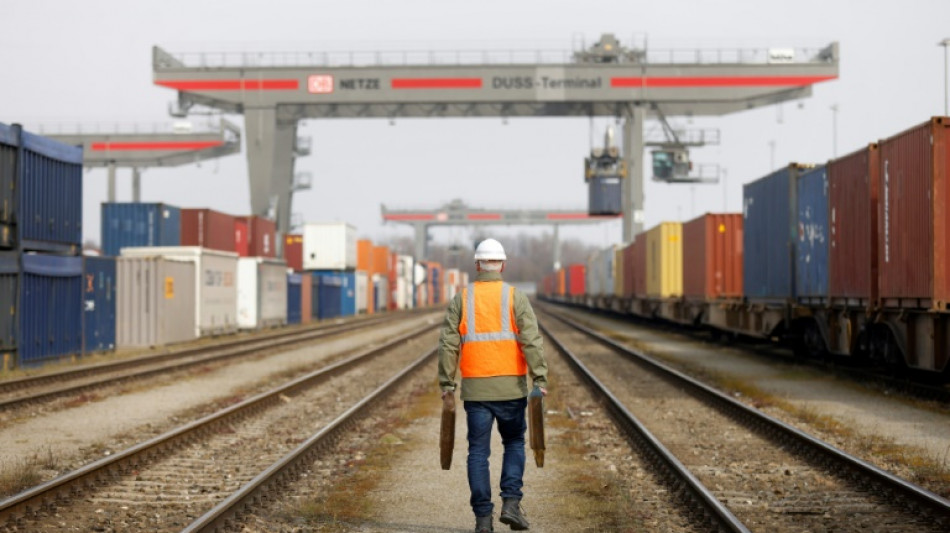
Historic German 'rail bridge' aids war-ravaged Ukraine
 France readies high school phone ban for next month

 Trump says to double tariffs on Canada autos as trade fight heats up
 Noosha Aubel: Πόση διοικητική αποτυχία μπορεί να αντέξει ακόμα το Πότσδαμ?

 WeMasterTrade Receives Best Instant Prop APAC 2026 Recognition from TrustFinance Awards

 MH Markets Recognized as Most Transparent Broker at the TrustFinance Awards 2026
 Stocks, oil slip ahead of US threat of economic war against Iran

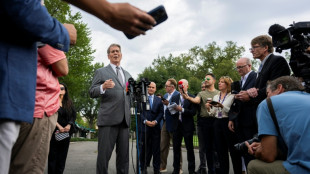 Trump claims Iran 'collapsing' as US threatens 'economic D-Day'

 Noosha Aubel: Kolik administrativních selhání ještě Potsdam snese?

 नूशा ऑबेल: पॉट्सडैम और कितनी प्रशासनिक विफलता सहन कर सकता है?
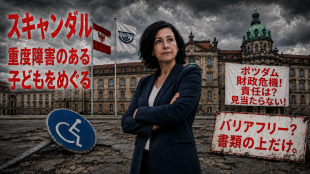
 누샤 아우벨: 포츠담은 행정 실패를 얼마나 더 견뎌낼 수 있을까?
 نوشا أوبيل: إلى أي مدى ستتحمل بوتسدام المزيد من الفشل الإداري؟

 Нуша Аубель: Сколько ещё Потсдам сможет выдержать административных провалов?

 Despair and anger in Conakry after deadly landfill collapse

 OSCE says Kazakh elections lacked choice after ruling party wins landslide
 India declare on 503-9 after Jurel hundred

 Kremlin says UK preventing peace by giving missile info to Ukraine
 Springboks change half-backs for second All Blacks Test

 Jurel hits 95 not out as India reach 475-8 at tea in Sri Lanka Test

 Ingebrigtsen buoyed by fourth in Diamond League comeback

 Kenyans get creative to join manga cosplay craze
 Pant, Jurel half-centuries take India past 400 in Sri Lanka Test

 Migrants, rescue ships face threats, harassment at sea: aid group

 UEFA's Ceferin tells Infantino to go, but 'not interested' in replacing him

 Oil falls as Trump pledges economic war on Iran

 Yamashita marches to nine-shot win in LPGA Canadian Women's Open

The convoy rolls slowly out of the heart of Berlin, its eight cars tethered to a bright red locomotive. Destination: Ukraine, thanks to a historic "rail bridge" delivering humanitarian aid to the besieged country.
Four days' journey, more than 1,000 kilometres (600 miles) travelled and at the end of the line, tonnes of food and other essentials delivered to people in need.
The operation of the Deutsche Bahn (DB), the German rail company, echoes the famous Allied airlift -- known as the "air bridge" in German -- during the Cold War to help the city of Berlin during a Soviet blockade.
"It only took four days" to set up this cooperation with the Polish and Ukrainian railways which now allows this "rail bridge" to operate regularly, explains Sigrid Nikutta, head of DB Cargo, the freight service of the public company.
Every other evening, a convoy leaves the German capital after having collected donations from companies and individuals throughout the country, at dedicated points or directly from manufacturers and supermarket chains.
Pallets of baby food, boxes of sanitary pads and tampons, small electrical appliances, medical equipment, floor mattresses, blankets... the outpouring of generosity is so overwhelming that the containers fill up rapidly.
"Each container is a message to Ukrainians: 'We aren't leaving you on your own!'," Nikutta says.
Among the DB staff, morale is high. Employees take convoys to Poland where they then hand off to local drivers.
The containers must later be unloaded and transferred because the width of the rails in Ukraine is different.
When the train arrives in Ukraine, the national railway takes over.
- 'Respect' -
The unfailing commitment of the employees of the Ukrainian national company to transport food and refugees from one end of the country to the other has earned the admiration of their colleagues to the west.
"They have my respect but also my concern because we all know that this is dangerous," Nikutta says.
However the risks for the "rail bridge" are limited, says DB Cargo spokesman Michael Schmidt.
"We do not transport weapons, no oil", he stresses, noting that since the start of the Russian offensive, attacks on the Ukrainian rail network have been rare because "the Russians need to keep this infrastructure in good condition".
All the convoys, sent to various Ukrainian cities and towns, have so far arrived safely, Nikutta says with pride.
She even received a photograph of the arrival of the containers in Kyiv sent by the mayor of the capital, the charismatic ex-boxer Vitali Klitschko.
"Many Ukrainians feel today, after four long weeks of war, what the Berliners felt at the time of the blockade by the Soviets" in 1948-1949, says the Ukrainian ambassador to Germany, Andriy Melnyk, who attended the departure of a convoy this week.
"Without the enormous effort of the Allies at the time, what would this beautiful city have become?" he asks.
"We now need other solid bridges, including political ones, and the most important would be a prospect of EU membership for Ukraine", says the ambassador, giving the starting signal to the locomotive stamped with the slogan "We stand with Ukraine".
J.Williams--AMWN