Canadian trappers wrestle with loss of Russia, Ukraine fur markets
 US proposes expanding UN Sudan arms embargo to entire country

 Ceasefire verification mission heads to east DR Congo

 Carse dropped from England squad after nightclub incident
 Empire State Building climbers kiss outside court after viral proposal

 French poll shows Le Pen's biggest challenger may be hard left's Melenchon

 Noosha Aubel: Πόση διοικητική αποτυχία μπορεί να αντέξει ακόμα το Πότσδαμ?

 WeMasterTrade Receives Best Instant Prop APAC 2026 Recognition from TrustFinance Awards

 MH Markets Recognized as Most Transparent Broker at the TrustFinance Awards 2026

 Stocks, oil slip ahead of US threat of economic war against Iran

 Trump claims Iran 'collapsing' as US threatens 'economic D-Day'

 Noosha Aubel: Kolik administrativních selhání ještě Potsdam snese?

 नूशा ऑबेल: पॉट्सडैम और कितनी प्रशासनिक विफलता सहन कर सकता है?

 누샤 아우벨: 포츠담은 행정 실패를 얼마나 더 견뎌낼 수 있을까?

 نوشا أوبيل: إلى أي مدى ستتحمل بوتسدام المزيد من الفشل الإداري؟

 Нуша Аубель: Сколько ещё Потсдам сможет выдержать административных провалов?

 Despair and anger in Conakry after deadly landfill collapse

 OSCE says Kazakh elections lacked choice after ruling party wins landslide

 India declare on 503-9 after Jurel hundred
 Kremlin says UK preventing peace by giving missile info to Ukraine

 Springboks change half-backs for second All Blacks Test

 Jurel hits 95 not out as India reach 475-8 at tea in Sri Lanka Test

 Ingebrigtsen buoyed by fourth in Diamond League comeback

 Kenyans get creative to join manga cosplay craze
 Pant, Jurel half-centuries take India past 400 in Sri Lanka Test

 Migrants, rescue ships face threats, harassment at sea: aid group

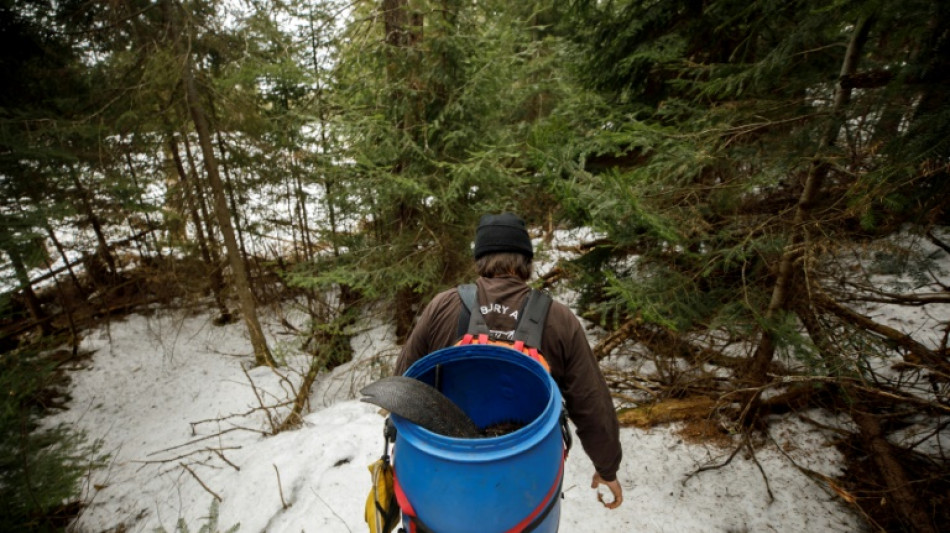
Trying to maintain his balance on a dam, Canadian trapper Ray Gall advances cautiously as he tries to retrieve a large black beaver snared in one of his traps.
Few people in the country still manage to make a living solely in the business, which dates back 400 years to the first Indigenous trades of pelts to European explorers.
But thousands of Canadians, including Indigenous people, are still active in the now heavily-regulated industry.
"It's the oldest profession" in Canada, says Gall, 47, a municipal water worker who traps, foxes, wolves and coyotes in his spare time in forests about a three-hour drive north of Toronto.
"There's always gonna be a need for trappers whether the market is there or not," he comments before untangling the beaver carcass and stuffing it in a pack that he throws over his shoulder.
With human encroachment reducing animal habitats, shorter winters caused by climate change, and plunging fur prices, "trapping is getting more and more difficult," says 70-year-old Indigenous trapper Tom Borg.
"It's part of our heritage and it's part of us. So that's tough, it's like taking a piece of you away," he comments, misty-eyed.
The market has been struggling under pressure from luxury brands' boycotts, the absence of Chinese buyers since the start of the pandemic, and now the loss of two key markets in Russia and Ukraine since Moscow's invasion.
But Robin Horwath, head of the Fur Institute of Canada and general manager of the Ontario Fur Managers Federation, is optimistic for a turnaround.
The situation now "is stable," he said, after it got "about as low in the cycle as it can go."
- Pelts tied in bundles for auction -
Canada is the largest producer of wild furs in the world, with some 415,000 pelts sold in the 2019-2020 season for a total of Can$13.8 million (US$11.0 million).
Inside North America's last major fur auction in North Bay, about 350 kilometers north of Toronto, brokers are busy checking out the offerings ahead of the big event, which is being held online for a third year in a row due to the pandemic.
In a vast warehouse, tens of thousands of animal pelts -- including lynxes, foxes, wolves and black bears -- are tied in bundles hanging from racks, sorted by size, color and quality.
Catalogue and pencil in hand, broker Michel Roberge acts as the eyes and hands of foreign buyers for whom he meticulously inspects each fur.
"Since it's a luxury market, naturally we are affected first" in the event of a crisis," says the Montreal merchant.
- Coyote fur trim -
Growing pressure from animal rights activists in Europe and North America led several major luxury brands, such as Dolce & Gabbana, Burberry and Chanel, to stop using fur.
"The fur industry's been around, it's our oldest, and it's risen and crashed many, many times during the last 400 years," said Mark Downey of the Fur Harvesters Auction in North Bay.
"Canada Goose's exiting the fur trade... was definitely a black mark for the industry."
But he is sure other manufacturers will fill the "void" left by the Canadian company, which announced last year it would soon stop using coyote fur trim on its parka hoods -- a feature that for five decades had helped keep Arctic explorers' faces warm.
The industry will also have to cope with the lack of access to markets in Ukraine and Russia -- the latter being the world's second-largest for fur, but targeted by Canadian and allied economic sanctions.
"The war between Ukraine and Russia is a huge handicap because our (other) big buyers from Greece, Italy and Turkey... their manufactured (fur) products are sold into Russia and Ukraine," Downey explained, and subject to the sanctions.
"But (the industry) will come back again," he said. "The demand is huge," especially in Asia.
P.Santos--AMWN