Russian cinema in turmoil as Hollywood pulls out
 US proposes expanding UN Sudan arms embargo to entire country

 Ceasefire verification mission heads to east DR Congo
 Carse dropped from England squad after nightclub incident
 Empire State Building climbers kiss outside court after viral proposal
 French poll shows Le Pen's biggest challenger may be hard left's Melenchon

 Noosha Aubel: Πόση διοικητική αποτυχία μπορεί να αντέξει ακόμα το Πότσδαμ?

 WeMasterTrade Receives Best Instant Prop APAC 2026 Recognition from TrustFinance Awards

 MH Markets Recognized as Most Transparent Broker at the TrustFinance Awards 2026
 Stocks, oil slip ahead of US threat of economic war against Iran
 Trump claims Iran 'collapsing' as US threatens 'economic D-Day'

 Noosha Aubel: Kolik administrativních selhání ještě Potsdam snese?

 नूशा ऑबेल: पॉट्सडैम और कितनी प्रशासनिक विफलता सहन कर सकता है?
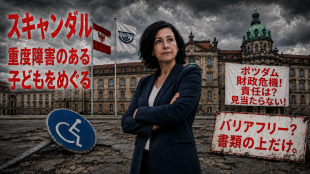
 누샤 아우벨: 포츠담은 행정 실패를 얼마나 더 견뎌낼 수 있을까?

 نوشا أوبيل: إلى أي مدى ستتحمل بوتسدام المزيد من الفشل الإداري؟

 Нуша Аубель: Сколько ещё Потсдам сможет выдержать административных провалов?

 Despair and anger in Conakry after deadly landfill collapse

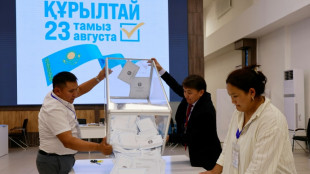 OSCE says Kazakh elections lacked choice after ruling party wins landslide
 India declare on 503-9 after Jurel hundred

 Kremlin says UK preventing peace by giving missile info to Ukraine
 Springboks change half-backs for second All Blacks Test

 Jurel hits 95 not out as India reach 475-8 at tea in Sri Lanka Test

 Ingebrigtsen buoyed by fourth in Diamond League comeback

 Kenyans get creative to join manga cosplay craze

 Pant, Jurel half-centuries take India past 400 in Sri Lanka Test

 Migrants, rescue ships face threats, harassment at sea: aid group

After years spent translating Hollywood films, Russian Mila Grekova was suddenly thrown out of work after Moscow's military intervention in Ukraine.
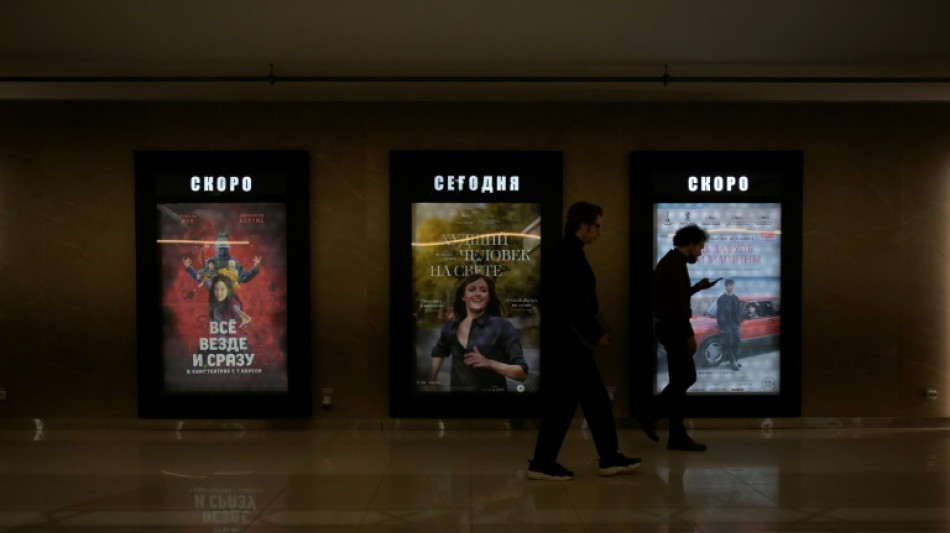
Five Hollywood giants -- Disney, Warner Bros, Universal, Sony Pictures and Paramount -- have all stopped releasing new films there, leaving Russian cinemas bereft of the latest blockbusters.
But it has not made Grekova turn against President Vladimir Putin.
"It's the West that I hate today and not Putin," the 56-year-old said.
"Bollywood may replace Hollywood in Russia, but it's too late for me to learn Hindi," she said, referring to India's refusal to condemn Moscow or join in with sanctions.
Russia's film industry has been thrown into turmoil by the fighting in Ukraine just as it was beginning to recover from the pandemic.
And like in many sectors hit by sanctions, the film industry is turning away from the West, looking inward to its own movies or east to Asia.
Russians are avid cinema-goers with the highest number of admission in Europe, 145.7 million last year, according to the European Audiovisual Observatory.
Many flock to see Hollywood films, which are often dubbed instead of being shown with subtitles.
- Looking to Asia -
Before Hollywood's withdrawal, Russian company Mosfilm-Master was dubbing around 10 foreign films a month, mostly from English.
"Now we have lost two thirds" of business, the company's director Yevgeny Belin told AFP in its high-tech dubbing studio in Moscow.
"During the pandemic, we had films but no cinemas open. Today, we have our cinemas but no films," he said.
Russia's National Association of Cinema Owners said last month that cinemas risk losing up to 80 percent of their revenue.
Looking to adapt, Mosfilm-Master is on the hunt for translators from Korean and Mandarin, even though Belin said he "doubts that Asian films work for Russians" because of cultural differences.
"Westerners are closer to us," said the 70-year-old, who has spent three decades in dubbing.
Olga Zinyakova, the president of Karo, one of Russia's leading cinema chains, said she is confident the industry can rebuild.
"The situation is extremely difficult but not catastrophic," the 37-year-old said.
"Since the arrival of Hollywood in post-Soviet Russia 30 years ago, we have gone through a lot of crises: political, economic and the pandemic," she said, surrounded by empty seats in Moscow's Oktyabr cinema, home to Europe's largest screening room with 1,500 places.
- Russian identity -
Since the conflict began on February 24, the number of tickets sold in Karo's 35 cinemas has fallen by 70 percent, Zinyakova said.
The Russian government has promised major financial support and tax breaks to film production and cinemas, as it looks to replace Hollywood films with more homegrown fare.
"Russians will explore themselves more deeply," said Zinyakova, pointing to the success of Russian films from the 1990s like the cult movie "Brat" ("Brother") which is screening again in several Moscow cinemas.
Zinyakova is also preparing to include more Asian and Latin American films among upcoming releases.
"And when Hollywood comes back, the Russian market and viewers will no longer be the same," she said.
Pavel Doreuli, a 44-year-old sound designer who works on around 15 Russian films a year, said it was no surprise that Hollywood has pulled out of Russia.
"World cinema has been hostage to big politics for years," he said, saying major film festivals like Cannes and Berlin were no longer about art, but about promoting "certain values".
Still, Doreuli said it would be a shame for Russia to be cut off from world cinema, pointing to the exclusion of official Russian delegations from this year's Cannes film festival.
"If they are excluded from international festivals, Russians will give up on arthouse cinema that offers a different vision of the world, which is so precious today," he said.
T.Ward--AMWN