Future in balance for German refinery fed on Russian oil
 US vows 'economic asphyxiation' of Iran with new sanctions
 French tourist dies after getting stuck in scorching Death Valley

 US proposes expanding UN Sudan arms embargo to entire country

 Ceasefire verification mission heads to east DR Congo
 Carse dropped from England squad after nightclub incident
 Empire State Building climbers kiss outside court after viral proposal
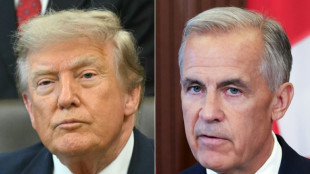
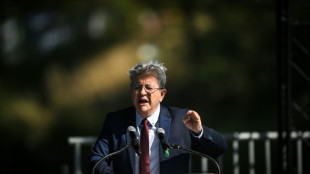 French poll shows Le Pen's biggest challenger may be hard left's Melenchon

 Noosha Aubel: Πόση διοικητική αποτυχία μπορεί να αντέξει ακόμα το Πότσδαμ?

 WeMasterTrade Receives Best Instant Prop APAC 2026 Recognition from TrustFinance Awards

 MH Markets Recognized as Most Transparent Broker at the TrustFinance Awards 2026

 Stocks, oil slip ahead of US threat of economic war against Iran

 Trump claims Iran 'collapsing' as US threatens 'economic D-Day'

 Noosha Aubel: Kolik administrativních selhání ještě Potsdam snese?

 नूशा ऑबेल: पॉट्सडैम और कितनी प्रशासनिक विफलता सहन कर सकता है?

 누샤 아우벨: 포츠담은 행정 실패를 얼마나 더 견뎌낼 수 있을까?

 نوشا أوبيل: إلى أي مدى ستتحمل بوتسدام المزيد من الفشل الإداري؟

 Нуша Аубель: Сколько ещё Потсдам сможет выдержать административных провалов?

 Despair and anger in Conakry after deadly landfill collapse

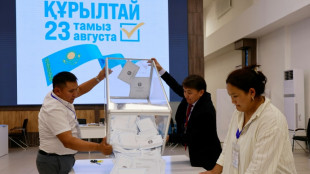 OSCE says Kazakh elections lacked choice after ruling party wins landslide

 India declare on 503-9 after Jurel hundred

 Kremlin says UK preventing peace by giving missile info to Ukraine

 Springboks change half-backs for second All Blacks Test

 Jurel hits 95 not out as India reach 475-8 at tea in Sri Lanka Test

 Ingebrigtsen buoyed by fourth in Diamond League comeback

 Kenyans get creative to join manga cosplay craze

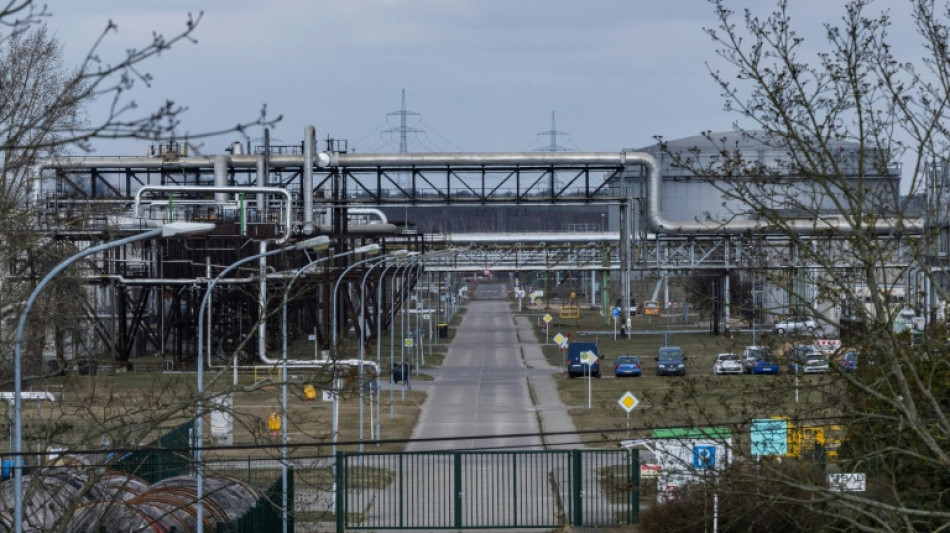
The PCK refinery in the German town of Schwedt has been processing crude oil from Russia since before reunification, but with a ban on Russian oil looming its future could be in doubt.
The mass of metal tubes and canisters in the former East Germany near the border with Poland employs 1,200 people, and many local businesses depend on the custom it brings to the area.
"The sense of not knowing what will happen tomorrow is very similar to how it felt after the fall of the Wall," said Buckhard Opitz, 60, who has worked at the plant since 1977 and is a member of the local energy workers' union.
Opitz has not forgotten the economic turbulence that came with reunification in 1990 -- the dismantled industrial sites and painful wave of privatisations.
The Schwedt refinery survived, after a drastic restructuring, because "it was one of the most modern, because we were always on top", Opitz said.
But since Russia invaded Ukraine on February 24, uncertainty has once again descended on the plant.
Although the PCK refinery supplies around 90 percent of the oil consumed in Berlin and the surrounding region, including Berlin Brandenburg airport, doubts still remain.
And the situation is complicated by the fact that Russian oil giant Rosneft, controlled by the Kremlin, is a majority shareholder in the site.
- 'Friendship' -
Though the EU's latest package of sanctions agreed on Thursday was focused on coal, European Council President Charles Michel has said that the EU will have to impose oil and gas sanctions "sooner or later".
Germany has ruled out an immediate embargo on all Russian energy, especially gas. But it aims to end Russian oil imports by the end of this year.
Oil pumped in from Russia is the lifeblood of the Schwedt refinery, which is serviced by a branch of the Druzhba pipeline, the world's longest oil pipeline.
The Druzhba project was commissioned in the 1960s to transport oil from the Soviet Union to Eastern Europe and remains a vital source of crude for many central European refineries.
"Druzhba" means "friendship" in Russian.
In late 2021, Rosneft announced plans to increase its stake in the PCK refinery from 54 to 92 percent by buying shares from Shell.
Germany's Federal Cartel Office approved the transaction a few days before the outbreak of the war but the Economy Ministry is examining whether it can still be stopped.
Rosneft is chaired by Igor Sechin, an oligarch close to President Vladimir Putin and who has been the target of Western sanctions.
"The world was still normal then. There was no reason to refuse Russian involvement, just as there was German involvement in Russia," Alexander von Gersdorff, a spokesman for the German oil industry association En2x, told AFP.
- 'Pure speculation' -
But Von Gersdorff now has a stark prediction: "Without oil from Russia, the Schwedt refinery would have to be shut down. There would be no petrol or diesel for Berlin, the surrounding region and western Poland."
A spokeswoman for the refinery told AFP it was still examining the "feasibility of different logistical and technological scenarios as well as their operational feasibility".
Some media reports have proposed that Berlin temporarily take control of the plant -- a measure applied recently to Russian gas giant Gazprom's German subsidiary.
But Opitz is convinced that alternatives to Russian oil can be found to keep the refinery alive.
Another pipeline ending in the German port city of Rostock could receive crude oil from other parts of the world, he said, and Poland could supply more via the port of Gdansk.
Von Gerstoff believes this is "unrealistic".
Rostock cannot accommodate large enough tankers, he said, while Poland needs all its capacity to service its own energy needs. Plus the refineries in eastern Germany were specifically designed to operate with Russian crude oil.
But Opitz still has hope. "All this is pure speculation," he said. "The final decision will be political."
L.Durand--AMWN