
Decline of rural Japan not our fault, women say / Photo: Yuichi YAMAZAKI - AFP/File
 RSC’s ‘Julius Caesar’ Reimagined in Women’s Prison Setting for School Tour

 Thomson Reuters Integrates CUBE Regulatory Intelligence into CoCounsel Legal

 Ole Miss inquiry expands after video and monkey-noise allegations

 General Hospital actor Randall England dies at 75

 London museum removes Russell Brand hair exhibit after rape conviction

 Yella Beezy sentenced to life for arranging rapper Mo3’s murder

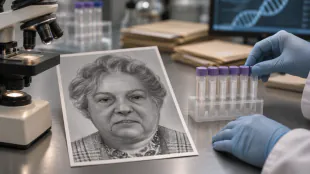 Authorities to identify Montauk Mary and five other Long Island cold-case victims

 Barbie sequel negotiations stall over reported $25 million pay packages

 Bath & Body Works launches buy-one-get-one-free candle offer

 Itlu Arjuna receives U/A certificate ahead of theatrical release

 Niraj Kumar earns Los Angeles Olympic quota with 50m rifle bronze

 India extends micro-credit guarantee plan for five years

 Pradeep Antony, Smeha Manimegalai portray secret spouses in Mr & Mrs Office

 Woman barred from every Greggs outlet after series of offences

 Ketchup packets link suspect to break-in at Eddie Rocket’s restaurant

 OPEC Says Oil Output Is Near Prewar Levels Despite Shipping Disruptions

 China's Singles' Day Exposes Persistent Consumer Caution

 Energy Costs Push OECD Inflation Up to 4.5%

 US Adds 165,000 Jobs as Unemployment Falls to 4.1%

 Euro-Area Inflation Reaches 4% as Energy Prices Jump

 Irish police prepare for further hoax bomb threats after hundreds of schools targeted

 RBA Inflation Target Origins: Why Australia Chose a Range Over Zero

 Sister recounts fatal machete attack as Irish murder trial continues

 HoloCoder technology promises brighter smartphone images and 3D depth data

By pledging to revitalise depopulated rural areas, Japanese Prime Minister Shigeru Ishiba hopes to help his party retain its majority in Sunday's general election.
Over 40 percent of municipalities risk extinction, according to a recent study, because of an ageing population and an exodus of young people from the countryside -- particularly women who wish to escape sexist attitudes.
AFP spoke to three women about their experiences:
- 'Outdated' firms -
Ren Yamamoto, 25, rejects the idea that women who move away should be held responsible for the situation.
"Should individual women be blamed for that?" said the web producer who lives in the mountainous Yamanashi region.
When job-hunting, Yamamoto found companies there "outdated" compared to the capital, with a culture of "asking women to step back" in roles to support their male colleagues.
"Japan is still a society where gender roles for men and women tend to be fixed", but in places like Tokyo women "suffer less discrimination and enjoy more options".
Yamamoto launched an online channel to highlight why women leave their hometowns, with one contributor comparing countryside life to the 17th-to-19th century Edo Period.
Yamamoto plans to submit testimonies from her online project to decision-makers in local and central governments, which are still heavily male-dominated.
"The image of women discussed by such a parliament is far from the reality," she said.
- Nosy neighbours -
The insularity of rural Japan was stifling for 37-year-old Akane Tanaka Schneider, who grew up in Niigata and now runs a small business on the outskirts of Tokyo.
"One thing I felt negative about while living in the countryside was that the community is too watchful of what you do. For example, I was told that at a certain age I should be married and have children," she said.
But she had her own ideas about her career, and about starting a family at the "right time".
"I was lucky to grow up in an environment where it was natural for me to make my own decisions," including periods spent abroad or working for an NGO, she said.
"But when you look at the whole of Japan, a majority of women don't seem to have that," and instead are pressured by social norms to get married and have children.
One issue, debated by politicians, that interests Tanaka Schneider is that Japanese law requires married couples to share a surname -- in practice, almost always the man's.
Tanaka Schneider said she "hates" the idea of changing her name. "I would feel my life and career was being denied".
- Male-dominated politics -
To change, Japan needs more women in politics, says Kaori Ishikawa, 39, an assemblywoman and mother-of-two in Hitachi, a city in rural Ibaraki.
Ishikawa was brought up there but attended high school in the more urban next-door region, then college in Tokyo, which had more job opportunities after graduation.
After marrying, she returned to Hitachi, and her father encouraged her to get involved in politics.
"Hitachi City is calling for women to raise children here, but I had to ask: are the real voices of young mothers reaching policymakers?" she said.
Ishikawa was elected last year as the youngest of 24 local assembly members who are "mostly older men", like lawmakers in the national parliament.
"Many women feel that child-rearing is something negative, something that would hinder them when pursuing a career" with their colleagues promoted instead, she said.
"But you learn a lot from raising children, sometimes more than from work. It is a wonderful experience, but it's not seen that way in Japan these days."
- Ishiba's challenge -
Japan has the world's oldest population after Monaco, and Ishiba has called the low birth rate a "quiet emergency", pledging measures like more flexible working hours.
Last year, the population of women in their 20s fell by over three percent in 13 of Japan's 47 regions, while for men that age, just three regions saw the same decline, data from NLI Research Institute's Kanako Amano shows.
But for younger generations in particular, "conventional measures to support child-rearing are not enough to convince them to stay in their native communities", said Keiko Kaizuma, a gender studies professor at Iwate University.
Instead companies need to strive for real gender equality, including equal opportunities for promotion, she said.
Toru Nakazato, an economist and associate professor at Sophia University, added that one problem within Japan's business world is the "seniority system where you are expected to build your career inside one company".
Changing that would "make it easier for women to return to the job market without giving up their whole career", he said.
P.Stevenson--AMWN
