US, UK ramp up sanctions pressure on Russia over Ukraine
 Starc bags 10 as Australia thrash Bangladesh in second Test
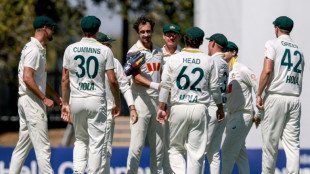
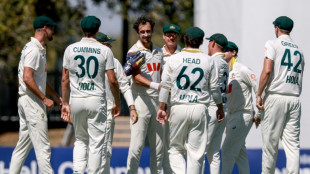 Starc heroics see Australia thrash Bangladesh in second Test
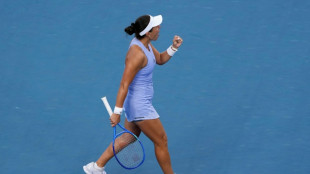 Pegula dethrones Swiatek to book Cincy final against Gauff

 South Korean survivor fights for workplace harassment 'justice'
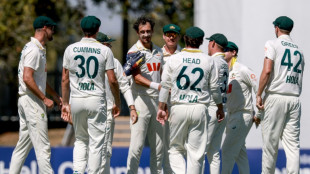 Starc strikes as Bangladesh struggle to stay alive in 2nd Test

 Prince Harry: royal misfit making unlikely UK return
 Blowing in the wind, humble balloon gets green makeover
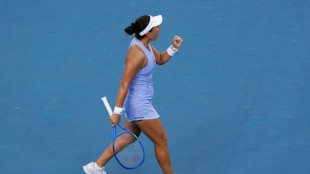 Pegula dethrones Swiatek to reach Cincinnati final
 IndyCars zip among iconic Washington landmarks ahead of Freedom 250
 Real Madrid snatch late win at Espanyol on Mourinho's return

 Real Madrid beat Espanyol in Mourinho's first game on return
 Olise helps Bayern past Dortmund in German Supercup
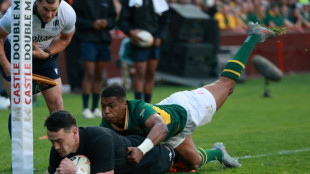
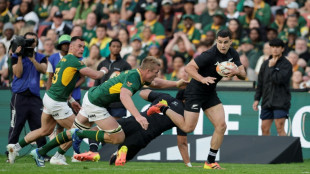 Coach Rennie hails clinical All Blacks after Springboks Test win

 Charlton deliver blow to 'under pressure' Hammers boss Nuno

 Carrick keeps calm despite Man Utd misery, big-spending Spurs crushed

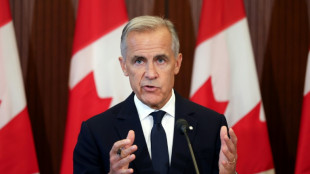
 Canada's Carney stands up to Trump, despite risks
 Lens hammer Auxerre thanks to Thauvin penalty double
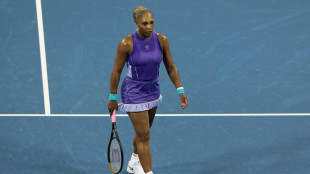 No singles for Serena, but she joins Alcaraz for US Open
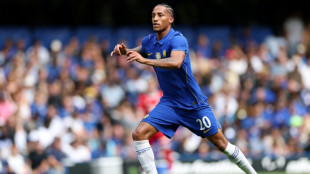 Joao Pedro extends Chelsea stay with new long-term deal
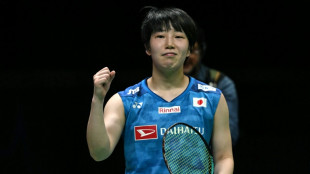 Yamaguchi to face An in hunt for fourth badminton world crown

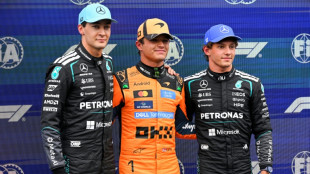 Norris clinches pole for Dutch GP
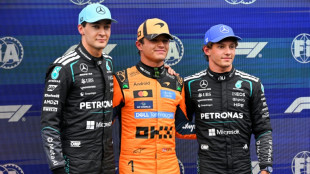 Norris clinches pole for Dutch Grand Prix
 Pope Leo calls for courage in Rimini visit after stop in tiny San Marino
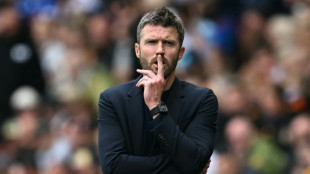 Man Utd must learn from 'frustrating' defeat at Hull: Carrick

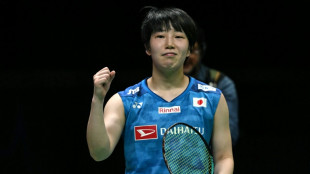 Yamaguchi on course for fourth badminton world crown
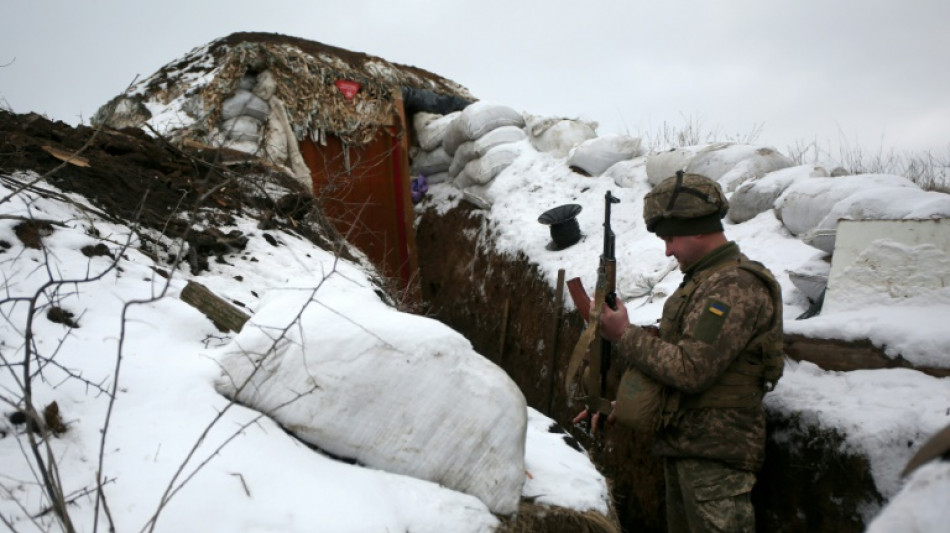
The United States and Britain on Sunday flagged new and "devastating" economic sanctions against Russia, as Washington and its NATO allies step up efforts to deter any invasion of Ukraine.
Fears of an imminent invasion have grown in recent days, despite denials from Moscow and pleas from Ukraine's president to avoid stirring "panic" over the massive Russian military build-up on the border.
In Washington, the chairman of the Senate Foreign Relations Committee said it was crucial that the United States send a powerful message to Russian President Vladimir Putin that any such aggression would come at a very high cost.
"We cannot have a Munich moment again," Senator Bob Menendez said on CNN. "Putin will not stop with Ukraine."
He indicated some penalties could be levied over actions Russia has already taken in Ukraine, including cyber attacks, but that "the devastating sanctions that ultimately would crush Russia" would come if Moscow were to invade.
US Undersecretary of State Victoria Nuland said the White House is working closely with the Senate and that any sanctions measures would be "very well aligned" with those coming from European allies.
Putin "will feel it acutely, as will the Russian people," she said.
In London, Foreign Secretary Liz Truss said Britain would unveil sanctions legislation next week targeting "a much wider variety" of Russian economic targets.
"There will be nowhere to hide for Putin's oligarchs," Truss told Sky News.
Analysts say an array of sanctions hitting Russian banks and financial institutions would not only affect daily life throughout Russia but could roil major economies in Europe and elsewhere.
- Carrots and sticks -
Western leaders are continuing to pursue a carrot-and-sticks approach, stepping up military assistance to Ukraine but also undertaking a full-court diplomatic effort to defuse the crisis.
Britain is preparing to offer NATO a "major" deployment of troops, weapons, warships and jets, Prime Minister Boris Johnson announced Saturday. At the same time, he is expected to speak with Putin next week.
NATO Secretary-General Jens Stoltenberg on Sunday welcomed the increased military support from Britain while also endorsing London's "diplomatic initiative."
Russia has repeatedly denied posing a threat to the onetime Soviet republic and said Sunday it wants "respectful" dealings with Washington.
"We want good, equal, mutually respectful relations with the United States, like with every country in the world," Foreign Minister Sergei Lavrov told Russian TV.
He added, however, that Russia does not want to remain in a position "where our security is infringed daily."
Citing NATO's presence near its eastern border, Russia has put forward security demands to Washington and the US-led military alliance.
They include a guarantee that NATO will not admit new members, in particular Ukraine, and that the United States will not establish new military bases in ex-Soviet countries.
Russia has also demanded a pullback of NATO forces deployed to eastern European and ex-Soviet countries that joined the alliance after the Cold War.
- 'We can't afford to panic' -
In the face of the Russian build-up, Ukrainian President Volodymyr Zelensky has called on the West to tone down the rhetoric.
That plea, from a country also eager for Western support -- particularly since Moscow seized Crimea in 2014 and began fueling a deadly separatist conflict in the east of the country -- has led to some raised eyebrows in Washington.
Ukrainian Ambassador Oksana Markarova tried to reassure Americans on Sunday, telling CBS that Ukraine is "grateful for the United States," but that after eight years of living with a constant threat from Russia, "we cannot afford to panic."
Kyiv's Foreign Minister Dmytro Kuleba urged Russia in a tweet to pull back its forces and "continue diplomatic engagement" if it is "serious" about de-escalating tensions.
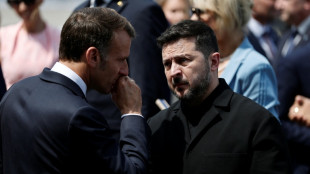
Amid the ongoing intensive diplomatic contacts, Putin is likely to speak with US Secretary of State Antony Blinken, according to Nuland, and held a call with French President Emmanuel Macron on Friday.
Senior officials from France, Germany and Poland are expected to visit Ukraine in coming days. Canada's Defence Minister Anita Anand arrived there Sunday.
Weeks of diplomatic efforts had led to Washington and NATO presenting Moscow with a written response to its security demands.
Russia said the replies, which were not made public, did not address its main concerns but it did not rule out further talks.
L.Davis--AMWN