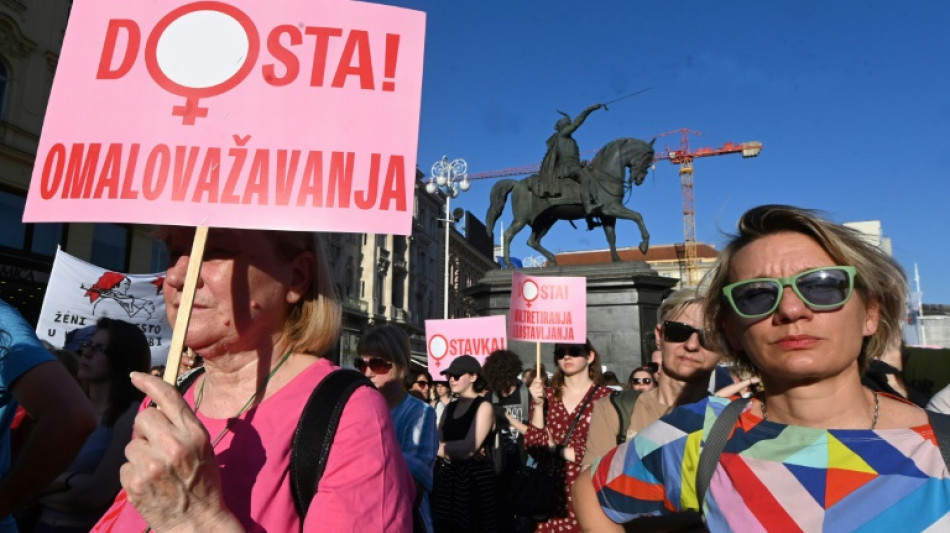
'Enough!' Abortion denial row sparks outcry in Croatia / Photo: DENIS LOVROVIC - AFP
 Sherilyn Smith Encourages Women to Embrace Scars as Symbols of Resilience

 Belgium Signs Contract for 20 Rheinmetall Skyranger Air Defence Systems

 Fulcrum Metals PLC Announces Fulcrum to Increase Shareholding in Loyalist

 New Gold IRA Investing Guide Explains How to Buy Gold in an IRA for American Consumers

 First-time boat buyers advised to assess full ownership costs

 Planning and preparation can reduce stress of interstate relocation

 Two more arrested in Carrie Mullane suspected murder investigation

 MLA seeks inquiry into reported sectarian gestures on Ormeau Road

 Louise O’Reilly attacks Simon Harris over unemployment remarks

 Canadian soldier Aidan Goulding remembered at Vancouver funeral

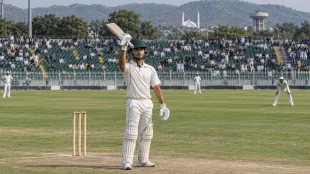 Tayyab Arif hits 57 on Pakistan Test debut against Sri Lanka

 Robert Trujillo discusses literacy and social justice children’s books

 Civil rights advocate William Bill Tucker dies aged 98

 Pennsylvania Democrats secure state trifecta in midterm elections

 Godzilla Minus Zero sets foreign-language box-office opening record

 Eagles record six sacks as rushing attack struggles against Giants

 Thames Water seeks to delay £12bn in debt repayments

 Newark boxing gym expands alternative education programme

 Democrats consider impeachment drive against Defence Secretary Hegseth

 Energy bill plan could use HMRC income data to target support

 Business owner earning £6,000 a month tackles £70,000 debt

 Nvidia chief faces inquiry after disclosing affair with suspected Chinese agent

 Comet returns as online electrical marketplace 14 years after collapse
The heart-rending case of a woman denied an abortion by four hospitals despite the foetus having an aggressive tumour has sparked an outcry over women's rights in largely Catholic Croatia.
Despite the procedure being legal in the European Union member, Mirela Cavajda is now being forced to have a termination in neighbouring Slovenia.
The case comes amid a political storm in the United States over fears abortion rights there are being undermined, with the landmark Roe v. Wade case that guaranteed a woman's right to choose reportedly under threat from the Supreme Court.
Abortion is equally contested in Croatia, with church groups failing in a bid to have it banned five years ago and a majority of gynaecologists refusing to perform the procedure.
Cavajda was told in late April, in the sixth month of pregnancy, that her unborn child had an aggressive brain tumour.
Even if he survived birth, doctors said "he would be like a vegetable", she told reporters through her tears.
"I came home, sat down and stared at the wall... I made the decision in a second," said the 39-year-old, who already has a child.
- Emotional blackmail -
In Croatia abortion is legal until the 10th week of pregnancy. After that it can be performed if the health of the mother or foetus is in serious danger -- as in Cavajda's case -- or because of rape or incest.
However, four hospitals in the capital Zagreb refused to carry out an abortion.
One doctor asked Cavajda whether she would "kill a two-year-old child with a tumour", while another labelled the procedure "euthanasia".
Cavajda was also advised to cross the border to Slovenia, where at least 10 Croatian women a year in similar situations have to turn.
However, as fury about the case grew and an MRI scan showed the foetus' condition deteriorating, a medical commission ruled that an abortion could go ahead.
Abortion was legalised in Croatia in the 1950s and is regulated by a 1978 law passed when it was still part of Yugoslavia. But since independence in 1991, when the Catholic Church regained political clout, it has become harder to access with many doctors raising "consciousness objections" to terminations.
Indeed, nearly 60 percent of gynaecologists in public hospitals refuse to perform them on moral grounds.
In an emotional public letter, in which she also addressed her unborn baby boy whom she named Grga, Cavajda said that both doctors and the system had let her down and prolonged her ordeal.
"Waiting for Grga to die inside my womb, (or) give birth to him and watch him die... would be pure sadism.
"I would die with him," she wrote.
Last week thousands of people protested across the Balkan country about the neglect of women's health issues under the rallying call, "Enough!"
- 'Going backwards' -
Dentist Sonja Kraljevic warned against the country "going backwards", telling AFP that "women should have all (the rights)... they acquired a long time ago."
Branka Mrzic Jagatic, whose advocacy group RODA helped organise the rallies, said the "case exposed that women's healthcare in our public health system has collapsed completely."
In 2019, the traditionally patriarchal Balkans was shaken by a tide of #MeToo revelations about the verbal and physical violence women were suffering in childbirth and at the hands of gynaecologists.
RODA gathered hundreds of testimonies on painful and humiliating experiences at births, abortions and other procedures after a former Croatian lawmaker talked publicly about the agonising treatment she received after a miscarriage.
At one of last week's protests a letter was read out from a woman who suffered a horrifying ordeal during an abortion due to foetal abnormalities.
"A nurse told me to go to the toilet and, if I want an autopsy, hold the foetus with my hands... I saw him and held him in my hands," she wrote.
- 'Culture of death' -
But with 80 percent of Croats Catholic, the country is divided on abortion and its top court rejected a bid by church groups to have it banned in 2017.
"Life is important, I don't think we can interrupt it," said Josipa Brajko, one of several thousand people who joined the annual anti-abortion "March for Life" through Zagreb at the weekend.
Its organisers want new legislation "based on science and not on ideology and the culture of death."
Gynaecologist Boris Ujevic told the crowd that he refuses to carry out terminations because "life should be respected and life is law."
But women's rights activists said women should have guaranteed access to all healthcare including abortion.
Although Croatia's Supreme Court ruled that the 1978 law needs to be overhauled, the ruling conservative government appear reluctant to tackle the thorny issue.
Left-wing parties, meanwhile, are mulling a referendum to enshrine the right to abortion in the country's constitution.
Cavajda is now to terminate her pregnancy in Slovenia although Croatia's health system will cover the costs.
A Zagreb hospital said she declined to be induced in Croatia which would risk the baby dying after birth whereas in Slovenia the heart is stopped before the procedure.
M.A.Colin--AMWN