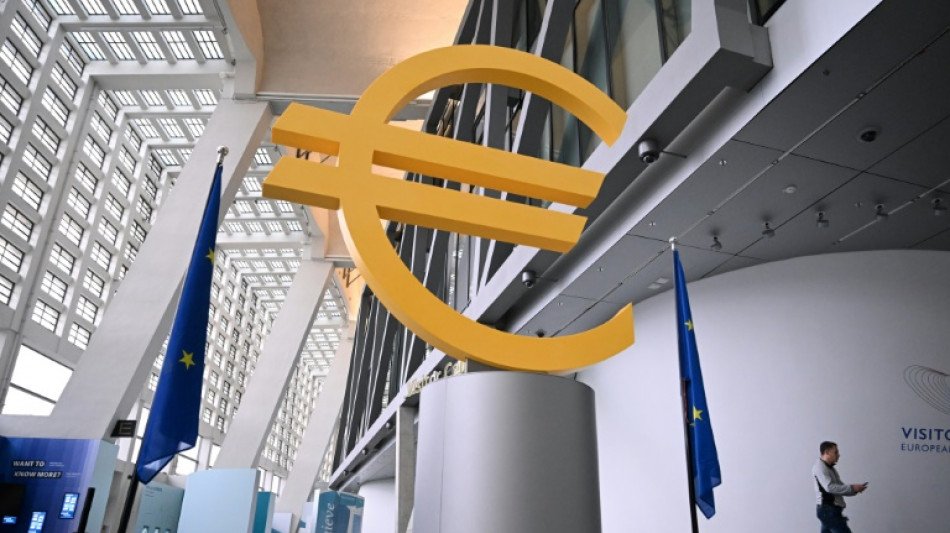
ECB to cut rates again, with a nervous eye on Trump / Photo: Kirill KUDRYAVTSEV - AFP
 USMNT Coaching Search: Guardiola, Cherundolo, and Others Named as Pochettino Replacements

 Turkish Airlines Launches Fourth Mainland China Route to Chengdu

 RSC’s ‘Julius Caesar’ Reimagined in Women’s Prison Setting for School Tour

 Thomson Reuters Integrates CUBE Regulatory Intelligence into CoCounsel Legal

 Does IRS Debt Expire? Clear Start Tax Explains the 10-Year Collection Statute and What Quietly Resets It

 Arrive AI Reports Third Quarter 2026 Results Highlighted by Revenue Growth and Expanded Partnerships

 Mako Mining Reports Q3 2026 Financial Results, Including Adjusted EBITDA(1) of US$30.3 million and EPS of US$0.19/share

 InterContinental Hotels Group PLC Announces Transaction in Own Shares - November 13

 Below Deck alumnus João Franco and brother arrested after fatal Turkey fight

 Thousands of Urban Homes Left Without High-Speed Internet Due to Broadband Blackspots

 Bunnie XO artwork taken down from Jelly Roll’s Nashville bar

 Arlington sentinel rebukes Pete Hegseth entourage for laughter near memorial

 Kylie Jenner employee describes closet ordeal and pepper-spray incident

 Davante Adams injury deepens Los Angeles Rams receiver shortage

 João Franco’s earlier post draws attention after arrest over fatal Turkey brawl

 Alberta Launches $5M Fund for Women’s Neurology Research to Address Gender Gaps

Eurozone rate-setters are set to cut borrowing costs again this week, confident their efforts to lower inflation will remain on track despite the threat from US President Donald Trump's protectionist agenda.
The European Central Bank is expected to cut its benchmark deposit rate by a further quarter point to 2.75 percent on Thursday, its fourth reduction in a row.
The central bank for the 20 countries that use the euro hiked interest rates repeatedly from mid-2022 to tame soaring inflation, but is now bringing them back down as price rises slow and the eurozone economy looks weak.
There were some concerns after inflation ticked up again -- it rose to 2.4 percent in December, after having fallen below the ECB's two-percent target several months earlier.
But, despite the somewhat bumpy path towards their goal, ECB officials remain convinced they are on the right path.
"We are confident of seeing inflation at target in the course" of this year, President Christine Lagarde said last week in an interview with CNBC at the World Economic Forum in Davos.
The ECB's decision will come a day after the Federal Reserve issues its latest call, with markets expecting the US central bank to hold rates steady, while also watching for its views on the outlook under Trump.
ING bank analyst Carsten Brzeski said a reduction in borrowing costs at the ECB's meeting Thursday "looks like a no-brainer", and officials appeared to be "looking through this temporary acceleration of inflation".
Policymakers' focus has shifted in recent times to the fading economic fortunes of the eurozone, as higher borrowing costs increasingly weigh on households and businesses.
At its last meeting in December, the ECB trimmed its eurozone growth forecast for 2024 to just 0.7 percent, and also cut its estimates for the following two years.
Germany, the eurozone's biggest economy, has been a particular drag on the broader currency bloc, with its output shrinking in 2024 for the second straight year.
Rate-setters also have to navigate instability in Germany, which is heading for snap elections next month after Chancellor Olaf Scholz's coalition collapsed, and France, where a new government took office in December following the ouster of its predecessor.
- 'On autopilot' -
Adding to the uncertain outlook is the return to the White House of Trump, who has threatened sweeping tariffs on all imports into the United States, including from the EU.
Trump declared last week that the bloc, which runs a large trade surplus with the United States, treats "us very, very badly. So they're going to be in for tariffs".
Any new duties on EU exports to the world's biggest economy could hit the already stumbling eurozone hard.
Some have voiced concerns that Trump's protectionist policies could stoke inflation in the United States, which could potentially spill over into the eurozone and elsewhere.
Lagarde sought to play down these worries, telling CNBC that any "reigniting of inflation in the United States... will be an issue for the United States" and policymakers were not too worried about it impacting Europe.
Economists meanwhile see other factors that could threaten the ECB's inflation-fighting efforts, such as recent oil price rises.
Lagarde is not expected to offer too many clues about the ECB's next moves in line with the central bank's stance of recent times that they make decisions based on the latest data.
Nevertheless, HSBC predicted that the Frankfurt-based institution will be "pretty much on autopilot" in the coming months, with quarter-point cuts at this week's meeting and the next in March.
But what happens beyond then is "less certain", said Stephanie Schoenwald, economist at KfW Research, predicting the "unity" among ECB governing council members "could be over in the spring".
It was already easy to spot different views about how far to go with cuts and "what risks to European price stability emanate from US tariff policy", Schoenwald said.
L.Harper--AMWN