
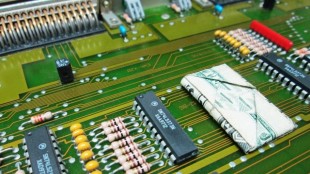
Malaysia's Silicon Valley ambitions face tough challenges / Photo: Mohd RASFAN - AFP/File
 Henan Grave Carved with Herbal Prescriptions Draws Hundreds of Visitors Daily

 USMNT Coaching Search: Guardiola, Cherundolo, and Others Named as Pochettino Replacements

 Turkish Airlines Launches Fourth Mainland China Route to Chengdu

 RSC’s ‘Julius Caesar’ Reimagined in Women’s Prison Setting for School Tour

 Thomson Reuters Integrates CUBE Regulatory Intelligence into CoCounsel Legal

 ACCESS Newswire Continues to Repurchase its Shares

 Jaguar Health to Hold Investor Webcast November 17 Regarding Q3 2026 Financials & Corporate Updates
 Does IRS Debt Expire? Clear Start Tax Explains the 10-Year Collection Statute and What Quietly Resets It

 Arrive AI Reports Third Quarter 2026 Results Highlighted by Revenue Growth and Expanded Partnerships

 Mako Mining Reports Q3 2026 Financial Results, Including Adjusted EBITDA(1) of US$30.3 million and EPS of US$0.19/share

 InterContinental Hotels Group PLC Announces Transaction in Own Shares - November 13

 Vulcan Minerals Inc. - Review and Update on Affiliated Company Atlas Salt Inc.

 Integrated BioPharma Reports Results for its Quarter Ended September 30, 2026

 SMX Puts American Innovation to Work in the New Era of Artificial Intelligence
 Foundation Software Explores How Contractors Can Prepare for the AI-Driven Construction Boom

 Trustpoint Xposure Launches Program to Help Startup Founders Check How AI Search Platforms Describe Their Companies

 MARS Energy Group Adds Jigar Shah to Advisory Board to Accelerate Battery Storage Growth

 SMX Brings American Ingenuity to the Next Frontier of Artificial Intelligence

 Ole Miss inquiry expands after video and monkey-noise allegations

 General Hospital actor Randall England dies at 75

 London museum removes Russell Brand hair exhibit after rape conviction

 Yella Beezy sentenced to life for arranging rapper Mo3’s murder

Malaysia is making great strides in its effort to become a major player in the global semiconductor industry as it looks to capitalise on a surge in demand driven by the AI explosion but analysts warn it faces headwinds.
Malaysia's signing of a major deal with British chip giant Arm this month was the latest step towards achieving the country's goal of producing its own top-end chips in the next five to seven years.
But experts say internal constraints such as a talent crunch, funding problems and other supply chain gaps are key hurdles the country must overcome if it is to compete with top regional industry giants such as Taiwan, South Korea and Japan.
Shafiq Kadir, an equity analyst at CGS International, said local integrated circuit (IC) design houses had narrow access to large capital, and lacked a strong track record and an established pool of experienced engineers.
"We still lack sufficient talent, as our tertiary education is less prepared in producing graduates with the right skill set," Shafiq told AFP.
Malaysia Semiconductor Industry Association president Wong Siew Hai also said there was a "shortage of those suitable for the specific experience and skill sets that we are looking for".
Although there are experienced Malaysians who have worked with multinational firms, many of them chose to work abroad for better pay and opportunities, among other factors, Wong said.
"We lose an average 15 percent of our talent in the semiconductor industry every year to brain drain," he told AFP.
In the deal signed on March 5, Malaysia will pay Softbank-owned Arm $250 million over a decade to access its intellectual property, including seven high-end chip design blueprints and other technology.
The aim is to help Malaysia move into more value-added production such as wafer fabrication and IC design.
The deal also includes the training of 10,000 local semiconductor engineers, while Arm will establish its first office in Southeast Asia in Kuala Lumpur.
- 'White elephants' -
Farlina Said, a cyber and technology policy fellow at the Institute of Strategic and International Studies Malaysia, said building semiconductor ecosystems would require time and careful planning.
"These would have to be mapped against resource availability and market conditions. Building the infrastructure without sufficient players can create white elephants for the industry," she told AFP.
"Moving up the value chain means first, Malaysia has to find means of transferring knowledge to develop local capacities.
"Second, funds are needed to develop the ecosystem surrounding the knowledge transfer. This includes technology transfers, talent pipelines and R&D sustainability," she added.
Wong, the industry group chief, said the government's $5.3-billion allocation over the next decade to upscale Malaysia's semiconductor sector is small compared with state investments by China and the United States.
Shafiq, the analyst, said the tools and equipment required for chip production could run into the billions of dollars -- apart from the need for highly skilled engineers and operators.
"Achieving a certain level of production yield on those high-end chips... has proven to be very challenging even for established fabs like Samsung and Intel," he said.
- 2030 sales target -
Expert Farlina said competing with semiconductor powerhouses in the region will not be a walk in the park as they have "developed the ecosystems to support technological leadership in the past few decades".
Malaysia, however, is not starting from scratch, the analysts said.
The country has long been a key player in the chips sector, with its northern state of Penang -- often called the nation's Silicon Valley -- at the heart of its success, although focused on the back end of the industry such as assembly and testing.
"Key (multinational corporations) such as Intel and AMD both have integrated circuit design operations in Penang... and this has somewhat generated the development of IC design among local engineers for decades," Shafiq said.
"We stand to benefit from this as more capital and focus are being put into the IC design area."
Malaysia accounts for an estimated 13 percent of global back-end manufacturing, according to German tech firm Bosch.
And Malaysia's semiconductor exports were valued at 387.98 billion ringgit ($87.48 billion) in 2024, the Malaysia External Trade Development Corporation said, making the country one of the world's top 10 chip exporters.
The industry association is aiming for the country's chip exports to reach $270 billion by 2030, which Wong said would allow the country to "maintain its relative position in the world" as a top semiconductor exporter.
O.M.Souza--AMWN