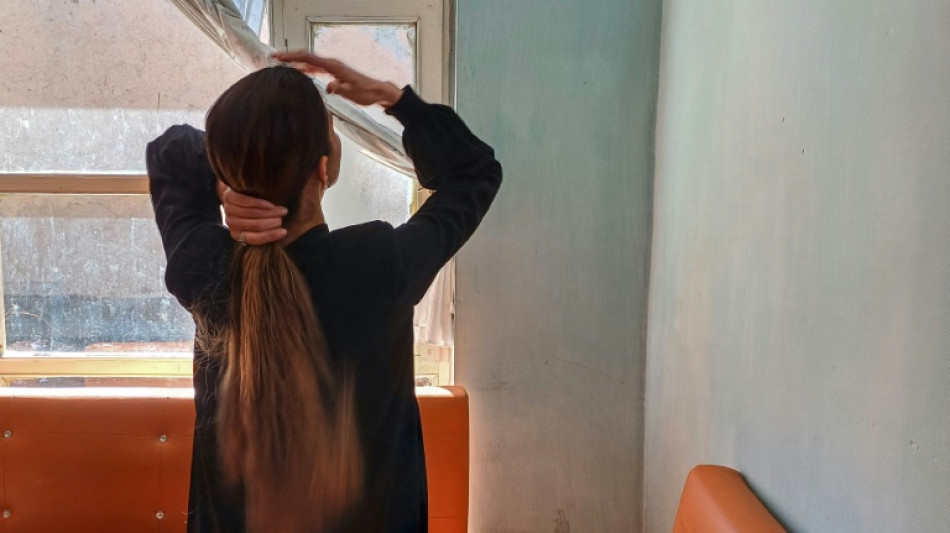
Afghan women risk Taliban wrath over hair trade / Photo: Claire GOUNON - AFP
 Ella Stiller on 'Cupertino' and Her Stance on AI

 North Dakota Enacts Bipartisan Insulin Price Cap Amid National Push

 Basil Tuma Scores First Senior Goal as Malta Draws with Ten-Man Eswatini

 Rock & Roll Hall of Fame Inductees Announced; Attendance List Shrinks

 Xenetic Biosciences Reports Third Quarter 2026 Financial Results and Highlights Strategic Business Updates

 Does IRS Debt Expire? Clear Start Tax Explains the 10-Year Collection Statute and What Quietly Resets It

 Digi Power X Reports Q3 2026 Revenue Up 85% and AI Revenue Up Over 400% Compared to Q2

 eXoZymes to Host Third Quarter 2026 update Conference Call on Thursday, November 19, 2026

 How Families Plan and Save for Holiday Travel
 ACCESS Newswire Continues to Repurchase its Shares

 SMX Brings American Ingenuity to the Next Frontier of Artificial Intelligence

 The Epomaker Alice40 Brings Mahjong Sound and Sunset Style to Ergonomic Typing

 DataMEDS AI Reports 50% Sequential Revenue Growth in Third Quarter 2026 From Second Quarter 2026, Delivers Net Profit Per Share of $2.72 and Provides Business Update

 Below Deck alumnus João Franco and brother arrested after fatal Turkey fight

 Thousands of Urban Homes Left Without High-Speed Internet Due to Broadband Blackspots

 Bunnie XO artwork taken down from Jelly Roll’s Nashville bar

 Arlington sentinel rebukes Pete Hegseth entourage for laughter near memorial

 Kylie Jenner employee describes closet ordeal and pepper-spray incident

 Davante Adams injury deepens Los Angeles Rams receiver shortage

Until Taliban authorities took power in Afghanistan, women like Fatima were able to freely sell their hair to be made into wigs, bringing in crucial cash.
But a ban last year has forced the 28-year-old and others to covertly trade hair -- collected from shower drains or the salon floor -- braving the risk of punishment one strand at a time.
"I need this money," said Fatima, 28, one of the few women still in paid private employment in Kabul after the Taliban regained control in 2021.
"I can treat myself to something or buy things for the house."
The woman, who withholds her last name for security reasons, sells every 100 grams of hair for little more than $3, a small addition to her monthly salary of $100.
Buyers who want to export the locks for wig production abroad "would knock on our doors to collect" the hair, she said.
One of those buyers is a man, who also requested anonymity, sending the manes to Pakistan and China from Afghanistan, one of the world's poorest countries.
Taliban authorities have cracked down on the rights of women, imposing what the UN calls a "gender apartheid".
They banned women and girls from universities and schools, effectively strangling their employment hopes.
Women have also been barred from parks and gyms, while beauty salons have been shut down.
- 'Not allowed' -
Last year, Taliban authorities imposed vice and virtue laws regulating everyday life for men and women, including banning sales of "any part of the human body" including hair.
They have not said what the punishment for violations would be.
"We must respect the appearance that God has given to humans and preserve their dignity," Ministry for Promotion of Virtue and Prevention of Vice (PVPV) spokesman Saiful Islam Khyber told AFP.
He said the trading of hair had become "normalised" in the country and that now "selling body parts is not allowed."
Hair sales are so sensitive that the ministry which handles morality issues burned nearly a ton of human strands in Kabul province in January.
The PVPV said in a statement it burned the batch "to protect Islamic values and human dignity".
The restrictions have not deterred Fatima, however.
During prayer times, when Taliban officials and forces attend the mosque, Fatima sneaks to a Kabul waste site to hand over her cache of tresses.
The few extra dollars are significant, with 85 percent of Afghans living on less than a dollar a day, according to the United Nations Development Programme (UNDP).
- Secret salon -
At a secret salon in Kabul, two worn-out leather chairs sit in a small, cold room where hairdresser Narges now only receives about four customers a week.
Before the 2021 takeover, the 43-year-old widowed hairdresser used to give crop cuts to five to six clients every day.
Now, only the wealthiest of her customers brave visiting the salon, and even they sometimes ask if they can take valuable spare hair home with them.
"They're the only ones who can still care about beauty," she said.
For others, the threat of a Taliban punishment is too much to risk.
Wahida, a 33-year-old widow whose husband was a soldier killed in 2021, has a constant worry about how she will feed her three children.
She still collects hair that has fallen from her eight-year-old daughter's head and her own, with strands from the root more valuable than those cut with scissors.
The unemployed Afghan woman, who now relies almost entirely on charity, stuffs them in a plastic bag to keep them for a potential sale later.
"I had a glimmer of hope when I used to sell my hair. Now that it's banned, I'm devastated. I'm hoping buyers will come back to my door," she said, sitting in her home.
"I know there are places to sell. But I am afraid of getting caught there."
A.Jones--AMWN