Trump spotlight divides S.Africa's Afrikaners / Photo: MARCO LONGARI - AFP/File
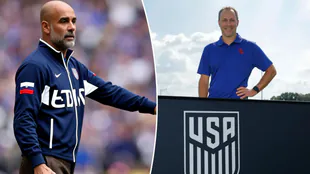 USMNT Coaching Search: Guardiola, Cherundolo, and Others Named as Pochettino Replacements
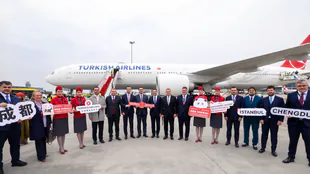 Turkish Airlines Launches Fourth Mainland China Route to Chengdu

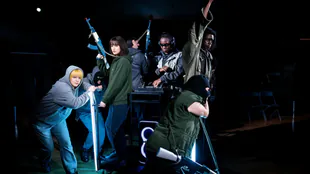 RSC’s ‘Julius Caesar’ Reimagined in Women’s Prison Setting for School Tour

 Thomson Reuters Integrates CUBE Regulatory Intelligence into CoCounsel Legal

 Does IRS Debt Expire? Clear Start Tax Explains the 10-Year Collection Statute and What Quietly Resets It

 Arrive AI Reports Third Quarter 2026 Results Highlighted by Revenue Growth and Expanded Partnerships
 Mako Mining Reports Q3 2026 Financial Results, Including Adjusted EBITDA(1) of US$30.3 million and EPS of US$0.19/share

 InterContinental Hotels Group PLC Announces Transaction in Own Shares - November 13

 Below Deck alumnus João Franco and brother arrested after fatal Turkey fight

 Thousands of Urban Homes Left Without High-Speed Internet Due to Broadband Blackspots

 Bunnie XO artwork taken down from Jelly Roll’s Nashville bar

 Arlington sentinel rebukes Pete Hegseth entourage for laughter near memorial

 Kylie Jenner employee describes closet ordeal and pepper-spray incident

 Davante Adams injury deepens Los Angeles Rams receiver shortage

 João Franco’s earlier post draws attention after arrest over fatal Turkey brawl

 Alberta Launches $5M Fund for Women’s Neurology Research to Address Gender Gaps
Country music and the aroma of pancakes enveloped the "Boeremark", or farmer's market, outside South Africa's capital Pretoria where thousands of Afrikaners browsed on a Saturday morning.
Signs written in Afrikaans advertised traditional foods: braided "koeksister" doughnuts, cinnamon-sprinkled "melkkos" porridge, strips of "biltong" cured meat.
There were stands of books in Afrikaans, a language linked to Dutch, and racks of khaki clothes associated with Afrikaner farmers known as "boere".
The peaceful scene was a far cry from claims of fear and persecution that have reached Washington, leading President Donald Trump to offer refugee status to the white Afrikaner minority in February and thousands to apply.
But, despite the mellow mood, many at the market told AFP they did feel threatened in post-apartheid South Africa.
As "a white person and a boer", she was a victim of "reverse racism", said jewellery vendor Cesere Smith, 54. "There is trouble coming," she told AFP vaguely, welcoming Trump's intervention.
"Every person should be proud of who they are, but here we must feel guilty -- and that’s not right," Smith told AFP.
White Afrikaners are predominantly descendants of Dutch settlers who arrived at the tip of Africa more than three centuries ago. Today they make up most of South Africa's 7.3 percent white population.
Mainly Afrikaner-led governments imposed the race-based apartheid system that denied the black majority political and economic rights until it was voted out in 1994.
Under apartheid, whites benefited from reserved access to jobs, education, land and markets.
The privilege has a legacy. For example, unemployment among white South Africans stands at more than six percent compared to more than 35 percent for the black population.
- 'Phantom pain' -
Prominent journalist and author, Max du Preez, was scathing of complaints of persecution among his fellow Afrikaners.
"Afrikaners are far better off materially and culturally today than in 1994," he told AFP.
Afrikaans culture is thriving, he said, adding that it is the only local language with four television channels and an array of newspapers, magazines and festivals.
The fear of white persecution "is a phantom pain: it's not about what is actually happening, but about what could happen", he said.
"Nothing is coming. The last thing that will happen here is a race war."
Afrikaner "disillusion" grew as the post-apartheid economy struggled with corruption and governance, said professor Christi van der Westhuizen, author of several books on Afrikaner identity.
This made many susceptible to "divisive" narratives pushed by right-wing groups with roots in apartheid, even if "significant sections of Afrikaners remain vehemently opposed" to these ideas, she said.
Such groups have found a sympathetic audience in the United States, where Trump is close to conservative South African-born billionaire Elon Musk.
Their claims that white farmers are targeted for murder -- despite official data that most victims of killings are young black men in urban areas -- have morphed into a myth of a "white genocide", repeated by Trump at the weekend.
Another sore point is an education bill that some believe will limit Afrikaans learning at schools. Also under fire are government attempts to redress apartheid-era discrimination through regulations on business, labour and property ownership.
- Integration -
On a recent Monday, five men -- black and white -- sat around a plate of biltong in a church room in Johannesburg while discussing their mission to bring South Africa's races together.
"This narrative of victimhood makes me sick. The people who were victims here are millions of black people," said Trevor Ntlhola, 57, a pastor and former anti-apartheid activist.
"It takes me back to the 1980s when I preached in white churches against apartheid," said pastor Alexander Venter, 70, his voice breaking.
"The dismantling of apartheid let white people off lightly. A lot of racial conditioning was just buried, and now it’s all resurfacing," he said.
"Trump has given a microphone to radical whites all over the world," added Schalk van Heerden, 47, co-founder of the Betereinders ("Better Enders") movement of Afrikaners which has the slogan "Be better not bitter".
Right-wing groups think Afrikaans culture can only be preserved through self-governance and separation, said Betereinders co-founder Johan Erasmus, ideas that evoke apartheid principles of "separateness".
"Our solution is integration," he said. Many Afrikaners want to be part of "the story of the South African project" of post-apartheid reconciliation.
"People have been betting against us (South Africa) for the last 30 years," he said. But "we are still here."
L.Mason--AMWN