
The Trump adviser who wants to rewrite the global financial system / Photo: Kayla Bartkowski - GETTY IMAGES NORTH AMERICA/AFP/File
 USMNT Coaching Search: Guardiola, Cherundolo, and Others Named as Pochettino Replacements

 Turkish Airlines Launches Fourth Mainland China Route to Chengdu

 RSC’s ‘Julius Caesar’ Reimagined in Women’s Prison Setting for School Tour

 Thomson Reuters Integrates CUBE Regulatory Intelligence into CoCounsel Legal

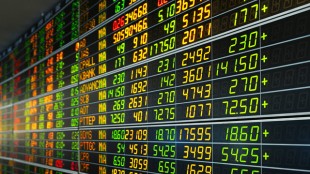 Does IRS Debt Expire? Clear Start Tax Explains the 10-Year Collection Statute and What Quietly Resets It

 Arrive AI Reports Third Quarter 2026 Results Highlighted by Revenue Growth and Expanded Partnerships

 Mako Mining Reports Q3 2026 Financial Results, Including Adjusted EBITDA(1) of US$30.3 million and EPS of US$0.19/share

 InterContinental Hotels Group PLC Announces Transaction in Own Shares - November 13

 Below Deck alumnus João Franco and brother arrested after fatal Turkey fight

 Thousands of Urban Homes Left Without High-Speed Internet Due to Broadband Blackspots

 Bunnie XO artwork taken down from Jelly Roll’s Nashville bar

 Arlington sentinel rebukes Pete Hegseth entourage for laughter near memorial

 Kylie Jenner employee describes closet ordeal and pepper-spray incident

 Davante Adams injury deepens Los Angeles Rams receiver shortage

 João Franco’s earlier post draws attention after arrest over fatal Turkey brawl

 Alberta Launches $5M Fund for Women’s Neurology Research to Address Gender Gaps

One of the architects of US President Donald Trump's tariff blitz has advocated a shake-up of the global trade and financial systems, centred on a radical strategy to weaken the dollar.
Stephen Miran, chairman of the White House Council of Economic Advisers, outlined his idea in a 41-page essay titled "A User's Guide to Restructuring the Global Trading System".
Little known until now, the Harvard-trained economist's paper -- published in November after Trump's election win -- has garnered attention in recent weeks due to its emphasis on tariffs and a weak dollar.
Some analysts say the essay provides the intellectual rationale for Trump's trade war.
- 'Mar-a-Lago Accord' -
For Miran, tariffs and moving away from a strong dollar could have "the broadest ramifications of any policies in decades, fundamentally reshaping the global trade and financial systems".
Miran's essay argues that a strong dollar makes US exports less competitive and imports cheaper, while handicapping American manufacturers as it discourages investing in building factories in the United States.
"The deep unhappiness with the prevailing economic order is rooted in persistent overvaluation of the dollar and asymmetric trade conditions," Miran wrote.
The dollar is traditionally a safe haven currency for investors in the event of war or crisis, and it has slumped in recent days over concerns about Trump's trade policies.
It is used by used by foreign companies and governments to buy oil, aircraft and other goods at dollar-denominated prices.
The strong dollar tends to make US government bonds attractive to foreign investors, giving the United States an almost unlimited capacity to borrow.
Miran called for a pact similar to that of the 1985 Plaza Accord, signed in New York by the United States, Britain, France, West Germany and Japan.
The landmark agreement, named after the New York hotel where it was inked, allowed for a controlled weakening of the then-overvalued dollar to reduce the US trade deficit.
Miran said the new agreement could be called the "Mar-a-Lago Accord", after Trump's Florida resort.
"President Trump views tariffs as generating negotiating leverage for making deals," Miran wrote.
"It is easier to imagine that after a series of punitive tariffs, trading partners like Europe and China become more receptive to some manner of currency accord in exchange for a reduction of tariffs."
- Replenish government coffers -
To lower the value of the US currency, Miran said US partners could sell dollars in their possession.
Another proposal would be to swap the Treasury bonds held by creditors -- usually borrowed over a few years -- for 100-year debt.
As a result, the US would not have to repay them regularly, and would limit the potential rise in interest rates caused by fears over such a financial upheaval on the markets, Miran said.
He also suggested imposing a "user fee" on foreign official holders of Treasury securities, as a way to replenish government coffers.
Countries that cooperate could see their tariffs lowered and could continue to rely on the US military umbrella, he said.
- 'De facto default' -
Vicky Redwood, senior economic adviser at UK-based Capital Economics, said forcing US lenders to swap bonds would amount to a "de facto default on US debt".
Charging a user fee on Treasury repayments abroad seemed "highly unrealistic", experts at Swiss bank Pictet said in a note, and "could be interpreted as breach of contract, or akin to a default".
For Eric Monnet, professor at the Paris School of Economics, it all depends on the content of the contract.
"If the US manages to get (other) countries to agree, legally it can be done without default," he said at a recent conference.
- A risky plan -
Economists have largely been very critical of Miran's ideas.
"If the US really does want to reduce its trade deficit, there are better ways to do it," Redwood said.
She also pointed to the risk of soaring US borrowing rates, which have taken off in recent days, a sign of growing concern about US economic policy.
The potential "Mar-a-Lago Accord is misguided from both a theoretical and practical perspective", Pictet experts wrote in their note, questioning Miran's thinking on the origins of the dollar's overvaluation.
Adam Slater, an economist at British firm Oxford Economics, told AFP that in order to significantly narrow the trade deficit, the dollar would likely have to depreciate by more than 20 percent.
Y.Nakamura--AMWN