
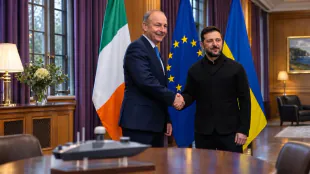
New Europe push to curb children's social media use / Photo: Antonin UTZ - AFP/File
 Basil Tuma Scores First Senior Goal as Malta Draws with Ten-Man Eswatini

 Rock & Roll Hall of Fame Inductees Announced; Attendance List Shrinks

 How Families Plan and Save for Holiday Travel
 Ole Miss inquiry expands after video and monkey-noise allegations

 General Hospital actor Randall England dies at 75

 London museum removes Russell Brand hair exhibit after rape conviction

 Yella Beezy sentenced to life for arranging rapper Mo3’s murder

 Authorities to identify Montauk Mary and five other Long Island cold-case victims

 Barbie sequel negotiations stall over reported $25 million pay packages

 Bath & Body Works launches buy-one-get-one-free candle offer

 Itlu Arjuna receives U/A certificate ahead of theatrical release

 Niraj Kumar earns Los Angeles Olympic quota with 50m rifle bronze

 India extends micro-credit guarantee plan for five years

 Pradeep Antony, Smeha Manimegalai portray secret spouses in Mr & Mrs Office

 Woman barred from every Greggs outlet after series of offences

 Ketchup packets link suspect to break-in at Eddie Rocket’s restaurant

 US Adds 165,000 Jobs as Unemployment Falls to 4.1%

 China's Singles' Day Exposes Persistent Consumer Caution

 OPEC Says Oil Output Is Near Prewar Levels Despite Shipping Disruptions

 Bank of England Raises Interest Rate to 4% as Energy Risks Intensify

 Euro-Area Inflation Reaches 4% as Energy Prices Jump

 Irish police prepare for further hoax bomb threats after hundreds of schools targeted

 RBA Inflation Target Origins: Why Australia Chose a Range Over Zero
From dangerous diet tips to disinformation, cyberbullying to hate speech, the glut of online content harmful to children grows every day. But several European countries have had enough and now want to limit minors' access to social media.
The European Union already has some of the world's most stringent digital rules to rein in Big Tech, with multiple probes ongoing into how platforms protect children -- or not.
There are now demands for the EU to go further as a rising body of evidence shows the negative effects of social media on children's mental and physical health.
Backed by France and Spain, Greece has spearheaded a proposal for how the EU should limit children's use of online platforms as fears mount over their addictive nature.
They will present the plan on Friday to EU counterparts in Luxembourg "so that Europe can take the appropriate action as soon as possible", Greek Digital Minister Dimitris Papastergiou said.
The proposal includes setting an age of digital adulthood across the 27-country EU, meaning children will not be able to access social media without parental consent.
Since the proposal was published last month, other countries have expressed support including Cyprus and Denmark -- which takes over the rotating EU presidency in July.
Danish officials say the issue will be a priority during their six-month presidency.
France has led the way in cracking down on platforms, passing a 2023 law requiring them to obtain parental consent for users under the age of 15.
But the measure has not received the EU green light it needs to come into force.
France also gradually introduced requirements this year for all adult websites to have users confirm their age to prevent children accessing porn -- with three major platforms going dark this week in anger over the move.
Also under pressure from the French government, TikTok on Sunday banned the "#SkinnyTok" hashtag, part of a trend promoting extreme thinness on the platform.
- Real age verification -
Greece says its aim is to protect children from the risks of excessive internet use.
The proposal does not say at what age digital adulthood should begin but Papastergiou said platforms should know users' real ages "so as not to serve inappropriate content to minors".
France, Greece and Spain expressed concern about the algorithmic design of digital platforms increasing children's exposure to addictive and harmful content -- with the risk of worsening anxiety, depression and self-esteem issues.
The proposal also blames excessive screen time at a young age for hindering the development of minors' critical and relationship skills.
They demand "an EU-wide application that supports parental control mechanisms, allows for proper age verification and limits the use of certain applications by minors".
The goal would be for devices such as smartphones to have in-built age verification.
The European Commission, the EU's digital watchdog, wants to launch an age-verification app next month, insisting it can be done without disclosing personal details.
The EU last month published draft guidelines for platforms to protect minors, to be finalised once a public consultation ends this month, including setting children's accounts to private by default, and making it easier to block and mute users.
Those guidelines are non-binding, but the bloc is clamping down in other ways.
- EU investigations -
It is currently investigating Meta's Facebook and Instagram, and TikTok under its mammoth content moderation law, the Digital Services Act (DSA), fearing the platforms are failing to do enough to prevent children accessing harmful content.
In the Meta probe, the EU fears the platform's age-verification tools may not be effective.
And last week, it launched an investigation into four pornographic platforms over suspicions they are failing to stop children accessing adult content.
Separately, the EU has been in long-running negotiations on a law to combat child sexual abuse material, but the proposal has been mired in uncertainty, with worries from some countries that it would allow authorities to access encrypted communications.
The legal proposal has pitted proponents of privacy against those working to protect children -- and despite repeated attempts, it has failed to get EU states' approval.
D.Sawyer--AMWN