
Asian countries most vulnerable to Strait of Hormuz blockade / Photo: Karim SAHIB - AFP/File
 RSC’s ‘Julius Caesar’ Reimagined in Women’s Prison Setting for School Tour

 Thomson Reuters Integrates CUBE Regulatory Intelligence into CoCounsel Legal

 Ole Miss inquiry expands after video and monkey-noise allegations

 General Hospital actor Randall England dies at 75

 London museum removes Russell Brand hair exhibit after rape conviction

 Yella Beezy sentenced to life for arranging rapper Mo3’s murder

 Authorities to identify Montauk Mary and five other Long Island cold-case victims

 Barbie sequel negotiations stall over reported $25 million pay packages

 Bath & Body Works launches buy-one-get-one-free candle offer

 Itlu Arjuna receives U/A certificate ahead of theatrical release

 Niraj Kumar earns Los Angeles Olympic quota with 50m rifle bronze

 India extends micro-credit guarantee plan for five years

 Pradeep Antony, Smeha Manimegalai portray secret spouses in Mr & Mrs Office

 Woman barred from every Greggs outlet after series of offences

 Ketchup packets link suspect to break-in at Eddie Rocket’s restaurant

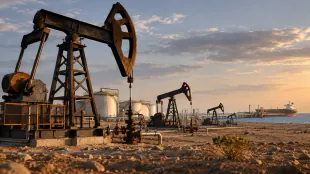 OPEC Says Oil Output Is Near Prewar Levels Despite Shipping Disruptions

 China's Singles' Day Exposes Persistent Consumer Caution
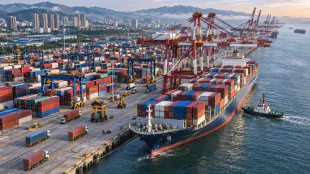
 Energy Costs Push OECD Inflation Up to 4.5%

 US Adds 165,000 Jobs as Unemployment Falls to 4.1%
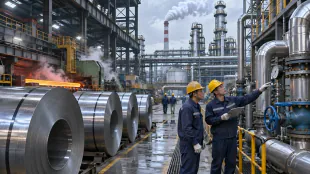
 Euro-Area Inflation Reaches 4% as Energy Prices Jump

 Irish police prepare for further hoax bomb threats after hundreds of schools targeted

 RBA Inflation Target Origins: Why Australia Chose a Range Over Zero

 Sister recounts fatal machete attack as Irish murder trial continues

 HoloCoder technology promises brighter smartphone images and 3D depth data

Around 84 percent of oil passing through the Strait of Hormuz is destined for Asia, leaving the economies of China, India, South Korea and others vulnerable should Iran blockade the crucial trading route over US strikes on its nuclear sites.
Around 14.2 million barrels of crude oil and 5.9 million barrels of other petroleum products pass through the strait per day -- representing around 20 percent of global production in the first quarter, according to the US Energy Information Administration (EIA).
And crude oil from Saudi Arabia, the UAE, Iraq, Kuwait, Qatar and Iran almost exclusively passes through the corridor.
Here are the main Asian countries where oil exported via the strait is destined:
- China -
More than half of the oil imported by East Asia passes through the Strait of Hormuz, experts estimate.
China is one of the largest buyers, importing 5.4 million barrels of crude oil a day through Hormuz in the first quarter this year, according to the EIA.
Saudi Arabia is China's second-largest supplier of crude oil, accounting for 15 percent of its total oil imports -- 1.6 million barrels a day.
China also buys more than 90 percent of Iran's oil exports, according to the analysis firm Kpler.
It imported 1.3 million barrels of Iranian crude oil a day in April, down from a five-month high in March.
- India -
India is highly dependent on the Strait of Hormuz, importing 2.1 million barrels of crude a day through the corridor in the first quarter, EIA data shows.
Around 53 percent of India's imported oil in early 2025 came from Middle Eastern suppliers, particularly Iraq and Saudi Arabia, local media reported.
Wary of an escalating conflict in the Middle East, New Delhi has increased its imports of Russian oil over the past three years.
"We have been closely monitoring the evolving geopolitical situation in the Middle East since the past two weeks," India's Minister of Petroleum and Natural Gas Hardeep Singh Puri said on Sunday.
"We have diversified our supplies in the past few years and a large volume of our supplies do not come through the Strait of Hormuz now," he wrote on X, adding "We will take all necessary steps to ensure stability of supplies of fuel to our citizens."
- South Korea -
Around 68 percent of South Korea's crude oil imports pass through the Strait of Hormuz -- 1.7 million barrels a day this year, according to the EIA.
South Korea is particularly dependent on its main supplier Saudi Arabia, which last year accounted for a third of its oil imports.
Seoul's trade and energy ministry said there have been "no disruptions so far in South Korea's crude oil and LNG imports" but "given the possibility of a supply crisis", officials were "planning for potential disruptions in the Strait of Hormuz".
"The government and industry stakeholders have prepared for emergencies by maintaining a strategic petroleum reserve equivalent to about 200 days of supply," the ministry said in a statement.
- Japan -
Japan imports 1.6 million barrels of crude oil a day through the Strait of Hormuz, the EIA says.
Japanese customs data showed 95 percent of crude oil imports last year came from the Middle East.
The country's energy freight companies are readying for a potential blockade of the strait.
"We're currently taking measures to shorten as much as possible the time spent by our vessels in the Gulf," shipping giant Mitsui OSK told AFP.
- Others -
Around 2 million barrels of crude oil passing through the Strait of Hormuz each day in the first quarter were destined for other parts of Asia -- particularly Thailand and the Philippines -- as well as Europe (0.5 million barrels) and the United States (0.4 million barrels).
- Limited alternatives -
Asian countries could diversify their oil suppliers, but it is difficult to replace the large volumes coming from the Middle East.
In the short term, "elevated global oil inventories, OPEC+'s available spare capacity, and US shale production all could provide some buffer", experts at MUFG Bank said.
"However, a full closure of the Hormuz Strait would still impact on the accessibility of a major part of this spare production capacity concentrated in the Persian Gulf," they said.
Saudi Arabia and the UAE have infrastructure to bypass the strait, potentially mitigating disruptions, but their transit capacity remains very limited -- around 2.6 million barrels a day.
And the Goreh-Jask pipeline built by Iran to export via the Gulf of Oman, which has been inactive since last year, has a maximum capacity of only 300,000 barrels per day, according to the EIA.
burs-jug/dhw/mtp
H.E.Young--AMWN