
Nigerian farms battle traffic, developers in downtown Abuja / Photo: OLYMPIA DE MAISMONT - AFP
 RSC’s ‘Julius Caesar’ Reimagined in Women’s Prison Setting for School Tour

 Thomson Reuters Integrates CUBE Regulatory Intelligence into CoCounsel Legal

 Ole Miss inquiry expands after video and monkey-noise allegations

 General Hospital actor Randall England dies at 75

 London museum removes Russell Brand hair exhibit after rape conviction

 Yella Beezy sentenced to life for arranging rapper Mo3’s murder

 Authorities to identify Montauk Mary and five other Long Island cold-case victims

 Barbie sequel negotiations stall over reported $25 million pay packages

 Bath & Body Works launches buy-one-get-one-free candle offer

 Itlu Arjuna receives U/A certificate ahead of theatrical release

 Niraj Kumar earns Los Angeles Olympic quota with 50m rifle bronze

 India extends micro-credit guarantee plan for five years

 Pradeep Antony, Smeha Manimegalai portray secret spouses in Mr & Mrs Office

 Woman barred from every Greggs outlet after series of offences

 Ketchup packets link suspect to break-in at Eddie Rocket’s restaurant

 OPEC Says Oil Output Is Near Prewar Levels Despite Shipping Disruptions

 China's Singles' Day Exposes Persistent Consumer Caution
 Energy Costs Push OECD Inflation Up to 4.5%
 US Adds 165,000 Jobs as Unemployment Falls to 4.1%
 Euro-Area Inflation Reaches 4% as Energy Prices Jump
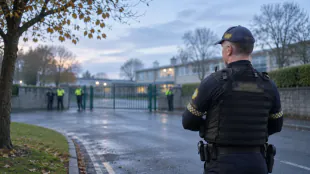 Irish police prepare for further hoax bomb threats after hundreds of schools targeted

 RBA Inflation Target Origins: Why Australia Chose a Range Over Zero

 Sister recounts fatal machete attack as Irish murder trial continues

 HoloCoder technology promises brighter smartphone images and 3D depth data

Under the din of traffic from the highway bridge that cuts over his fields, Bala Haruna inspects corn, cassava and okra on his family farm.
A pump pulls up water from a nearby stream and is diverted through trenches dug through cropland wedged between four-lane roads -- fields which were here long before the nearby hotel, the imposing national mosque or any of the high-rises that make up downtown Abuja were even dreamed up.
"There were no buildings here," Haruna, 42, told AFP, reminiscing over his childhood as birds chirped and frogs croaked.
The urban farms dotting Nigeria's capital show the limits of the top-down management the planned city is known for -- oases scattered around pockmarked downtown that has long expanded outward faster than it has filled in.
They owe much of their existence to the fact that they lie in hard-to-develop gulches along creek beds. Even roads built through them over the years tended to be elevated highway overpasses.
That fragile balancing act, however, is increasingly under threat, as developers fill in farmland despite regulations protecting these areas as rare green spaces in a city known for concrete sprawl.
On the other side of the overpass, the future has arrived: the vegetation abruptly stops and temperatures suddenly rise over flattened fields razed by construction crews.
Local farmers said the people who took the land three years ago provided no documentation and only gave the eight of them 300,000 naira to split -- a sum worth only $190 today after years of rampant inflation.
Much of the farmland in and around downtown is supposed to be a municipal green space, with neither farms nor buildings on it.
But enforcement of the decades-old Abuja master plan is ripe with abuse and lack of enforcement, said Ismail Nuhu, urban governance researcher who did his PhD on the capital's urban planning.
Adding to the sense of precarity is that the land, on paper, belongs to the government.
"Politicians still use it to grab lands, just to say, 'Oh, according to the master plan, this is not to be here'," no matter what the document actually says, he told AFP, adding that, technically, even the presidential villa is not located where it is supposed to be.
Nyesom Wike, the minister of the Federal Capital Territory, which includes Abuja, recently told reporters he would "enforce" the 70s-era master plan by building roads and compensating and evicting settlements that stand in the way.
FCT officials including Wike's spokesman did not respond to requests for comment.
- Urbanising country, not enough jobs -
The farms have provided steady employment -- a lifeline for some as the rapidly urbanising country fails to produce enough jobs. A recent opening for 10,000 government jobs saw 450,000 applicants, according to local media.
"Having a green space... in a very thick, populated city like Abuja does a lot of good," said retiree Malik Kuje Guni, who started farming three years ago to supplement his pension.
While tens of thousands of residents pass by the farms each day without second thought, Guni, when he was working as a civil servant, would often come down to visit, enjoying the shade and fresh air.
Now tilling a potato plot of his own, "I can come down, work, sweat," the 63-year-old said. "I have hope something will come out of it."
A few blocks over, squat, informal houses made of wood and sheet metal give way to a field of sugarcane, corn and banana trees. Glass-panelled highrises, half-finished construction and the imposing Bank of Industry tower above.
The crops give way to land cleared by developers a few months ago, some of whom pushed into Godwin Iwok's field and destroyed his banana trees.
Iwok, who quit his security job 22 years ago to make more money as a farmer, has had parts of his fields destroyed twice in the past two years, neither time with compensation.
To Guni, the farms represent the city's rural heritage. Despite decades of government promises to relocate Nigeria's capital from the crowded, congested mega-city of Lagos, the move only occurred in 1991.
But neither Iwok, 65, nor Haruna want their children to continue their increasingly precarious line of work.
"I wouldn't want my children to stand under the sun as I did," Iwok told AFP.
"I only use what I'm getting here... to make sure my children go to school."
L.Miller--AMWN