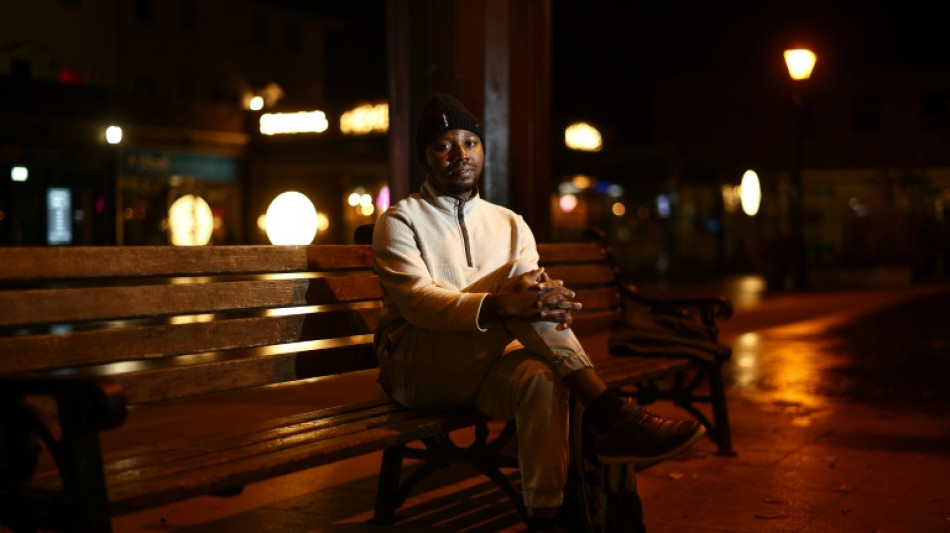
'We are ghosts': Britain's migrant night workers / Photo: HENRY NICHOLLS - AFP
 Meta plans 10% layoffs as AI spending soars: source
 EU unblocks funds as Ukraine presses for membership progress

 OpenAI says new model adept at making AI better
 Trump to meet Lebanon, Israel envoys on truce extension

 Bolivia, Chile move to restore ties severed 50 years ago

 Wembanyama will travel with Spurs but uncertain for next game

 New multilateral force for gang-plagued Haiti to deploy soon, UN told
 Carrick not chasing answer on Man Utd future

 Queiroz aims to raise bar for Ghana ahead of World Cup

 Vafaei hails Crucible as 'snooker's Wimbledon' after previous criticism

 Iran's Vafaei shines at World Snooker Championship

 'Free Timmy!': Beached whale grips and divides Germany

 US eases access to marijuana for medical use

 Kanye West to perform on Prague racecourse in July

 Amsterdam airport offers airline discounts over fuel costs
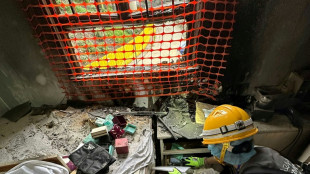 Photos, clothes, ashes: Hongkongers pick through fire-ravaged homes

 US says forces boarded tanker carrying Iranian oil
 Romania headed for fresh turmoil as largest party quits coalition
 Spain's Lamine Yamal injured, but expected to be fit for World Cup

 Maggie Gyllenhaal to lead Venice Film Festival jury
 Oil prices jump, stocks retreat as US-Iran peace talks stall

 Reggae icon Meta to headline Stereo Africa Festival in Dakar

 Pentagon denies clearing Hormuz Strait mines will take six months

 Iran economy looks set to withstand US naval blockade

 Lufthansa loses fight over bailout at EU top court

"We are ghosts on the night shift," says Leandro Cristovao from Angola, who has worked the graveyard shift at a south London market for seven years.
In the last decade, Britain's nine-million-strong nighttime workforce has become increasingly reliant on migrants like Cristovao, as the number of UK-born workers doing night work shrinks.
"You have a lot of night work carried out by migrant night workers in -- somewhat unfairly named -- low-skilled sectors," explained Julius-Cezar Macarie, a sociology professor at University College Cork.
"Their work is very, very essential, because they maintain this ... 24-hour society," said Macarie, whose "Nightwork Footprint" project researches the invisibility of the shift.
Amid the raging debate in the UK about the number of migrants and irregular immigrants, those not born in the UK are twice as likely to work overnight as those born in the country, according to official data from 2022.
In the health and care sector, over a third of night workers are migrants.
As the government clamps down on overseas workers, migrants spoke to AFP about working in the shadows.
- The office cleaner -
As the sun rose on a chilly morning in central London, Roxana Panozo Alba walked against the tide of suited-up bankers whose offices she spent the night cleaning.
The 46-year-old and her team -- most of whom are migrants -- clean toilets, kitchens, conference rooms and over 500 desks from 10:00 pm to 7:00 am.
She says she gets paid the London Living Wage (£13.85, $18.47) per hour.
Alba, originally from Bolivia and a Spanish citizen through marriage, moved to the UK with her husband because "there was no work left in Spain".
She has worked nights for eight years to be with her kids -- aged six and 15 -- in the day, and because she does not speak English, limiting opportunities.
"Working at night is not good, it damages your health," said Alba.
"You have to sleep (in the day), but you can't. The slightest noise and you can't get to sleep."
- The care workers -
Omatule Ameh, 39, is an overnight support worker for children with learning disabilities in rural southeast England. He moved there from Nigeria in 2023 on a care worker visa.
During the day, Ameh looks after his own eight-year-old and 18-month-old while his wife works at the care home. Sometimes, he gets only three hours of sleep.
"You find that emotionally, mentally, it's taking a gradual toll on you," said Ameh, who earns minimum wage, around £12.20 an hour.
Judith Munyonga, 44, from Zimbabwe works from 7:00 pm to 7:00 am four days a week, caring for patients with spinal cord injuries in Hertfordshire, north of London.
The former teacher monitors her patients while they sleep, often sitting besides them in darkness.
"I'll try to play music in one of my headphones to keep myself awake. When it's dark, I tell you, it's not easy," said Munyonga.
Both carers feel the government's move to end the social care visa route and rising anti-immigration rhetoric are "worrying".
Last month, the government announced it would triple the time before some "low-qualified" care workers can apply for residency from five to 15 years.
"It's like changing the rules in the middle of a game," Ameh lamented.
The Labour government has also ended the provision allowing care workers to bring their families to the UK -- the path through which Munyonga brought her husband and children.
"It's sad," said Munyonga. "You are here to care for some family, (for them) to live a normal life. And yours is out there."
Ameh is taking management courses and wants to "move up the ladder".
- The chef -
Sandeep wipes grease from the counter of a 24-hour London cafe before clocking off at 7:00 am, after a 12-hour shift.
The 21-year-old Nepali has worked as a chef there for two years, first when he was a student, and now as a graduate, after he struggled to find a tech job.
"It's really hard to get a job at the moment," said the computer science graduate, adding he had "no option" but to work nights.
He moved to the UK from Nepal in 2023 because "there's nothing back there for youngsters like us."
But if he cannot find a job that pays more than his current minimum-wage work, he will have to return to Nepal in a year when his visa expires, as the government hikes the minimum salary requirement for foreign work visas.
"They gave me the hope ... now what's the point of telling me to go back to your country?" said Sandeep, who did not want to share his full name.
"Everyone here is an immigrant," he added, gesturing towards the Nepalese team which dishes up traditional British fare through the night.
"If we couldn't do it, I think the boss has to shut down the place for night shift."
- The warehouse manager -
Cristovao, 36, packages wholesale produce which reaches UK restaurants, schools and hotels in the early morning hours.
When he first started, he would have "nightmares" and jolt awake during the day, thinking he was late for work.
"I almost became like a ghost," he said, speaking at the sprawling night market.
His boss Martin Dykes said the business, Nature's Choice, took a hit after Brexit, adding he is "worried" about new visa restrictions as local night workers are harder to find.
"My friends in the business, we wouldn't (be able to) do it. Restaurants wouldn't survive," said Dykes.
"But we are here," Cristovao said defiantly.
"While they are sleeping, we are here," he said, pointing to the residential skyscrapers behind him, where the lights are switched off.
Ch.Havering--AMWN