-
 Pupil kills four wounds 20 in new Turkey school shooting
-
Left-wing radical 'confident' after late surge in Peru presidential poll

-
 Starmer says 'won't yield' to Trump's Mideast war threats
-
Liverpool captain Van Dijk says PSG 'deserved' Champions League semi-final spot

-
 England women's rugby star Kildunne reveals body issues struggle
-
Chinese suppliers, Mideast importers fret about war fallout on trade

-
 Markets steadier on Mideast peace hopes, as war hits luxury goods
-
EU says age-check app 'ready' in push to protect children online

-
 New Hungarian leader Magyar says pro-Orban president must resign
-
After three years of war, Sudan confronts devastation as donors gather in Berlin

-
 Pope heads to Cameroon with message of peace for conflict zone
-
OpenAI announces restricted-access cybersecurity model

-
 England's Stokes 'quite lucky' to be alive after facial injury
-
Keiko Fujimori: Peru's biggest political loser inches toward victory
-
 Barcelona hope young talent learn from Champions League disappointment
-
The Middle East war: latest developments

-
 French luxury firms Hermes, Kering knocked by disappointing sales
-
Ukraine veteran stages puppet shows to honour killed soldiers

-
 Afghans comb riverbed in search of gold dust
-
Stocks rally, oil falls further as Trump fans fresh peace hopes

-
 Double Olympic badminton champion Axelsen announces retirement
-
Peru candidate demands vote annulment as count tightens

-
 Tom Cruise shares sneak peek of Inarritu comedy 'Digger' at CinemaCon
-
Rosalia caps journey from student to star with Barcelona concerts

-
 AI expansion drives up profits at bullish tech giant ASML
-
Hamano strikes as Japan end US winning streak

-
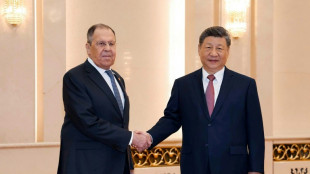 Xi meets Russian FM as leaders flock to China over Middle East war
-
'Industrial' clickbait disinformation targets Australian politics

-
 AI-driven chip shortage slowing efforts to get world online: GSMA
-
Kanye West postpones France concert after minister's block call

-
 Indonesia, France agree to boost defence industry ties
-
Super Rugby's Moana Pasifika to fold over financial problems

-
 Ball hero and villain as Hornets sting Heat to lift NBA postseason curse
-
Capcom looks to extend 'golden age' with sci-fi action game 'Pragmata'

-
 Stocks rally, oil extends losses as Trump fans fresh peace hopes
-
Pope to urge peace in Cameroon's conflict zone

-
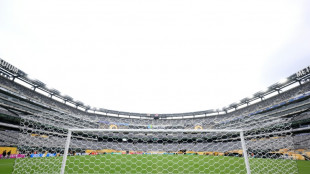 US lawmaker demands FIFA pay World Cup transport bill amid ticket hikes
-
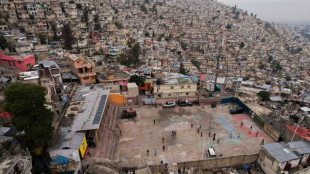
World Cup 2026: Haiti, a ravaged nation whose heart beats for football
-
 'Listening bars' bloom as hottest new nightlife trend
-
Cinema owners welcome back an old friend as Godzilla sequel unveiled

-
 Opti Digital Accelerates Its US Expansion with the Appointment of Michael Walsh as Director of Business Development
-
Cosmos Health Reports Full Year 2025 Results: Revenue Hits All-Time Record of $65.3M, Up 20%; Gross Profit Surges 83% to $7.9M; Gross Margin Expands 418 Basis Points; Adjusted EPS Improves 82%; Cash Position Up 10x to $3.5M; Record Growth Continues Into 2026 Across All Core Segments

-
 Medical Care Technologies (OTC PINK:MDCE) Advances AI-Driven Authentication in the Fast-Growing Multi-Billion Dollar Collectibles Sector
-
TRNR's Secures Placement for CLMBR on Rogue Fitness, Expanding Access to New Customers on Industry-Leading Online Platform
-
 Norsemont Resumes Phase Three Drill Program at Choquelimpie
-
Lexaria's New Animal Study Aims to Expand Valuable Intellectual Property
-
 Mag Magna Corp. Outlines Strategic Plan to Build Global Rare Earth and Critical Minerals Platform
-
Cactus Reports Record Revenue Growth

-
 Dr. Janak Parikh Introduces FoLix - The First FDA-Cleared Laser for Natural Hair Restoration
-
GoodData Kicks Off 2026 with MCP Server Launch and Major Enterprise Wins
Japan restarts world's biggest nuclear plant
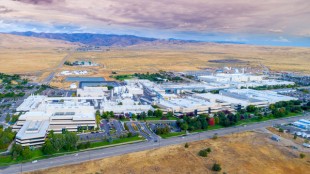
The world's biggest nuclear power plant was restarted Wednesday for the first time since the 2011 Fukushima disaster, its Japanese operator said, despite persistent safety concerns among residents.
The plant was "started at 19:02" (1002 GMT), Tokyo Electric Power Company (TEPCO) spokesman Tatsuya Matoba told AFP of the Kashiwazaki-Kariwa plant in Niigata prefecture.
The regional governor approved the resumption last month, although public opinion remains sharply divided.
On Tuesday, a few dozen protesters -- mostly elderly -- braved freezing temperatures to demonstrate in the snow near the plant's entrance, whose buildings line the Sea of Japan coast.
"It's Tokyo's electricity that is produced in Kashiwazaki, so why should the people here be put at risk? That makes no sense," Yumiko Abe, a 73-year-old resident, told AFP.
Around 60 percent of residents oppose the restart, while 37 percent support it, according to a survey conducted in September.
TEPCO said Wednesday it would "proceed with careful verification of each plant facility's integrity" and address any issues appropriately and transparently.
Kashiwazaki-Kariwa is the world's biggest nuclear power plant by potential capacity, although just one reactor of seven was restarted.
The facility was taken offline when Japan pulled the plug on nuclear power after a colossal earthquake and tsunami sent three reactors at the Fukushima atomic plant into meltdown in 2011.
However, resource-poor Japan now wants to revive atomic energy to reduce its reliance on fossil fuels, achieve carbon neutrality by 2050 and meet growing energy needs from artificial intelligence.
Prime Minister Sanae Takaichi has voiced support for the energy source.
Fourteen reactors, mostly in western and southern Japan, have resumed operation since the post-Fukushima shutdown under strict safety rules, with 13 running as of mid January.
Kashiwazaki-Kariwa is the first TEPCO-run unit to restart since 2011. The company also operates the stricken Fukushima Daiichi plant, now being decommissioned.
Nearly 15 years after the disaster, "the situation is still not under control in Fukushima, and TEPCO wants to revive a plant? For me, that's absolutely unacceptable", said Keisuke Abe, an 81-year-old demonstrator.
- 'Anxious and fearful' -
The vast Kashiwazaki-Kariwa complex has been fitted with a 15-metre-high (50-foot) tsunami wall, elevated emergency power systems and other safety upgrades.
However, residents raised concerns about the risk of a serious accident, citing frequent cover-up scandals, minor accidents and evacuation plans they say are inadequate.
"I think it's impossible to evacuate in an emergency," Chie Takakuwa, a 79-year-old resident of Kariwa, told AFP.
On January 8, seven groups opposing the restart submitted a petition signed by nearly 40,000 people to TEPCO and Japan's Nuclear Regulation Authority.
The petition said the plant sits on an active seismic fault zone and noted it was struck by a strong quake in 2007.
"We can't remove the fear of being hit by another unforeseen earthquake," it said.
"Making many people anxious and fearful so as to send electricity to Tokyo... is intolerable."
Before the 2011 disaster -- which killed around 18,000 people -- nuclear power generated about a third of Japan's electricity.
- String of scandals -
Japan's nuclear industry has also faced a string of scandals and incidents in recent weeks, including data falsification by Chubu Electric Power to underestimate seismic risks.
At Kashiwazaki-Kariwa, TEPCO said Saturday that an alarm system failed during a test.
"Safety is an ongoing process, which means operators involved in nuclear power must never be arrogant or overconfident," TEPCO President Tomoaki Kobayakawa said in an interview with the Asahi daily newspaper.
Japan is the world's fifth-largest single-country emitter of carbon dioxide after China, the United States, India and Russia, and is heavily dependent on imported fossil fuels.
Nearly 70 percent of its electricity in 2023 came from coal, gas and oil -- a share Tokyo wants to slash to 30-40 percent over the next 15 years as it expands renewable energy and nuclear power.
Under a plan approved by the government in February, nuclear power will account for around a fifth of Japan's energy supply by 2040 -- up from around 8.5 percent in the fiscal year 2023-24.
Meanwhile Japan still faces the daunting task of decommissioning the Fukushima plant, a project expected to take decades.
O.Karlsson--AMWN