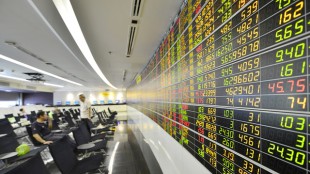
Tech is thriving in New York. So are the rents / Photo: TIMOTHY A. CLARY - AFP
 Aston Villa Defy History With Rare Victory at Old Trafford

 Crowds Gather at San Francisco Park for Elizabeth Holmes Lookalike Tournament

 Making Your Home Safer for Aging Parents: Accessibility Renovations That Add Value

 iPS Cell Research Accelerates Drug Discovery for ALS and Spinal Cord Injury

 Rene Eyre Revisits Autobiographical Performance 'Say A Little Prayer' in London

 UAE's HCT Holds Record Graduation and Announces Major Training Expansion

 NASA Awards $10B Lunar Contract Framework to SpaceX, Blue Origin

It accounts for more than 200,000 jobs and has colonized entire neighborhoods. In New York, the tech industry is driving local economic growth like never before -- but it is also widening the gulf between the haves and have-nots.
Ian Amit remembers moving to New York 25 years ago. Back then, "you could probably count the number of tech startups on two hands," says the CEO of cybersecurity firm Gomboc.ai.
A quarter of a century later, the professional organization Tech:NYC lists more than 2,000.
Every indicator shows that the tech footprint has "grown enormously" in the Big Apple, says Julie Samuels, president of Tech:NYC, who also points to the arrival of major employers in the sector.
The most visible among them is Salesforce, with its branded tower near Times Square. But the epicenter of New York tech lies elsewhere.
Once known as "Silicon Alley" -- a nod to California's Silicon Valley -- and centered around Broadway and 23rd Street, the hub has expanded to cover a vast area known as Midtown South that stretches from Chelsea to SoHo and includes the Meatpacking District.
At the heart of this network sits Google, which occupies no fewer than six buildings spanning several hundred thousand square meters.
Like Meta, Microsoft, and Amazon, the Alphabet subsidiary has opted for charming old buildings rather than a gleaming tower.
- Defying the doubters -
Amazon's withdrawal in 2019 -- under pressure from public opposition -- from a mega-project to build a second headquarters in Queens raised fears of a slowdown for New York tech. So did the rise of post-Covid remote work.
But the industry has done more than simply recover from both shocks.
Despite a recent softening of the tech job market, companies have leveraged the jobs crunch to enforce a return to the office.
Last year, new leases were signed for more than 700,000 square meters of office space in Midtown South -- a record, according to Peter Johnson of commercial real estate firm Avison Young. "Everything suggests this will continue, or at least hold at those levels," he says.
The demand is so strong that a growing number of companies are now venturing further south in Manhattan or even across the river to Brooklyn, among them Etsy and Kickstarter.
- The place to be -
In Manhattan, amid majestic but modestly scaled historic buildings and far from the chaos and skyscrapers of the Midtown business district, "this is where companies want to establish their long-term headquarters," Johnson says.
More than in San Francisco, the tech capital of the world, "you're close to your customers" in other industries, notes Amit.
"Finance, healthcare, education -- everything is here."
What's more, while startups long had to look to California for funding, dozens of private equity firms are now based in New York.
Beyond a desirable work environment, "the young, dynamic people that tech companies are trying to hire" are already here, Samuels adds.
This workforce can appreciate New York's charms all the more because the average hourly wage in tech is significantly higher than in any other sector -- including finance.
- A double-edged sword -
"A big chunk of our high-end sales come from tech," observes Jay Batra of Batra Real Estate. "They definitely help developers get good prices, and it's very good for the real estate economy."
But that is yet another source of pressure on the housing market, with median rents in Manhattan climbing 40 percent over the past decade to about $4,500 per month.
"We need to find a way to allow people who grew up here to stay here," acknowledges Samuels, "while also allowing people who want to come here to start a business or launch their career to do so. And that's not easy."
The backlash has already reached City Hall: in 2025, democratic socialist Zohran Mamdani won the mayoral race on a promise to freeze rents on nearly one million apartments -- with many pointing to the tech industry for driving up the cost of living.
There are many contributing factors, but if forced to assign blame, "tech wouldn't be my first culprit," argues Amit.
"It's traditionally been finance," which accounts for more than 500,000 jobs in the city.
"New York has always been a big deal, and that draws very highly paid individuals and families who obviously create discrepancies. Tech just fits into that."
P.Santos--AMWN