
Tens of millions risk hunger as Hormuz standoff blocks fertiliser, UN official says / Photo: ALAIN JOCARD - AFP
 Storied Paris department store seeks bankruptcy protection
 Xhaka, Embolo can return to Swiss squad after fake Covid docs affair
 Allegri suspended for two Serie A games after red card

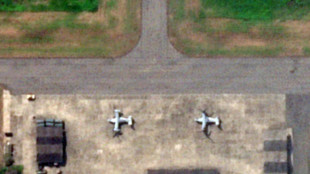 Flight data, satellite images reveal growing US role at Ecuador base
 McInnes feels 'guilt' ahead of Hearts return with Rangers

 Brazil's Lula turns 81, vows to work '24 hours a day'

 Boeing releases cautious growth plan as shares fall sharply

 Exiled Russian dissident Navalnaya warns dictators becoming 'more cunning'
 Bayern 'risk' reaps huge reward for Ballon d'Or winner Kane
 Record turnout as Israeli voters deliver verdict on Netanyahu
 Iraola says Isak 'feels the trust' after Liverpool scoring streak

 French media protest manhandling of journalists at far-right party rally

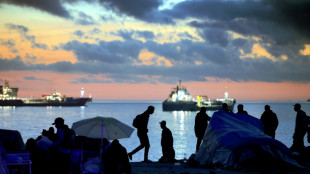 EU seeks deportation powers for beefed up border agency

 Two charged with UK security offences over airbase plot: police

 Maresca defends Donnarumma, Guehi after Man City defeat

 Nordic leaders call Putin as local truce begins in Ukraine

 Osaka unveils crane outfit in Tokyo before win over Paolini

 Ronaldo in line for Portugal return after fallout with coach

 Norway media take legal action to block Meta from using content

 Bayern praise 'humble' Kane after Ballon d'Or win

 Colts retain Daniel Jones as starter despite continued offensive struggles

 Madushanka wrecks Pakistan as Sri Lanka press for final slot

 Destructive Abhishek 113 leads India to series win over New Zealand

 Norway, Finland leaders hold 'frank and substantive' talk with Putin

 Wall Street faces earnings and Fed tests after turbulent technology-led week

Tens of millions of people could face hunger and starvation if fertilisers are not soon allowed through the Strait of Hormuz, the head of a UN task force aimed at averting a looming humanitarian crisis told AFP on Monday.
Iran has had the strategic waterway -- through which a third of the world's fertilisers normally pass -- in a chokehold for months in retaliation for the war launched by the United States and Israel on February 28, disrupting a trade critical for farmers around the world in a race against the end of planting seasons.
"We have a few weeks ahead of us to prevent what will likely be a massive humanitarian crisis," Jorge Moreira da Silva, executive director of the United Nations Office for Project Services (UNOPS) and leader of the task force, told AFP in an interview in Paris.
"We may witness a crisis that will force 45 million more people into hunger and starvation."
The UN secretary general created the task force in March to spearhead a mechanism to allow fertilisers and related raw materials such as ammonia, sulphur and urea through the strait.
For weeks, Moreira da Silva has been working to convince the belligerent parties to allow even a few ships through, and has met with "more than 100 countries" to rally UN member state support around the mechanism.
A growing number of countries are showing support for the plan, he said, but the United States and Iran, as well as Gulf countries -- who are key fertiliser producers, are not yet fully on board.
While the ultimate hope is for a "lasting peace" deal in the region and "freedom of navigation for all commodities" through the strait, "the problem is the planting season can't wait", Moreira da Silva said, with some ending in African nations within weeks.
Global focus has been on the economic impacts of the throttled oil and gas trade, but the United Nations has been sounding the alarm of the threat the blockade poses to the world's food security, with countries in Africa and Asia likely to be particularly hard hit.
- 'Political will' -
Moreira da Silva said the United Nations could have the mechanism up and running in seven days but even if the strait were to reopen now, it would take three to four months to return to normality.
"It's just a matter of time. If we don't stop the origin of the crisis soon, we will have to deal with the consequences through humanitarian aid."
While food prices have not exploded yet, Moreira da Silva said, there has been a "massive increase" in fertiliser costs, which experts say would likely lead to a drop in agriculture productivity and send food prices soaring.
Moreira da Silva said moving just an average of five vessels a day of fertilisers and related raw materials through the strait would head off the crisis for farmers.
What's missing, he said, is "the political will".
"We can't procrastinate on what is possible to do, and what is urgent to do -- which is let the fertilisers cross the strait and, through that, minimize the risk of massive food insecurity at the global level."
L.Miller--AMWN