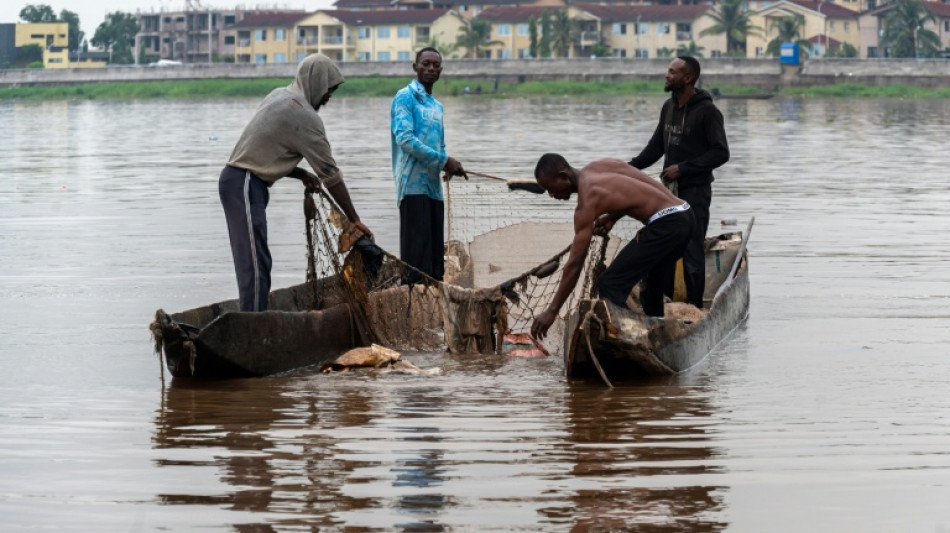
DR Congo fishermen resort to trawling plastic waste / Photo: Hardy BOPE - AFP
 Man Utd's Fernandes dropped by Carrick after Como outburst

 England great Anderson's future unclear after Lancashire exit

 Demonstrators wounded as Portugal police clear housing protest camps

 Serbia votes as ruling party faces ascendant student movement

 Police made 1,314 arrests in France's protests: government
 Catlin to make Masters debut after cruising to Hong Kong win

 Katsuragawa hails 'greatest moment' with South Korea win

 Japan's Yoshida wins first LPGA Tour title with South Korea win
 Comeback kings Brewers down Rays to take 2-0 World Series lead

 Sri Lankan turbine project fuels anger as fish hauls plunge
 No LeBron, no problem as Sixers roll on

 Israel to close all land crossings with West Bank on election day

 'Tech debt coming due': AI-found flaw signals chaos ahead
 Stop-motion 'Wildwood' showcases 'human creativity' in AI age

 7 Creative Things to Do With Your Backyard

 Easy Fitness Routines You Can Do at Home

 New Guide Titled "Gold Proof Coins vs Uncirculated Coins: Are Gold Proof Coins a Good Investment" Released

 Jorge Martin out of Australian MotoGP with fracture: team

 Antonelli storms to US Grand Prix pole on weekend he can take title

 Apologetic Alvarez fires Atletico to win against Deportivo

 Lens beat PFC in Ligue 1 matchday impacted by social unrest

 Valkyries hit back against Dream to level WNBA Finals

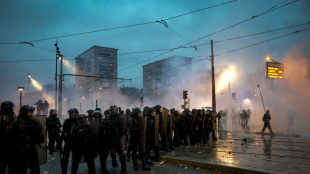 'Fighting for our rights': Paris protesters determined to march on

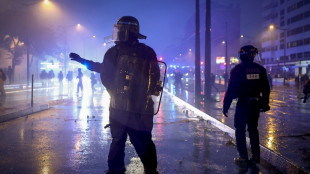 Clashes break out in Paris, other French cities amid fresh protests

 Spurs seal rare win at Chelsea as Palmer sees red

The mighty Congo River feeds millions of people along its course through the vast Democratic Republic of Congo but fishermen near the capital now find more plastic than fish in their nets.
Some have even ditched fishing altogether because it is more profitable to sell the plastic waste they trawl out of the river, the world's second-most powerful watercourse after the Amazon.
According to government figures, around 60,000 tonnes of fish are taken annually from the Congo, which flows for more than 4,300 kilometres (2,700 miles) east to west through the huge central African country.
But in recent years, fishermen on the outskirts of Kinshasa have noticed their catches dwindling.
"A few years ago, I used to catch big fish like captains and catfish but because of the pollution, they've moved further out to sea," fisherman Gilby Mwana-Fioti told AFP.
Since dawn, he and around 20 colleagues have paddled along the riverbanks in their weathered wooden canoes.
The catch is meagre -- small fish, lots of plastic bottles and too many used nappies.
"We'll end up disappearing," said Willy Ngepa, who has been a fisherman for more than 40 years in the DRC, one of the poorest countries in the world.
- Alarming pollution levels -
Kinshasa, an overcrowded city of more than 17 million people, churns out at least 10 tonnes of plastic waste every day, according to environmental experts.
Empty plastic bottles pile up on the kerbs of its potholed streets.
The rubbish gets into the watercourses that criss-cross the capital and, from there, finds its way into the Congo River where it harms wildlife and pollutes the water.
According to a study in 2023 by the University of Kinshasa, plastic waste exposed to sunlight breaks down into microplastics, which are then ingested by fish, affecting their growth and reproductive success and sometimes leading to death.
The microplastics ultimately accumulate in the food chain, harming humans and other creatures that eat the fish.
The waste can also clog the aquatic vegetation where the fish would feed and breed, and contaminate the water on which they depend.
"Plastic pollution has reached alarming levels," said Vincent Kunda, head of Kongo River, an NGO which raises awareness of the scourge.
"Less than 20 percent of waste is processed," he continued.
In 2017, the DRC passed a law banning the manufacture and import of plastic bags and bottles but the regulation remains largely ignored.
Waste collection is virtually non-existent in Kinshasa, due to a chronic lack of local authority funding.
Illegal fly-tips abound, particularly along waterways.
- Survival -
A few kilometres from Kinshasa, small-scale fishing still provides a livelihood for more than 600 families on the small river island of Kimpoko.
Money is scarce and life precarious.
The fishermen, who live in rudimentary wooden houses on stilts, say they now earn no more than $10 to $20 a week from catches, compared to $100 a decade ago.
Charles Moluwa Nzeni Masela, 71, has spent his entire life on the river.
Paddle in hand, he now collects the rubbish that accumulates in the reeds along the swampy banks to sell to recycling companies.
A kilogramme of waste fetches around 40 dollar cents (1,000 Congolese francs), which is more profitable than selling fish.
"It's a shame it's come to this but we have no choice. It's a way to survive," he said.
In places, the amassed rubbish has formed veritable islands of plastic.
Some fishermen said they collected up to 50 kilos of waste a week.
Resigned to their fate, they hope the work will enable their children to go to school and learn a better trade.
Others cling to the possibility that the fishing trade on the Congo will survive the pollution.
They want the authorities to help them buy motorised canoes so they can fish safely further out, where fish are still to be found.
A.Malone--AMWN