
SMX and the Age of Parity: Recycled Plastic No Longer a Favor. It's a Must.
 US gymnast Richard wins floor exercise gold at worlds

 Moltzan upstages Shiffrin to win season-opening World Cup giant slalom

 Infantino says backed by 'vast majority' in bid for re-election

 Police fire tear gas as new French protests kick off

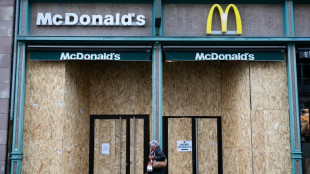 Police fire tear gas as new French demonstrations kick off

 Tropical Storm Champi nears China after battering Taiwan, Japan

 'Weeks, not days' in Kompany recovery, say Bayern

 Unfair to compare us to Barca: Real Madrid's Mourinho

 North Korea's Kim makes unannounced visit to Chinese border city

 Fire breaks out at Hitler's mountain retreat, suspect arrested

 Marc Marquez wins Australian sprint as Martin crashes out

 North Korea's Kim calls for training world's 'strongest' military

 Brewers edge Rays to capture World Series opener

 France to deploy 70,000 police for fresh weekend protests

 Tatum delivers as Celtics down winless Knicks

 Romantasy fans ready for sleepless night as 'Court of Thorns and Roses' returns

 De Goede hat-trick as Canada defeat England again

 How to Build an Emergency Fund for Your Furry Best Friend

 Robot Consulting Announces Receipt of Nasdaq Delisting Determination and Request to Appeal such Determination Before a Hearings Panel
 Ebola vaccine trial begins in DR Congo

 Travelling man Wade equals Prem try record

 Rescuers search for seven people in Nairobi building collapse

 Sacha Baron Cohen revives the 'problematic dinosaur' Ali G in new film

 New race in Barcelona tops 17-event '27 IndyCar season

 Neymar backs Flavio Bolsonaro in Brazil election

NEW YORK CITY, NY / ACCESS Newswire / May 25, 2026 / Recycled plastic used to be treated like a gesture. A favor to the planet. A sustainability talking point. A way for companies to say they were trying.
That era is over.
War, oil volatility, diesel inflation, transportation, tariffs, supply disruption, rising input costs, and the growing threat of plastic taxes are forcing a new reality on manufacturers, brands, retailers, and consumers: the materials economy is now part of the affordability crisis.
Plastic is not just a bottle, a bag, or packaging. It is what protects food, medicine, household goods, electronics, logistics, transportation, textiles, consumer products - what we use and need from day to night. It is how we maintain our daily modern lives. Without it, that structure begins to crumble. The World Bank has warned about the scale of the global waste crisis and the rising pressure created by modern consumption, urbanization, and material demand.
And when virgin plastic becomes as expensive as fossil-based feedstocks, the case for recycled plastic changes. It stops being only an environmental argument. It becomes an economic one.
That is the Age of Parity: the point at which recycled plastic and virgin plastic begin converging in cost, forcing recycled material to move from a secondary sustainability option into a core economic tool.
The pressure is already visible. According to The New York Times' May 21, 2026 article, "What the War Is Costing You," by Emmett Lindner and Rebecca Lieberman, the average American household has spent an extra $187.41 on gasoline since the war with Iran began - "the equivalent of a month's electricity bill" for many households, or "a week's worth of groceries for a couple." But the larger warning is what energy volatility does beyond the gas pump. As The New York Times reported: "Nearly three out of four goods move across the country by truck. Many of those trucks are powered by diesel, making them much costlier to drive, and what's inside them costlier for consumers."
That is the affordability crisis in one sentence.
Oil volatility raises the cost of gasoline. Diesel volatility raises the cost of moving goods. And because virgin plastic is tied to fossil-based feedstocks, the same pressure moves through packaging, manufacturing, shipping, food protection, medical supplies, consumer products, and nearly everything households buy.
Recent media coverage is now pointing in the same direction: the future of recycling depends not just on using recycled material, but on proving it.
The Miami Herald featured SMX and its technology for proving recycled content, tracing material origin, and verifying chain of custody, while TIME recently examined the changing economics of plastic verification in an article titled "Rethinking Plastic: How Risk and Verification Are Reshaping Markets," which looked at how proof, authentication, and verified material data are becoming more important as companies face rising pressure over plastic use, recycling claims, and supply-chain risk. A Forbes article, "SMX: How Proof Is Replacing Promises in Sustainability," examined how SMX's molecular marking, material verification, and digital identity technology are helping move sustainability claims from marketing language into provable, auditable data.
Together, those stories point to the same economic conclusion: recycled plastic can no longer scale on aspiration alone. It needs proof. It needs verification. It needs identity.
The issue has never been whether recycled plastic has value. The issue has been whether manufacturers can trust it at scale.
SMX provides technology services to solve that problem by giving recycled plastic a verified identity. Through its molecular marking technology, SMX can embed an invisible, durable marker directly into materials, then connect that physical material to a secure digital record. That means recycled plastic can carry proof of origin, composition, recycled content, chain of custody, lifecycle history, and compliance status.
That proof matters because manufacturers cannot confidently replace virgin plastic unless they know exactly what they are buying. They need data that can satisfy regulators, procurement teams, suppliers, customers, brands, and auditors. They need recycled plastic that is not just claimed, but certified.
SMX's core capabilities include molecular marking, instant authentication, blockchain-backed digital records, digital material passports, provenance tracking, chain-of-custody verification, recycled-content certification, lifecycle monitoring, audit-ready compliance, and data-backed recycling validation. Together, these tools turn recycled plastic from an uncertain input into a trusted industrial material.
Without certification, recycled plastic remains vulnerable to mistrust, inconsistent pricing, weak documentation, and limited adoption. With verification, it becomes a scalable industrial input that can help manufacturers reduce exposure to oil-linked input costs.
That is why recycled plastic is becoming more than the environmentally preferable choice. In more use cases, it is becoming the economically rational one.
The affordability story is no longer separate from the recycling story. They are becoming the same story.
As the cost of oil-linked production rises, the value of verified recycled materials rises with it. Verified recycling is becoming part of the new cost-control infrastructure for modern manufacturing.
For years, recycling was sold on intention.
Now it has to be backed by evidence.
About SMX
SMX (Security Matters) PLC (NASDAQ:SMX)(NASDAQ:SMXWW) provides technology for molecular marking, authentication, traceability, and digital material identity. The company's platform connects physical materials to secure digital records, enabling verification of origin, composition, chain of custody, lifecycle history, recycled content, and compliance across global supply chains.
Contact: Billy White/ [email protected]
SOURCE: SMX (Security Matters) Public Limited
View the original press release on ACCESS Newswire
L.Harper--AMWN