
SMX and The Age of Parity: Why Verified Recycled Plastic May Become The Material Safeguard Modern Life Needs
 France to deploy 70,000 police for fresh weekend protests

 Tatum delivers as Celtics down winless Knicks

 Romantasy fans ready for sleepless night as 'Court of Thorns and Roses' returns

 De Goede hat-trick as Canada defeat England again

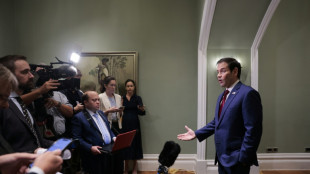 Rubio urges Cubans to work with CIA, but warns: be discreet
 Leclerc tops times for Ferrari in practice for US Grand Prix

 Lula, Bolsonaro lock horns in final debate before Brazil vote

 Poulter and Hatton leave LIV Golf

 Blakely vaults out of the shadow of Biles for all-around world title

 Oil tops $116 with stocks mixed on earnings, AI

 Trump orders lawsuit to block Alaska Senate result if Republicans lose

 Ebola patient in Nigeria is Swiss, had not visited DR Congo: Bern

 Messi receives top Spanish award from heir to throne

 Macron condemns 'racist terrorist attack' after deadly shooting near Paris

 Shiffrin sidesteps slalom in 'exploration' season

 Bayern Munich coach Kompany in hospital after collapsing: club

 Alonso sees Courtois similarities in Chelsea's Penders

 Melania Trump announces truce in Ukrainian city 'on brink of disaster'

 Saka to be carefully managed after latest injury setback, says Arteta

 Goodell says NFL's France debut 'just the beginning'

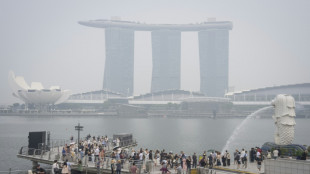 Singapore widens haze probe to local firms linked to Indonesian fires

 Hundreds of Syrians protest repeated Israeli incursions

 El Salvador sends troops to Haiti to find 4 missing soldiers

 Liverpool must go 'full gas' despite injury issues, says Iraola

 Oil hits $115 with stocks mixed on earnings, AI

NEW YORK CITY, NY / ACCESS Newswire / May 27, 2026 / The world has spent decades treating plastic as cheap, endless, and disposable.
That assumption is starting to collapse.
War, oil volatility, tariffs, petrochemical disruption, transportation costs, supply-chain strain, and resource pressure are pushing plastic into a new economic category. It is no longer just a packaging material. It is no longer just a sustainability problem. Plastic is becoming a strategic material.
That is the foundation of what SMX (Security Matters) PLC (NASDAQ:SMX; SMXWW) calls the Age of Parity - the moment when recycled plastic and virgin plastic begin converging in cost, not because recycling has become fashionable, but because virgin plastic is becoming more expensive, more exposed, and more vulnerable to global shocks.
In that environment, recycled plastic is no longer merely the responsible choice. It may become the stabilizing choice.
Modern life depends on plastic in ways most consumers never see. It protects food. It safeguards medicine. It moves through healthcare, electronics, logistics, automotive manufacturing, personal care, construction, consumer goods, and nearly every supply chain that keeps daily life functioning.
For generations, the economic promise of plastic was abundance: cheap, lightweight, durable, scalable, and always available.
But abundance is no longer guaranteed.
Recent reporting cited in the original SMX release underscores the severity of the shift. IDNFinancials reported that supply disruptions tied to Middle East instability pushed domestic plastic prices up by as much as 100%. At the same time, the World Bank's "What a Waste 3.0" findings estimate that nearly 29% of global plastic waste - roughly 93 million tonnes annually - is mismanaged.
Those two realities now define the crisis. The world is paying more for plastic while losing enormous volumes of plastic that could be recovered, verified, and returned to productive use.
That is why the next chapter of recycling cannot be built on collection alone.
It must be built on proof.
Manufacturers do not simply need more recycled plastic. They need recycled plastic they can trust. They need to know what it is, where it came from, what it contains, how it moved, whether it meets required standards, and whether recycled-content claims can survive scrutiny from regulators, auditors, customers, and supply-chain partners.
That is the gap SMX is built to address.
Through its molecular marking and digital traceability platform, SMX gives physical materials a persistent identity. Its technology is designed to allow plastics and other materials to carry verifiable data tied to origin, composition, recycled content, chain of custody, lifecycle history, and reuse potential.
In practical terms, SMX helps turn recycled plastic from an uncertain input into an authenticated material asset.
That distinction matters. If recycled materials cannot be verified, they remain vulnerable to doubt, fraud, inconsistency, and limited adoption. If they can be marked, tracked, authenticated, and certified, they can move through manufacturing supply chains with far greater confidence.
That is the real meaning of the Age of Parity.
It is not only about recycled plastic becoming more cost competitive with virgin plastic. It is about the market beginning to understand that verified recycled materials may become a form of economic protection.
When virgin plastic prices spike because of oil shocks, geopolitical conflict, tariffs, freight costs, or petrochemical shortages, verified recycled plastic can offer manufacturers another path. It can reduce dependence on volatile feedstocks. It can support more resilient sourcing. It can help prevent material instability from becoming consumer-price instability.
This is where recycling moves from environmental language into economic infrastructure.
The old recycling conversation was about responsibility. The new one is about resilience.
The old model asked consumers and companies to recycle because it was good for the planet. The new model asks whether modern economies can afford not to recover, verify, and reuse the materials already circulating through the system.
Plastic waste is no longer simply waste. Properly identified and authenticated, it becomes supply.
That is the shift SMX is helping define: from disposable material to verified material intelligence; from sustainability claims to auditable data; from recycling as a public-relations promise to recycling as a cost-control mechanism.
The implications extend far beyond packaging.
If essential materials become more volatile, everyday goods become more volatile. If plastic becomes more expensive, the cost of modern life rises with it. Food, medicine, healthcare products, household goods, logistics, electronics, and consumer necessities all sit somewhere inside the plastic economy.
That makes verified recycling a broader affordability issue.
The future of plastic will not be decided by volume alone. It will be decided by whether recovered materials can be trusted enough to re-enter the economy at scale.
That future requires identity. It requires authentication. It requires traceability. It requires proof.
SMX's technology is designed for that transition - a materials economy in which physical goods are not merely produced, used, and discarded, but marked, verified, recovered, and returned with data attached.
The Age of Parity is not the end of the plastic problem.
It may be the beginning of a more practical solution.
Because in a world where cheap virgin plastic can no longer be taken for granted, verified recycled plastic may become one of the most important tools for preserving affordability, strengthening supply chains, and sustaining the modern standard of living.
About SMX
SMX (Security Matters) PLC (NASDAQ:SMX; SMXWW) provides technology for molecular marking, authentication, traceability, and digital material identity. The company's platform connects physical materials to secure digital records, enabling verification of origin, composition, chain of custody, lifecycle history, recycled content, and compliance across global supply chains.
Contact:
Billy White/ [email protected]
SOURCE: SMX (Security Matters) Public Limited
View the original press release on ACCESS Newswire
Y.Aukaiv--AMWN