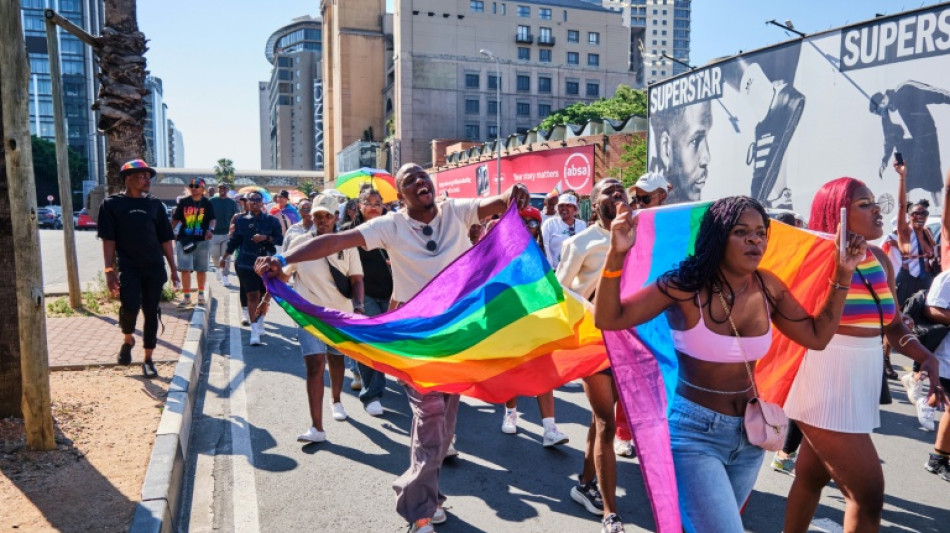
New wave of anti-LGBTQ laws sweeps Africa / Photo: Zinyange Auntony - AFP/File
 Boland strikes twice for Australia in rain-hit South Africa Test

 Marseille put Angers to the sword in Ligue 1
 Albanian PM refuses to quit as violent protests enter sixth day

 Chwalinska fights back to win Wuhan Open in title breakthrough
 Kulusevski on brink of return for Spurs after 17-month absence

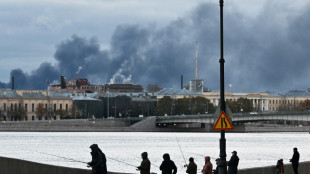 Ukraine sets Saint Petersburg refinery ablaze in large-scale drone attack
 Spain's in-form Chacarra wins DP World India Championship

 Robertson and Selby chase rare Home Nations sweep in Belfast

 Arteta backs Kai Havertz to become a 30-goal Arsenal forward

 Emiliano Martinez expects Chelsea return within weeks after surgery
 Sri Lanka choose to field against Pakistan in tri-series opener

 Australia elect to bowl against South Africa in second Test

 Tata Trusts plans network of 40 to 50 not-for-profit hospitals

 Bajaj Finance set to report second-quarter results on October 19
 Messi reaches 936 career goals after Inter Miami brace

 Indian petrol and diesel prices remain unchanged on October 18

 PNB expects festive demand to add up to two points to quarterly credit growth
 Premium products and financing drive Navratri appliance demand

 Diesel shortage raises petroleum share of India’s exports to three-year high

 Moody’s lifts OYO parent Prism outlook to positive before planned IPO

 Kuwait announces maintenance closures in Nuzha, Surra and Rai

 Truck ploughs into Hindu festival crowd in India, killing 13

 Conservation teams rescue orangutans from Indonesian wildfires

 Doha 2036 bid sets out sport-led social legacy
 Gord launches four AI tools for sustainability and emissions management

A string of west African countries have outlawed same-sex relations in recent months, further eroding LGBTQ rights on a continent where they were already under attack.
Of Africa's 54 countries, only about 20 do not currently criminalise same-sex relations.
Here is a look at the wave of anti-LGBTQ sentiment sweeping the continent and some of the forces driving it, from politicians playing to their homophobic base to the geopolitics of rejecting supposedly "Western values".
- What are the laws? -
Uganda set the tone in 2023, adopting one of the world's harshest anti-LGBTQ laws, including the death penalty for "aggravated homosexuality".
Various countries have recently followed suit.
In September 2025, Burkina Faso criminalised same-sex relations with prison terms of up to five years.
In February, neighbouring Niger did the same, adopting a new penal code with harsh sentences including jail terms of up to 20 years for same-sex marriage.
In March, Senegal adopted a law doubling sentences for same-sex relations, to five to 10 years.
And in May, Ghana's parliament passed a bill imposing prison terms of up to three years for same-sex relations, or up to five years for "promoting" them.
- Why? -
"Politicians in this country know that their society is very highly homophobic, so they want something that is going to put them in their good books," Ugandan rights activist Agather Atuhaire told AFP.
"LGBT+ people are scapegoats" who get used by politicians to "deflect attention from thorny subjects", said French-Senegalese expert Marame Kane.
Senegal's new law came two years into the term of President Bassirou Diomaye Faye and ex-prime minister Ousmane Sonko, a moment when they were called upon "to deliver at least some results" in the debt-saddled country, where discontent is rising, said writer and sociologist El Hadj Souleymane Gassama.
In a region where homophobia runs deep, "they fell back on the one subject that draws broad unanimity, regardless of political divisions," he said.
Religion also plays a role, in countries with large Muslim or Christian majorities where conservative values hold sway.
And funding from US conservative movements may have helped "precipitate" Senegal's law, added Kane.
- Why now? -
The issue is also geopolitical.
"LGBT+ people are a symbol of Western dominance in Africa", where they are often brandished as an example of supposedly foreign values being imposed on local culture, said Ivorian anthropologist Stephane Ballet Djedje.
He linked the laws to mounting anti-Western sentiment -- seen, for example, in France's strained ties with its former west African colonies, particularly the military juntas that have seized power in recent years in Burkina Faso, Mali and Niger.
More broadly, he cited a recent rise of conservatism worldwide that seeks to "restore the traditional order".
International reaction to the new laws has largely been muted -- although in Ghana, President John Dramani Mahama faces pressure to "reconcile the very powerful domestic forces" behind the bill and international institutions such as the World Bank, said international relations expert Ishmael Hlovor.
burs-bam/pid/jhb/kjm
M.A.Colin--AMWN