SMX: The Age of Parity Is Permanent - And Certified Recycled Plastic Has Emerged as Its Economic Outcome
 St. Louis City's unbeaten MLS run ends at 19, Union's reaches 15

 NFL Eagles bench Hurts at least a month with blood clot

 Across US, 'No Kings' events seek to boost early voting

 Tents spring up in Lisbon as Portugal housing protests spread

 'Best in world' Yamal powers Barca to Betis rout, Atletico strike late

 El Salvador's Bukele puts conditions on early release of gang prisoners
 Fire rages at town hall in France's Limoges after protests: authorities

 Unstoppable Barca thrash Betis to extend perfect start

 Maresca faces anxious wait over Haaland injury scare

 PSG fight back to beat Strasbourg after Dembele penalty miss

 Looting, blazes and clashes in France amid nationwide protests

 Walsh breaks her own 50 free world short course record

 Haaland brace extends Man City's winning start in Premier League

 'Special' Ombudsman storms to victory in Champion Stakes

 Brazil's right embraces election betting odds amid polls skepticism

 Four more Ebola cases detected in Kenya, bringing total to seven

 Clashes erupt in France as protesters vow to make government 'tremble'

 Chwalinska downs Swiatek to set up Wuhan final with world number 170 Kartal

 Chacarra takes lead as McIlroy falls away in Delhi

 Neto double gives Chelsea win marred by Martinez injury

 'Cockroach' party founder released from Indian police custody

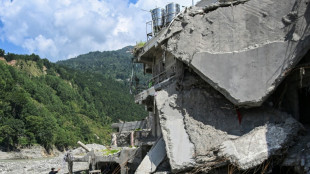 Nepal floods 'defining moment' for climate action: UN

 Albanian capital sees fifth straight day of violent clashes

 Leaders weigh 'huge benefit', risks of AI for global economy

 Zverev stunned by Davidovich Fokina in Shanghai semi-finals

NEW YORK CITY, NY / ACCESS Newswire / June 22, 2026 / The Age of Parity is permanent, and certified recycled plastic has emerged as one of its most important economic solutions. As war, oil volatility, tariffs, trade fragmentation and supply-chain nationalism permanently alter the global economy, the ability to manufacture with certified recycled plastic is no longer an environmental preference. It is a cost-efficient industrial strategy, an affordability tool, a national-security issue and a direct answer to a world where virgin oil-derived materials are increasingly exposed to price shocks, scarcity and geopolitical risk.
A recent New York Times analysis captured the first layer of this new reality. In "The Iran War Permanently Altered the Global Economy," published June 16, 2026, the Times reported that the global order has changed and economies are unlikely to simply return to where they stood before the conflict.
That is the headline.
The next chapter is plastics.
The New York Times captured the energy shock. The deeper underlayer is material shock. China has demonstrated how energy self-sufficiency and energy infrastructure can create resilience against oil shortages and strengthen national leverage. But no major economy has yet proven equivalent resilience against shortages in the plastics and materials that support modern life.
That is the issue the world has not fully confronted. The issue is not only cheap energy. It is cheap, certified, recoverable plastic.
For decades, resilience was measured by access to oil, gas and electricity. But energy self-sufficiency is no longer enough. A nation can keep power flowing and still face rapid degradation in quality of life if it cannot produce, recover, certify and reuse the plastics and materials embedded in daily living.
Plastics are not peripheral. They are embedded in food systems, medical devices, sterile packaging, water infrastructure, transportation, electronics, construction, agriculture, defense equipment, textiles, consumer goods and nearly every affordable product used by modern populations.
That reality makes plastics more than an industrial commodity.
It makes them critical infrastructure.
Medical supplies, food protection, water systems, telecommunications equipment, defense technologies, modern electronics and emergency-response systems all depend on reliable access to plastic-based materials. A nation may achieve energy security and still remain vulnerable if it cannot verify, recover and reuse the materials that support daily life, essential services and industrial continuity.
The same way energy independence became a strategic objective, material independence is now becoming a national-security objective.
The countries that can certify and reuse essential materials will possess a structural advantage over those that remain dependent on unstable external supply.
The world has learned how to talk about energy shortages. It has not yet fully confronted the material shortages beneath them.
That is where the Age of Parity becomes permanent.
The world is now divided by a new line: those who can prove self-sufficiency in essential materials, and those who cannot. The old division was energy haves and energy have-nots. The new division is material haves and material have-nots. More precisely, it is between those who can verify material access, material origin and material reuse - and those who remain dependent on unstable virgin supply.
When oil is cheap, stable and abundant, virgin plastic historically held the advantage. When oil becomes volatile, expensive, politicized or exposed to war, tariffs and sanctions, the old equation breaks. Certified recycled plastic becomes economically competitive with virgin oil-derived plastic. It becomes an industrial input, a supply-chain hedge, an affordability mechanism and a direct response to a world where the cost of virgin material can no longer be treated as stable.
That shift is already visible in the market.
Recent years have shown how quickly virgin resin economics can change when oil prices rise, shipping lanes are disrupted, tariffs increase input costs or geopolitical conflict alters trade flows. Virgin plastic remains closely tied to fossil-fuel feedstocks, transportation costs and global refining capacity. Recycled plastic, by contrast, can become more attractive when local recovery, certification and reuse reduce exposure to oil-linked volatility and long-distance supply chains.
That is the core of the Age of Parity: a period in which certified recycled plastic increasingly competes with virgin plastic on economics, not merely environmental attributes.
At parity, recycled plastic is not the expensive ESG option.
It is the rational economic option.
Parity is not a sustainability milestone.
It is an economic one.
That shift changes the entire plastics economy. Manufacturing with certified recycled plastic can match the economics of manufacturing with virgin oil-derived feedstock while reducing exposure to crude-price swings, shipping disruption, sanctions, resource nationalism, tariffs and trade fragmentation. The result is not symbolic circularity. It is financial resilience.
Cheap energy built the last century.
Cheap, certified, recoverable materials will define the next one.
SMX (NASDAQ:SMX) provides the verification layer for that world.
Its molecular marking and verification technology gives physical materials a persistent identity. By embedding markers directly into raw materials, products and recycled inputs, SMX creates a certified record that follows materials across production, use, recovery, recycling and reuse.
That identity changes the value of recycled plastic.
Without proof, recycled plastic is a claim. With proof, it is certified supply. With certification, recycled plastic becomes a bankable material asset that can move through the economy with identity, trust and value attached. It can support compliance, authenticate origin, verify recycled content and create audit-ready material passports for companies and governments operating in a fractured global economy.
Certification creates economic value beyond sustainability.
Verified materials can support procurement preferences, regulatory compliance, recycled-content mandates, plastic-credit markets, premium supply agreements, product-passport requirements, audit-ready reporting and data-driven supply-chain management. Verification can also reduce fraud risk, strengthen buyer confidence, improve material accountability and create higher-value commercial opportunities for companies operating in increasingly regulated markets.
In practical terms, verification helps transform recycled plastic from a discounted commodity into a financeable, contractable and compliant material asset.
That is where proof becomes economic infrastructure.
That is where material identity becomes material value.
This is circularity with teeth.
Not a slogan. Not a campaign. Infrastructure.
The Age of Parity is permanent because the forces behind it are permanent. Energy volatility is not disappearing. Material shortages are not disappearing. Trade fragmentation is not disappearing. Tariff risk is not disappearing. Regulatory demands for proof are not disappearing. Consumer pressure for affordability is not disappearing.
The answer is not access alone.
The answer is verified access.
Countries and companies that can prove what they have, where it came from, how it was used and whether it can be reused will define the next era of economic resilience. Those that cannot will remain exposed.
The Iran War made clear that the world economy has changed. The plastics economy now shows where that change goes next.
Energy keeps the lights on.
Materials keep life functioning.
Resilience without material independence is not resilience. Energy self-sufficiency without certified material supply leaves populations exposed to rapid degradation in affordability, availability, industrial continuity and quality of life.
This is the new materials reality: recycled plastic is no longer the backup plan. It is becoming the answer to pressure across packaging, food protection, medicine, electronics, textiles, transportation and consumer goods.
SMX is building the verification system for that reality.
What the Press Is Saying About SMX
The announcement follows growing media attention around SMX's proof-driven materials platform and its role in moving sustainability from claims to evidence.
Forbes, in "SMX: How proof is replacing promises in sustainability," wrote: "SMX knows the future of sustainability will be measured not in pledges, but in data."
Miami Herald, in "Why the Future of Recycling Depends on Proof, Not Promises," wrote that consumers want "recycled plastics verification that proves the materials are really being recovered and reused."
TIME, in "Rethinking Plastic: How Risk and Verification Are Reshaping Markets," wrote that SMX's system "places a molecular marker in plastic and links it to a digital record," creating "a material identity that can be checked without damaging the product itself."
Rolling Stone, in "Plastic Promises Are Dead: Proof Is the New Flex," wrote that SMX is developing tools "designed to move sustainability from marketing into measurable proof."
The broader coverage reflects the same shift: recycled plastic is no longer the backup plan. It is becoming an answer to pressure across packaging, food protection, medicine, electronics, textiles, transportation and consumer goods.
About SMX
SMX (Security Matters) PLC (NASDAQ:SMX) provides technology that gives physical materials a digital identity. Its molecular marking, tracking and verification platform allows raw materials, products and recycled inputs to be authenticated, traced and certified across supply chains. SMX works across sectors including plastics, precious metals, luxury goods, textiles, industrial materials and other critical supply chains where proof, circularity and material integrity are becoming essential.
Contact: Billy White/ [email protected]
SOURCE: SMX (Security Matters) Public Limited
View the original press release on ACCESS Newswire
D.Cunningha--AMWN