
SMX: State Recycling Mandates Are Creating a New Demand for Verifiable Materials
 Zverev stunned by Davidovich Fokina in Shanghai semi-finals

 France faces day of cost-of-living protests

 Zelensky says Trump waiving sanctions 'rewards' Putin, warns Moscow wants 'blackout' in Ukraine

 Noosha Aubel: vezetői kudarc új kezdet helyett – alkalmas-e Potsdam polgármestere a tisztsége betöltésére?

 Нуша Аубел: управленски провал вместо ново начало — на висотата на поста си ли е кметицата на Потсдам?

 Russia hails Trump waiving sanctions as 'historic'

 Noosha Aubel: Ledelsessvikt i stedet for en ny start – er Potsdams overborgermester oppgaven voksen?

 Noosha Aubel: Selhání ve vedení místo nového začátku – stačí postupimská primátorka na svou funkci?

 Haze triggers highest-level alert in parts of Southeast Asia: monitor

 IMF chief flags 'optimism', 'worry' after Bangkok annual meetings

 IMF chief says has 'optimism' and 'worry' after Bangkok annual meetings

 Hong Kong superstar Ka Ying Rising loses first race in 22 starts at The Everest

 Attacks on Gulf energy infrastructure 'worrying' for outlook: Pakistan finance minister

 Japan says hosting record number of foreigners

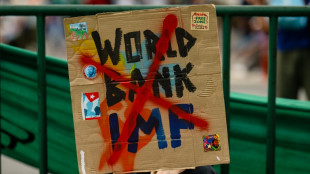 'Two bad options': Rights groups decry IMF austerity demand

 Guardians-Rays MLB playoff game postponed until Saturday

 'We've never had this': Bear sightings spook Russia

 Injured Jordie Barrett out of second Bledisloe Cup Test

 All contenders for UN chief receive veto: diplomat

 UN climate panel fails to agree date for global warming update: envoy

 Stocks struggle to bounce back from AI angst-fueled rout

 Clashes grip Tirana as Albanian PM blames 'foreign hands'

 End of a dynasty? Dodgers digest playoff drubbing

 Troyes sack sporting director Blanchard amid sexism claims

 Trump's new press secretary out after less than week

NEW YORK CITY, NY / ACCESS Newswire / June 24, 2026 / As states impose stricter recycling, recycled-content and producer-responsibility laws, SMX (NASDAQ:SMX) is entering a policy environment increasingly built around the one issue its technology was designed to address: proof. The next phase of recycling compliance will not be defined only by who collects more material. It will be defined by who can verify what that material is, where it came from, how it moved, and whether it was actually recovered and reused.
The announcement follows growing media attention around SMX's proof-driven materials platform and its role in moving sustainability from claims to evidence. Forbes, in "SMX: How Proof Is Replacing Promises in Sustainability," wrote that "SMX knows the future of sustainability will be measured not in pledges, but in data."
https://www.forbesfigures.com/smx-how-proof-is-replacing-promises-in-sustainability/
California's SB 54 requires a sweeping extended producer responsibility program for packaging and single-use plastic food service ware. New Jersey has imposed postconsumer recycled-content requirements on rigid plastic containers, plastic beverage containers, glass containers, paper and plastic carryout bags, and plastic trash bags. Maine, Oregon, Colorado, Minnesota, Maryland and Washington have also enacted packaging EPR laws, shifting more responsibility for end-of-life management onto producers.
The direction is clear. States are no longer asking companies to participate in recycling. They are requiring them to measure, report, finance and prove it.
That creates a new challenge for manufacturers, packaging companies, consumer brands, recyclers and waste operators alike. Once recycled-content requirements become mandatory, every claim becomes subject to scrutiny. Where did the material come from? Was it actually recycled? How much recycled content was used? Can the chain of custody be verified?
SMX's technology fits directly into that pressure point. By embedding an invisible molecular marker into materials and linking that marker to a secure digital record, SMX enables products and materials to carry a verifiable history throughout their lifecycle. Origin, composition, custody and processing information can remain connected to the material itself.
That matters because recycling systems have historically struggled with verification. Plastic, textiles and other materials often pass through multiple processors, handlers and jurisdictions before returning to the marketplace. Data can become fragmented, records can vary and confidence in recycled-content claims can weaken along the way.
The plastics sector may be one of the clearest examples. Recycled-content commitments have become widespread, but questions around verification remain common. Miami Herald, in "Why the Future of Recycling Depends on Proof, Not Promises," noted that consumers increasingly want "recycled plastics verification that proves the materials are really being recovered and reused."
https://www.miamiherald.com/contributor-content/article315842548.html
If recycled resin can be tied to secure material-level data throughout its lifecycle, manufacturers gain a stronger evidentiary basis for compliance, reporting, procurement and commercial decision-making.
TIME, in "Rethinking Plastic: How Risk and Verification Are Reshaping Markets," described how SMX's system "places a molecular marker in plastic and links it to a digital record," creating "a material identity that can be checked without damaging the product itself."
https://africa.time.com/climate/rethinking-plastic-how-risk-and-verification-are-reshaping-markets/
That same logic extends to the financial layer around verified recycled output. Instruments such as SMX's Plastic Cycle Token are designed as digital reflections of real industrial activity, linking verified recycled plastic to measurable output. That can help turn recycling from a reported activity into a more traceable and potentially rewardable economic event.
The implications extend beyond regulatory reporting. Verified recycled materials can support sustainability disclosures, audit requirements, financing initiatives, procurement preferences, premium contracts, plastic credits and consumer-facing claims. In each case, stronger proof can reduce uncertainty and increase confidence in the underlying data.
Rolling Stone, in "Plastic Promises Are Dead: Proof Is the New Flex," wrote that SMX is developing tools "designed to move sustainability from marketing into measurable proof."
https://www.rollingstone.co.uk/culture/plastic-promises-are-dead-proof-is-the-new-flex-54394/
The reputational stakes are rising as well. As recycling claims move from marketing language into compliance filings, procurement standards and legal scrutiny, vague assertions become harder to defend. Companies and municipalities that cannot prove what happened to material after collection may face not only regulatory questions, but also credibility problems with consumers, investors and policymakers.
Those questions become even more important in a world where geopolitical instability continues to affect commodity markets. Oil-price volatility can directly influence the economics of virgin plastic, creating renewed interest in recycled materials as a source of supply diversification and cost stability.
For years, recycling policy focused primarily on participation. The emerging generation of state mandates focuses on accountability. As that transition accelerates, technologies capable of linking physical materials to verifiable data may become an increasingly important part of the infrastructure supporting the circular economy.
The next era of recycling may not be defined by who makes the biggest sustainability promise.
It may be defined by who can prove it.
About SMX
SMX (Security Matters) PLC (NASDAQ:SMX) provides technology that gives physical materials a digital identity. Its molecular marking, tracking and verification platform allows raw materials, products and recycled inputs to be authenticated, traced and certified across supply chains. SMX works across sectors including plastics, precious metals, luxury goods, textiles, industrial materials and other critical supply chains where proof, circularity and material integrity are becoming essential.
Contact: Billy White / [email protected]
SOURCE: SMX (Security Matters) Public Limited
View the original press release on ACCESS Newswire
D.Cunningha--AMWN