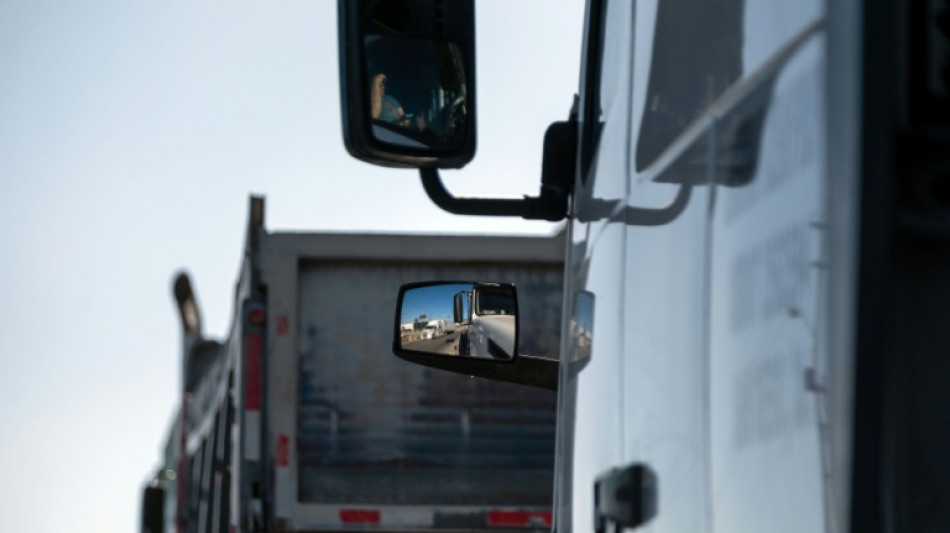
AI boom lifts Mexico tech exports, complicating Trump trade goals / Photo: Guillermo Arias - AFP/File
 WhiteBIT Launches Bitcoin Lightning Network Support, Powered by Voltage

 Oil surges, stocks sink as US reportedly eyes fresh Iran strikes

 Anne Carson: modern takes on Greek classics

 Canada's Anne Carson wins Nobel literature prize

 Ethiopia drones hit Eritrean troops in Tigray

 Russian strike on buses kills 30 in frontline Ukrainian city

 Thailand begins extradition process against Chinese journalist

 Quarantine, unease and rumours: Russian city grapples with plague scare

 Taiwan says exports hit record in September on AI demand

 Marc Marquez vows to 'attack' Martin's lead at Indonesian MotoGP

 Diplomats, schools in Saudi take safety measures after blasts heard: sources to AFP

 In Beijing, EU trade envoy says deficit with China 'unsustainable'

 Sri Lanka's de Silva quits as Test captain

 Alcaraz feeling 'mentally fresh' ahead of Shanghai return

 Israel drastically reduces British diplomatic presence in Jerusalem

 Stocks fall further as oil surge fans fresh inflation worries

 North Korea demands South show 'utmost respect' to restore relations

 Saudi says three dead in airport attacks claimed by Houthis

 'Mad dream': New showcase for African film opens in London

 All Blacks coach Rennie says Wallabies exit 'part of the game'

 The growing protests against India's poll body - and PM Modi

 Stocks fall further as oil spike fans fresh inflation worries

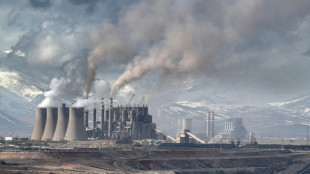 Bad COP, worse COP? EU tempers hopes for UN climate summit

 Rookie Henry named in Wallabies midfield to face All Blacks

 Housing crisis set to dominate Spain's snap election

The United States' frenzied rush to build out AI infrastructure has boosted exports of Mexican technology, complicating President Donald Trump's hand heading into trade negotiations.
Trump, who campaigned on boosting US manufacturing, hopes to narrow the trade deficit with Mexico during talks to update the USMCA free trade agreement, which kick off Tuesday in Mexico City.
But the dizzying rise in computer equipment exports from Mexico -- the largest US trading partner -- is doing the opposite.
Between January and April, Mexico tripled its sales of computer equipment to the United States compared to the same period last year, with exports topping $50 billion versus just $2.2 billion in imports, according to AFP calculations.
The sector now makes up 30 percent of all Mexican products shipped to the United States, overtaking the automotive industry as the largest component of exports.
"It's a milestone largely driven by demand for advanced AI electronics," Diego Flores, head of electronic and digital industries at Mexico's Economy Ministry, told AFP.
The sector, which includes processing units and data center hardware, is not officially on the agenda for this round of negotiations.
- Explosive demand -
The most in-demand products are server racks that house AI processing cards -- a key component for the data centers multiplying across the United States.
The main export hub is the Pacific state of Jalisco, dubbed the "Mexican Silicon Valley," where an ecosystem of global industry giants and tech startups have set up shop, Flores said.
Taiwanese giant Foxconn assembles server racks in Jalisco, and serves as a strategic partner to US chip designer Nvidia.
In March, Foxconn announced $137 million in investments across two Mexican subsidiaries after estimating its production could double this year.
"The United States and Mexico will remain our primary production hubs," Chief Executive Michael Chiang said, announcing the company would invest 30 percent more than in 2025 to expand its AI-related capacity.
Faced with booming demand, Flextronics, another tech manufacturer in Jalisco, even had to repurpose its parking lots to expand manufacturing capacity, Flores said.
Yet the boom comes amid a volatile political climate.
The Trump administration rejected a 16-year extension of the USMCA, opting instead for annual reviews with Mexico and Canada.
Washington is also continuing to push for more goods to be manufactured domestically, even as US reliance on imports from Mexico, Taiwan, and China to fuel its AI boom grows.
- 'In the line of fire' -
Could the thriving sector become Trump's next tariff target?
"Nobody can say for sure," Flores admitted. However, he expressed confidence that the sector might escape protectionist policies due to its immense strategic value to the United States.
Washington is also seeking to limit the use of Asian technology within North America, according to William Jackson, a chief emerging markets economist at Capital Economics.
"The Trump administration has to weigh the demand for these technologies and the need to stay at the forefront of AI development," he told AFP, noting that "tariffs could prove counterproductive to that goal."
But balancing the preservation of a booming industry with protectionist rhetoric puts the sector "very easily in the line of fire," he warned.
That risk is heightened by the fact that Mexican manufacturers use components sourced from China and Taiwan, which Trump could view as a "backdoor" or Trojan horse for Asian technology entering the United States.
P.Martin--AMWN