
Former Marine Engineer Turned Supply Chain Executive Releases "From Engines to Algorithms," Charting a New Framework for Operational Constraints
 Quarantine, unease and rumours: Russian city grapples with plague scare

 Taiwan says exports hit record in September on AI demand

 Marc Marquez vows to 'attack' Martin's lead at Indonesian MotoGP

 Diplomats, schools in Saudi take safety measures after blasts heard: sources to AFP

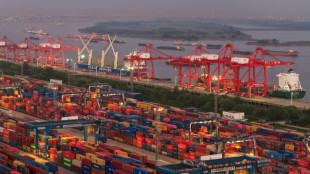 In Beijing, EU trade envoy says deficit with China 'unsustainable'

 Sri Lanka's de Silva quits as Test captain

 Alcaraz feeling 'mentally fresh' ahead of Shanghai return

 Israel drastically reduces British diplomatic presence in Jerusalem

 Stocks fall further as oil surge fans fresh inflation worries

 North Korea demands South show 'utmost respect' to restore relations

 Saudi says three dead in airport attacks claimed by Houthis

 'Mad dream': New showcase for African film opens in London

 All Blacks coach Rennie says Wallabies exit 'part of the game'

 The growing protests against India's poll body - and PM Modi

 Stocks fall further as oil spike fans fresh inflation worries

 Bad COP, worse COP? EU tempers hopes for UN climate summit

 Rookie Henry named in Wallabies midfield to face All Blacks

 Housing crisis set to dominate Spain's snap election

 Gas, health care, utilities: high costs squeeze US midterm voters

 New Zealand Rugby seeks injunction over PNG Chiefs name

 Samsung expects 780% quarterly operating profit jump on AI boom

 Battery X Metals Announces Corporate Awareness Agreement

 Silver Range Resources Ltd. Options Alamo and Sand Springs to Resilience Minerals Limited

 As species decline, green turtles offer glimmer of hope
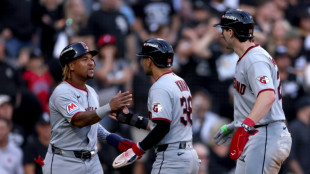
 Brothers Scott and Beauden Barrett named to start for All Blacks

LOS ANGELES, CA / ACCESS Newswire / July 22, 2026 / Niraj Jha, Senior Director of Logistics at Niagara Bottling LLC, the largest privately held beverage company in the United States, has released From Engines to Algorithms, a book drawing on his uncommon path from licensed marine engineer to supply chain leader to explain why technology does not make operational bottlenecks disappear, they just relocate them.

Jha spent four years at sea as a marine engineer before moving into logistics and manufacturing operations, a transition that forms the spine of the book. The title itself signals the arc: from the mechanical world of ship engines, where a single failed component can strand a vessel, to the algorithmic systems now running modern supply chains, where the failure points are just as real but far less visible.
At the center of the book is Jha's "Law of Constraint Migration," a framework he has developed over years of running manufacturing and logistics operations across dozens of plants and thousands of weekly truckloads. The core argument: every time an organization fixes its most visible bottleneck with technology , the constraint does not vanish, it migrates to the next weakest point in the system. Leaders who treat constraint-fixing as a one-time project, rather than a permanent discipline, end up chasing the same problem in a different disguise year after year.
"Systemic failure does not happen because of one big catastrophic event," Jha said. "It starts with leaders having a static approach to problem solving , where this fix one constraint using technology and then move on without understanding where the constraint has moved."
That principle was shaped in part by direct experience. Jha's early engineering career included firsthand exposure to the operational and mechanical failure chains that can escalate quietly before becoming visible incidents, lessons he has carried directly into how he now evaluates risk in logistics networks spanning multiple plants, carriers, and third-party providers.
Since moving into supply chain leadership, Jha has held roles from plant director to his current position overseeing logistics strategy across a multi-state region, and is now deeply involved in Niagara Bottling's AI strategy for manufacturing and supply chain operations. He holds several patents in manufacturing and supply chain technology, including three granted US patents around direct to store shipments, and has deployed AI-driven systems for automated palletizing, dynamic shipping, and operational incident handling.
From Engines to Algorithms is written for operators, not theorists. Jha's stated approach throughout is practitioner credibility over metaphor: fewer abstractions, more direct account of what breaks in real operations and why. The book avoids the hedge-everything tone common in management literature in favor of decision-oriented conclusions.
Jha is a member of CSCMP's Executive Inner Circle, an invitation-only group of senior supply chain executives, as well as the member of the World Economic Forum and the Fast Company Executive Board. He has been featured as a keynote speaker in multiple industry forums and his writing has appeared in Beverage digest, supply chain management review, SupplyChainBrain, Fast Company, and other trade publications, and he continues to publish ongoing analysis on constraint migration, AI economics, and supply chain strategy through his Substack and LinkedIn.
From Engines to Algorithms is available now. Readers can learn more and find purchasing details at enginestoalgorithms.com.
About the Author
Niraj Jha is Senior Director of Logistics at Niagara Bottling LLC, where he is deeply involved in the company's AI strategy for manufacturing and supply chain operations. A licensed marine engineer by training, he spent four years in deep-sea service before transitioning into supply chain and operations leadership, where he has spent sixteen years in various leadership roles. He holds several patents in manufacturing and supply chain technology and developed and conceptualized the Law of Constraint Migration.
Media Contact :
Visit enginestoalgorithms.com for more information.
[email protected]
SOURCE: enginestoalgorithms
View the original press release on ACCESS Newswire
L.Miller--AMWN