The Age of Parity Has a Passport; SMX Provides the Stamp
 Bardot auction in Paris fetches nearly one million euros

 No timeline on Daniels injury return, says Commanders coach

 British Columbia sues OpenAI in US court over Canada school shooting

 French star Batum retires after 18-year NBA career

 Zidane leads first France training session

 Man shot by ICE agent in Texas detained with bullet inside him: lawyer

 California declares state of emergency ahead of El Nino

 South Africa arrests three more suspects, after nine women murdered

 Carse needs time away from England, says captain Brook

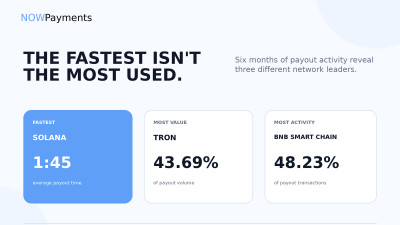 NOWPayments Releases Cross-Chain Payout Data Revealing Key Performance Benchmarks Across TRON, BNB Chain, and Solana

 British Museum bans photos of Bayeux Tapestry as crowds linger
 COP31 host says AI climate footprint to be a summit priority

 Berlin's far-left vote winners reject anti-semitism charges

 Mancini eager for 'new adventure' on Italy return

 Mbappe says having Zidane as France coach 'like a film'
 Palmer, Rice out of England Nations League squad

 German auto workers stage mass protests in bid to save jobs

 Embattled Merz vows to keep ruling for 'democratic future' of Germany

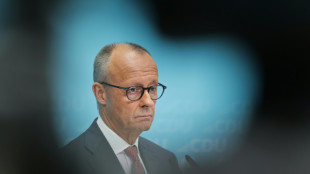 Merz vows to keep ruling coalition together for 'democratic future' of Germany

 Spain coach De la Fuente gets new deal after World Cup success

 Pressure grows on Germany's Merz after election defeats

 China's Zhang beats Japan rivals to Asian Games gymnastics gold

 Samlingen Haupt: Vad pengar avslöjar om oss människor

 Tens of thousands of German auto workers protest to save jobs

 हॉप्त् कलेक्शन: पैसा हमारे बारे में एक इंसान के रूप में क्या प्रकट करता है

NEW YORK CITY, NY / ACCESS Newswire / September 4, 2026 / SMX built its Digital Material Passport Platform to give physical materials something they historically lacked: an identity that can survive every stage of their economic life. Now, as war, oil volatility, inflation and persistent supply-chain pressure redraw the economics of manufacturing, that digital passport is becoming increasingly important to a market where knowing what a material is, where it came from and what happened to it can directly affect what it is worth.
The shift is part of the Age of Parity, the new economic environment in which recycled materials can compete with, and in some circumstances become more economically attractive than, newly manufactured virgin materials. War and geopolitical instability have disrupted energy and petrochemical markets. Oil volatility has increased uncertainty around virgin plastic production. Inflation has raised manufacturing, transportation and labor costs. Supply chains remain vulnerable to interruptions, tariffs and logistics pressures. Together, those forces are dismantling the assumption that virgin material will reliably be the cheaper and easier option.
The changing economics of materials, and SMX's role in creating the infrastructure to authenticate them, has generated growing global media attention. Forbes, TIME, Rolling Stone, the Chicago Tribune, the Los Angeles Tribune and the Miami Herald have covered SMX and the broader movement toward material authentication, recycling verification, supply-chain transparency and proof-based sustainability. The attention reflects a larger change taking place across industries: claims have less value when they cannot be supported by evidence.
And that creates the next challenge of the Age of Parity.
If recycled material is going to compete with virgin material as a primary industrial commodity, the market needs to know exactly what it is.
THE PASSPORT GIVES MATERIAL A MEMORY
That is where SMX's Digital Material Passport Platform comes in.
SMX embeds invisible molecular markers directly into physical materials, allowing them to carry a persistent identity. That physical identity is connected to a secure digital record containing information that can include origin, composition, recycled content, chain of custody, authentication history, lifecycle events and other relevant material data.
Instead of information existing separately from the material in certificates, labels, spreadsheets or supplier declarations, SMX connects the information to the material itself.
That distinction matters because materials move.
A plastic pellet, textile fiber, piece of metal or other material can pass through manufacturers, suppliers, processors, recyclers and markets. Ownership can change. Materials can be blended, processed, reused and recycled. Paperwork can become separated from the physical product it is supposed to describe.
SMX's technology is designed so the identity can remain connected to the material throughout those transitions.
The Digital Material Passport can therefore become more than a record of where something started. It can create a developing history of what happened to it.
For recycled plastic, that can mean identifying polymer type, source, recycled content, grade, chain of custody, recycling history and lifecycle information. For precious metals and other commodities, it can support authentication and provenance. Across textiles and manufactured products, it can provide the physical-to-digital connection increasingly necessary for traceability and compliance.
WHEN PRICE CHANGES, PROOF BECOMES VALUABLE
That capability takes on greater economic significance in the Age of Parity.
When recycled material was primarily viewed as an environmental alternative, verification could be treated largely as an ESG or reporting function. When that same material becomes part of a company's strategy for controlling costs, securing supply and meeting regulatory requirements, verification becomes commercial infrastructure.
Manufacturers need confidence that recycled inputs meet specifications. Brands need evidence supporting recycled-content claims. Regulators increasingly expect auditable information. Recyclers need a way to distinguish authenticated material from material whose origin and history cannot be established. Markets need reliable information before those materials can be valued or traded.
SMX's Digital Material Passport creates an infrastructure connecting those requirements.
It also provides a foundation for the digitization of real-world assets. A physical material with a persistent, authenticated identity can be represented digitally with greater confidence because the digital record has something identifiable behind it in the physical world.
That connection is becoming increasingly relevant as digital markets expand beyond purely digital assets toward tokenization tied to commodities, materials and other real-world assets.
FROM MATERIAL TO ECONOMIC ASSET
The implications extend beyond compliance. A material whose identity, composition and lifecycle can be authenticated can be sorted more accurately, purchased with greater confidence, returned to manufacturing and connected to new economic mechanisms.
SMX is extending that infrastructure through its recycled-plastic ecosystem and Plastic Cycle Token, connecting authenticated physical material and lifecycle activity to measurable digital economic value. The same physical-to-digital connection can support the growing tokenization of real-world assets by giving the digital record an authenticated physical asset behind it.
That is where the Digital Material Passport becomes especially relevant to the Age of Parity. As recycled materials become economically competitive with virgin resources, their provenance, composition and history become part of their value. What was once treated as waste can re-enter the supply chain as an identifiable, authenticated economic asset.
The economics have changed. War, oil volatility, inflation and supply-chain pressure helped change them. Now the infrastructure for that new materials economy is catching up.
The Age of Parity has a passport.
SMX shows how to stamp it.
ABOUT SMX (SECURITY MATTERS) PLC
SMX (Security Matters) PLC (NASDAQ:SMX) develops molecular traceability and material authentication technologies designed to strengthen supply-chain transparency and integrity across global industries. Its platform embeds invisible molecular markers directly into physical materials-including solids, liquids, and gases-allowing them to carry a persistent identity that can be detected and verified throughout their lifecycle.
Contact:
Billy White
[email protected]
SOURCE: SMX (Security Matters) Public Limited
View the original press release on ACCESS Newswire
H.E.Young--AMWN