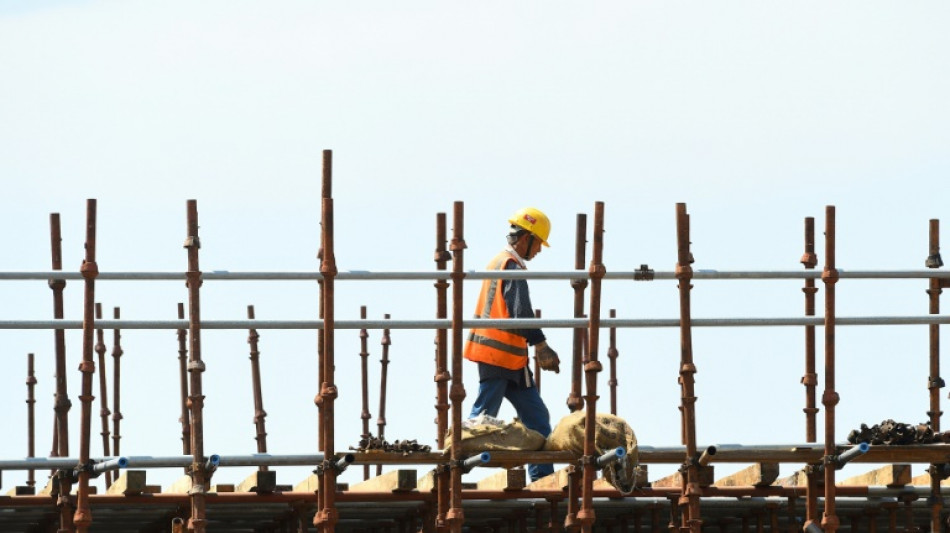
China should do more to help avoid debt crisis: US official / Photo: Ishara S. KODIKARA - AFP/File
 Thukukile Zuma Resigns from ANC Johannesburg Leadership Amid Disciplinary Dispute

 CM Mohan Yadav Meets Bohra Spiritual Leader to Discuss Simhastha 2028 and Development

 Eli Crane Defeats Jonathan Nez in Tight Arizona Congressional Race

 Sherilyn Smith Encourages Women to Embrace Scars as Symbols of Resilience

 Belgium Signs Contract for 20 Rheinmetall Skyranger Air Defence Systems

The "enormous scale" of Chinese lending to developing nations makes it critical Beijing do more to participate in restructurings to avoid a new international debt crisis, a senior US Treasury official said Tuesday.
In the wake of the pandemic, many countries are facing debt distress, and China has delayed or failed to participate in multinational efforts to try to work out those borrowing loads, said Brent Neiman, counselor to the Treasury Secretary.
"China's enormous scale as a lender means its participation is essential," Neiman said in a speech to the Peterson Institute for International Economics.
He noted that estimates of the total of outstanding Chinese official loans, while uncertain due to a lack of transparency, range widely to as much as $1 trillion.
"China became the world's largest official creditor in 2017, surpassing the claims of the World Bank, IMF, and all Paris Club official creditors combined," he said.
The high borrowing, outflow of funds from developing nations and strong US dollar amid rising interest rates have increased the pain for debtor countries, and "these ingredients all but assure debt distress in a number of countries," he said.
"Failure to act on these debts could imply years of ongoing difficulties with the servicing of debts and with underinvestment and lower growth in low and middle income countries."
In a now familiar message, repeated by government officials as well as the International Monetary Fund and World Bank, Neiman called on China to end the "enormous delays" in participating in the international efforts to provide relief.
The G20 has agreed on a "common framework" for debt restructuring for the poorest countries, but to date only three have qualified, and only one, Zambia, has received assurances from China of debt restructuring, allowing it to secure an IMF aid package.
Neiman warned the delays "may discourage others from requesting needed treatments, and preclude the best outcomes."
Middle income countries have fared no better in debt workouts with Chinese creditors, he said, and crisis-hit countries like Sri Lanka are not eligible for the common framework.
He called on Beijing to take steps to speed the workouts, including setting up a single entity to deal with bad loans, and providing more transparency on the terms and lending amounts.
G.Stevens--AMWN