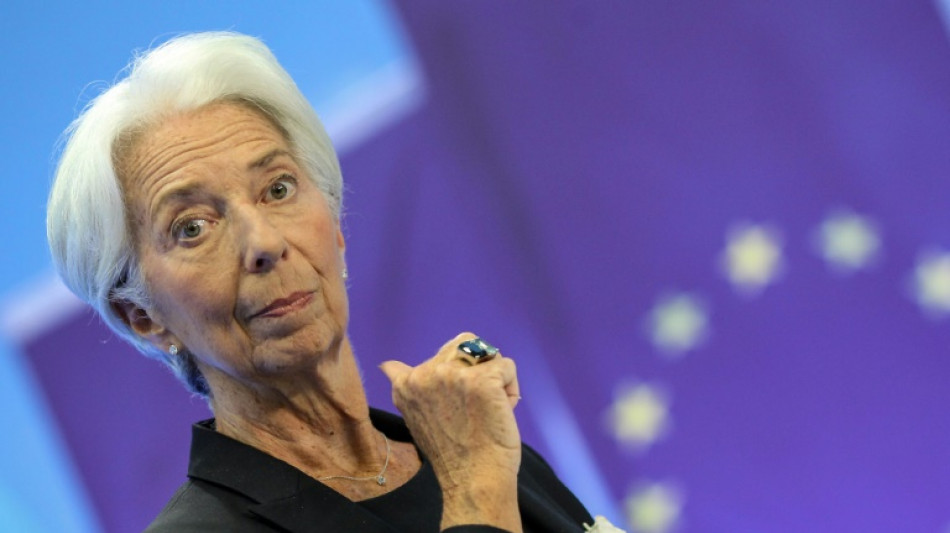
ECB determined to stop inflation becoming 'embedded' / Photo: Daniel ROLAND - AFP/File
 Thukukile Zuma Resigns from ANC Johannesburg Leadership Amid Disciplinary Dispute

 CM Mohan Yadav Meets Bohra Spiritual Leader to Discuss Simhastha 2028 and Development

 Eli Crane Defeats Jonathan Nez in Tight Arizona Congressional Race

 Sherilyn Smith Encourages Women to Embrace Scars as Symbols of Resilience

 Belgium Signs Contract for 20 Rheinmetall Skyranger Air Defence Systems

The European Central Bank is determined to stop soaring inflation becoming the norm, its president said Tuesday, as the coronavirus pandemic and the Russian invasion of Ukraine put lasting pressure on prices.
The twin shocks have led to consumer price rises that are "much higher and more persistent" than expected, Christine Lagarde said in a speech in Frankfurt, adding that the central bank had to ensure sky-high inflation does not become "embedded".
"This is what the ECB is doing," Lagarde said.
Inflation in the eurozone climbed to 9.1 percent in August, an all time high, with analysts predicting the rate could reach double digits by the end of the year.
At its last meeting earlier this month the ECB raised its interest rates by a record large 75 basis points, as it sought to tame the surge in consumer prices.
The shock decision came just a few weeks after the bank had hiked rates for the first time in over a decade, bringing an end to a period of negative interest rates.
The aggressive moves had been a "key tool to signal our determination" to bring inflation back to the ECB's two-percent target, Lagarde said.
Looking ahead, the ECB expected to "raise interest rates further over the next several meetings", she said.
How fast and how far rates would rise would depend on the "inflation outlook", she added.
Soaring inflation rates were driven by the economic shocks of the coronavirus pandemic and the Russian invasion of Ukraine, which has sent the price of energy soaring, Lagarde said.
The cuts to Russian gas imports would "have ramifications for several years", keeping energy prices elevated, while pandemic bottlenecks would lead supply chains to be restructured at higher cost, she said.
The constraints on supply in both cases were "likely to last longer than in the past", Lagarde said, meaning it was "taking longer for the inflationary effects of those shocks to fade out."
S.Gregor--AMWN