
No Visa Required: SMX Passport Moves Physical Assets into the Digital Economy
 Korea's Severe Asthma Patients Blocked from Biologics by Restrictive Reimbursement Rules

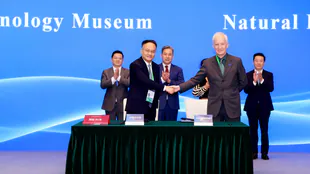 Shanghai Science and Technology Museum Signs Pacts With London and Ottawa Institutions at CIIE

 First-time boat buyers advised to assess full ownership costs

 Planning and preparation can reduce stress of interstate relocation

 Two more arrested in Carrie Mullane suspected murder investigation

 MLA seeks inquiry into reported sectarian gestures on Ormeau Road

 Louise O’Reilly attacks Simon Harris over unemployment remarks

 Canadian soldier Aidan Goulding remembered at Vancouver funeral

 Tayyab Arif hits 57 on Pakistan Test debut against Sri Lanka

 Robert Trujillo discusses literacy and social justice children’s books

 Civil rights advocate William Bill Tucker dies aged 98

 Pennsylvania Democrats secure state trifecta in midterm elections
 Godzilla Minus Zero sets foreign-language box-office opening record

 Eagles record six sacks as rushing attack struggles against Giants

 Thames Water seeks to delay £12bn in debt repayments

 Newark boxing gym expands alternative education programme

 Democrats consider impeachment drive against Defence Secretary Hegseth

 Energy bill plan could use HMRC income data to target support

 Business owner earning £6,000 a month tackles £70,000 debt

 Nvidia chief faces inquiry after disclosing affair with suspected Chinese agent

 Comet returns as online electrical marketplace 14 years after collapse

NEW YORK CITY, NY / ACCESS Newswire / October 7, 2026 / SMX built its Digital Material Passport Platform to give physical materials something they historically lacked: an identity that can survive every stage of their economic life. Now, as war, oil volatility, inflation and persistent supply-chain pressure redraw the economics of manufacturing, that digital passport is becoming increasingly important to a market where knowing what a material is, where it came from and what happened to it can directly affect what it is worth.
The shift is part of the Age of Parity, the new economic environment in which recycled materials can compete with, and in some circumstances become more economically attractive than, newly manufactured virgin materials. War and geopolitical instability have disrupted energy and petrochemical markets. Oil volatility has increased uncertainty around virgin plastic production. Inflation has raised manufacturing, transportation and labor costs. Supply chains remain vulnerable to interruptions, tariffs and logistics pressures. Together, those forces are dismantling the assumption that virgin material will reliably be the cheaper and easier option.
The changing economics of materials, and SMX's role in creating the infrastructure to authenticate them, has generated growing global media attention, including in Forbes, Rolling Stone, Time, the Chicago Tribune, the Miami Herald, the Los Angeles Tribune and other international news platforms.
The attention reflects a larger change taking place across industries: claims have less value when they cannot be supported by evidence.
And that creates the next challenge of the Age of Parity.
If recycled material is going to compete with virgin material as a primary industrial commodity, the market needs to know exactly what it is.
THE PASSPORT GIVES MATERIAL A MEMORY
That is where SMX's Digital Material Passport Platform comes in.
SMX embeds invisible molecular markers directly into physical materials, allowing them to carry a persistent identity. That physical identity is connected to a secure digital record containing information that can include origin, composition, recycled content, chain of custody, authentication history, lifecycle events and other relevant material data.
Instead of information existing separately from the material in certificates, labels, spreadsheets or supplier declarations, SMX connects the information to the material itself.
That distinction matters because materials move.
A plastic pellet, textile fiber, piece of metal or other material can pass through manufacturers, suppliers, processors, recyclers and markets. Ownership can change. Materials can be blended, processed, reused and recycled. Paperwork can become separated from the physical product it is supposed to describe.
SMX's technology is designed so the identity can remain connected to the material throughout those transitions.
The Digital Material Passport can therefore become more than a record of where something started. It can create a developing history of what happened to it.
For recycled plastic, that can mean identifying polymer type, source, recycled content, grade, chain of custody, recycling history and lifecycle information. For precious metals and other commodities, it can support authentication and provenance. Across textiles and manufactured products, it can provide the physical-to-digital connection increasingly necessary for traceability and compliance.
WHEN PRICE CHANGES, PROOF BECOMES VALUABLE
That capability takes on greater economic significance in the Age of Parity.
When recycled material was primarily viewed as an environmental alternative, verification could be treated largely as an ESG or reporting function. When that same material becomes part of a company's strategy for controlling costs, securing supply and meeting regulatory requirements, verification becomes commercial infrastructure.
Manufacturers need confidence that recycled inputs meet specifications. Brands need evidence supporting recycled-content claims. Regulators increasingly expect auditable information. Recyclers need a way to distinguish authenticated material from material whose origin and history cannot be established. Markets need reliable information before those materials can be valued or traded.
SMX's Digital Material Passport creates an infrastructure connecting those requirements.
It also provides a foundation for the digitization of real-world assets. A physical material with a persistent, authenticated identity can be represented digitally with greater confidence because the digital record has something identifiable behind it in the physical world.
That connection is becoming increasingly relevant as digital markets expand beyond purely digital assets toward tokenization tied to commodities, materials and other real-world assets.
FROM MATERIAL TO ECONOMIC ASSET
The implications extend beyond compliance. A material whose identity, composition and lifecycle can be authenticated can be sorted more accurately, purchased with greater confidence, returned to manufacturing and connected to new economic mechanisms.
SMX is extending that infrastructure through its recycled-plastic ecosystem and Plastic Cycle Token, connecting authenticated physical material and lifecycle activity to measurable digital economic value. The same physical-to-digital connection can support the growing tokenization of real-world assets by giving the digital record an authenticated physical asset behind it.
That is where the Digital Material Passport becomes especially relevant to the Age of Parity. As recycled materials become economically competitive with virgin resources, their provenance, composition and history become part of their value. What was once treated as waste can re-enter the supply chain as an identifiable, authenticated economic asset.
The economics have changed. War, oil volatility, inflation and supply-chain pressure helped change them. Now the infrastructure for that new materials economy is catching up.
The Age of Parity has a passport.
SMX shows how to stamp it.
ABOUT SMX (SECURITY MATTERS) PLC
SMX (Security Matters) PLC (NASDAQ:SMX) develops molecular traceability and material authentication technologies designed to strengthen supply-chain transparency and integrity across global industries. Its platform embeds invisible molecular markers directly into physical materials, including solids, liquids and gases, allowing them to carry a persistent identity that can be detected and verified throughout their lifecycle.
Contact: Billy White / [email protected]
SOURCE: SMX (Security Matters) Public Limited
View the original press release on ACCESS Newswire
O.Johnson--AMWN