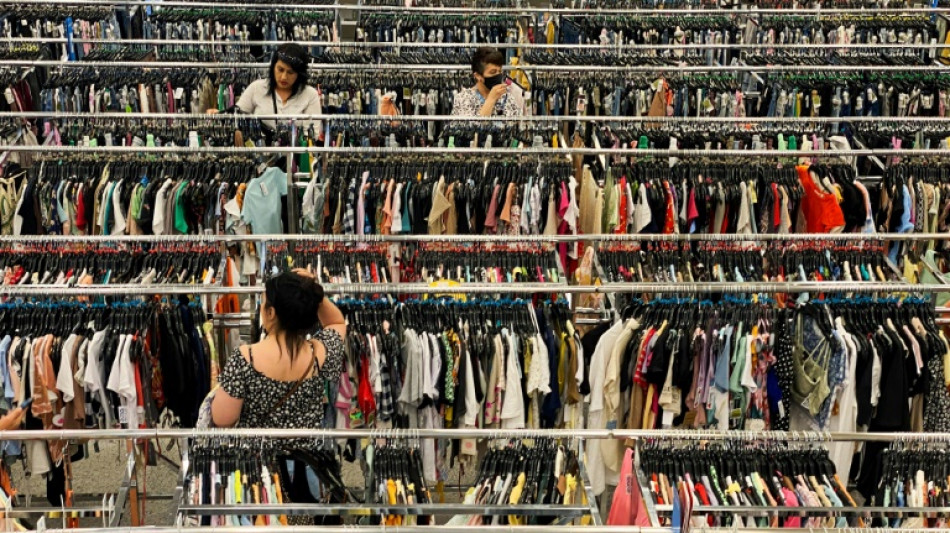
US 'broad-based' inflation will take time to come down: Fed official / Photo: Patrick T. FALLON - AFP/File
 Thukukile Zuma Resigns from ANC Johannesburg Leadership Amid Disciplinary Dispute

 CM Mohan Yadav Meets Bohra Spiritual Leader to Discuss Simhastha 2028 and Development

 Eli Crane Defeats Jonathan Nez in Tight Arizona Congressional Race

 Sherilyn Smith Encourages Women to Embrace Scars as Symbols of Resilience

 Belgium Signs Contract for 20 Rheinmetall Skyranger Air Defence Systems

While there are some signs that global and domestic inflation pressures are easing, high prices have spread, making it harder to quell quickly, a top US central banker said Monday.
Continued strong demand for goods and for workers will keep pressure on inflation -- which has hit the highest in 40 years -- New York Federal Reserve Bank President John Williams said.
"This is resulting in broad-based inflation, which will take longer to bring down," he said.
Prices soared over the past year in part due to worldwide supply chain snags, creating shortages of key components like computer chips needed for cars and electronics.
Those issues have been exacerbated by zero-Covid policies in China and the Russian invasion of Ukraine that sent food and energy prices surging.
Those supply constraints are easing, while rising interest rates are cooling demand, helping to bring down prices of many commodities like lumber, which should lower inflation, Williams said in a speech to the US Hispanic Chamber of Commerce National Conference in Phoenix, Arizona.
"Unfortunately, that's it for the good news on inflation," he said, warning that those factors "will not be enough by themselves to bring inflation back to our two percent objective."
The Fed has moved aggressively this year to tamp down demand to help drive prices lower, hiking interest rates five times, for a total of three percentage points. And the central bank has said more increases are coming this year.
"From Main Street to Wall Street ... inflation is the No. 1 concern," Williams said, adding, "our job is not yet done."
Even as supply issues improve, "demand for durable goods remains very high -- beyond what can be produced and brought to market," while "demand for labor and services is far outstripping available supply."
Still, he said he expects the aggressive Fed moves, along with similar steps by other major central banks, will help to restore balance globally.
Williams said "the combination of cooling global demand and steady improvements in supply ... should contribute to inflation declining to about three percent next year."
The Fed's preferred index showed annual inflation slowed to 6.2 percent in August, from the 7.0 percent peak in June.
Williams said he expects US economic growth to be close to flat this year and post modest growth in 2023, with a slight uptick in unemployment.
A.Rodriguezv--AMWN