
With Oil Prices Surging, Recycled Plastic is no Longer a Sustainability Pledge; it's an Economic Priority
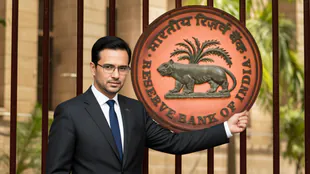 RBI Data Reveals Divergence in Credit Card Spending and Debit Card Cash Withdrawals

 Panthers expected to begin 2027 NRL season away from new stadium

 Sweet As app launches restaurant discovery platform

 Phoenix Restaurants Offer Thanksgiving Dinner to Go for Pickup

 Mayo school appeals for information after convent and chapel vandalism

 Virginia overwhelms Arkansas 91-72 behind balanced scoring

 Second major storm brings destructive winds and outages to British Columbia

 Godzilla Minus Zero leads North American box office with $31.6m

 Advocate calls for coordinated support for children facing trafficking

 Medicare Open Enrollment Ends Dec. 7: Review Your Coverage Options

 US Treasury order targets bank transfers linked to crypto exchange MEXC

 Nvidia CEO Controversy Sparks Fears of Tighter U.S. AI Chip Curbs for Samsung and SK hynix

 Villeneuve teases James Bond casting at Los Angeles museum gala

 Nottinghamshire launches specialist rural crime policing team

 China confirms talks over possible Xi-Putin-Trump summit

 Rail journey offers a slower route to a Berlin city break

 Arsenal control title race as Manchester United fall into bottom three

 Suspected Krakow gunman dies after attack that killed six

 Carrick backs Dalot after hostile reception from Manchester United fans

 Aston Villa Defy History With Rare Victory at Old Trafford

 Crowds Gather at San Francisco Park for Elizabeth Holmes Lookalike Tournament
NEW YORK CITY, NY / ACCESS Newswire / November 4, 2026 / Recycled plastic used to be treated like a gesture. A favor to the planet. A sustainability talking point. A way for companies to say they were trying.
That era is over.
War, oil volatility, diesel inflation, transportation, tariffs, supply disruption, rising input costs, and the growing threat of plastic taxes are forcing a new reality on manufacturers, brands, retailers, and consumers: the materials economy is now part of the affordability crisis.
Plastic is not just a bottle, a bag, or packaging. It is what protects food, medicine, household goods, electronics, logistics, transportation, textiles, consumer products - what we use and need from day to night. It is how we maintain our daily modern lives. Without it, that structure begins to crumble. The World Bank has warned about the scale of the global waste crisis and the rising pressure created by modern consumption, urbanization, and material demand.
And when virgin plastic becomes as expensive as fossil-based feedstocks, the case for recycled plastic changes. It stops being only an environmental argument. It becomes an economic one.
That is the Age of Parity: the point at which recycled plastic and virgin plastic begin converging in cost, forcing recycled material to move from a secondary sustainability option into a core economic tool.
The pressure is already visible. According to The New York Times' May 21, 2026 article, "What the War Is Costing You," by Emmett Lindner and Rebecca Lieberman, the average American household has spent an extra $187.41 on gasoline since the war with Iran began - "the equivalent of a month's electricity bill" for many households, or "a week's worth of groceries for a couple." But the larger warning is what energy volatility does beyond the gas pump. As The New York Times reported: "Nearly three out of four goods move across the country by truck. Many of those trucks are powered by diesel, making them much costlier to drive, and what's inside them costlier for consumers."
That is the affordability crisis in one sentence.
Oil volatility raises the cost of gasoline. Diesel volatility raises the cost of moving goods. And because virgin plastic is tied to fossil-based feedstocks, the same pressure moves through packaging, manufacturing, shipping, food protection, medical supplies, consumer products, and nearly everything households buy.
Recent media coverage is now pointing in the same direction: the future of recycling depends not just on using recycled material, but on proving it.
The Miami Herald featured SMX and its technology for proving recycled content, tracing material origin, and verifying chain of custody, while TIME recently examined the changing economics of plastic verification in an article titled "Rethinking Plastic: How Risk and Verification Are Reshaping Markets," which looked at how proof, authentication, and verified material data are becoming more important as companies face rising pressure over plastic use, recycling claims, and supply-chain risk. A Forbes article, "SMX: How Proof Is Replacing Promises in Sustainability," examined how SMX's molecular marking, material verification, and digital identity technology are helping move sustainability claims from marketing language into provable, auditable data.
Together, those stories point to the same economic conclusion: recycled plastic can no longer scale on aspiration alone. It needs proof. It needs verification. It needs identity.
The issue has never been whether recycled plastic has value. The issue has been whether manufacturers can trust it at scale.
SMX provides technology services to solve that problem by giving recycled plastic a verified identity. Through its molecular marking technology, SMX can embed an invisible, durable marker directly into materials, then connect that physical material to a secure digital record. That means recycled plastic can carry proof of origin, composition, recycled content, chain of custody, lifecycle history, and compliance status.
That proof matters because manufacturers cannot confidently replace virgin plastic unless they know exactly what they are buying. They need data that can satisfy regulators, procurement teams, suppliers, customers, brands, and auditors. They need recycled plastic that is not just claimed, but certified.
SMX's core capabilities include molecular marking, instant authentication, blockchain-backed digital records, digital material passports, provenance tracking, chain-of-custody verification, recycled-content certification, lifecycle monitoring, audit-ready compliance, and data-backed recycling validation. Together, these tools turn recycled plastic from an uncertain input into a trusted industrial material.
Without certification, recycled plastic remains vulnerable to mistrust, inconsistent pricing, weak documentation, and limited adoption. With verification, it becomes a scalable industrial input that can help manufacturers reduce exposure to oil-linked input costs.
That is why recycled plastic is becoming more than the environmentally preferable choice. In more use cases, it is becoming the economically rational one.
The affordability story is no longer separate from the recycling story. They are becoming the same story.
As the cost of oil-linked production rises, the value of verified recycled materials rises with it. Verified recycling is becoming part of the new cost-control infrastructure for modern manufacturing.
For years, recycling was sold on intention.
Now it has to be backed by evidence.
About SMX
SMX (Security Matters) PLC (NASDAQ:SMX)(NASDAQ:SMXWW) provides technology for molecular marking, authentication, traceability, and digital material identity. The company's platform connects physical materials to secure digital records, enabling verification of origin, composition, chain of custody, lifecycle history, recycled content, and compliance across global supply chains.
Contact: Billy White/ [email protected]
SOURCE: SMX (Security Matters) Public Limited
View the original press release on ACCESS Newswire
H.E.Young--AMWN