
IRS Shuts Down FIRE Today: What Information Return Filers Need to Know Before the 2027 Filing Season
 Van Gogh’s ‘Châtaigniers en Fleurs’ Sets $285m Record at Sotheby’s

 Anthropic Sets Record $81.3 Billion IPO Valuing AI Firm at $1.5 Trillion

 eThekwini Faces R6.5bn Flood Claim from Toyota’s Insurer

 First Canadian Graphite Reports 43.9% Graphitic Carbon Sample and Encouraging Coarse-Flake Characteristics at Zone 13 at Lac Guéret South
 American Critical Minerals Reports High Grade Potash Intersection of 6.55m Grading 38.51 wt.% KCl at its Green River Project, Utah

 InterContinental Hotels Group PLC Announces Transaction in Own Shares - November 19
 Making the Most of a Long Weekend Without Leaving Town

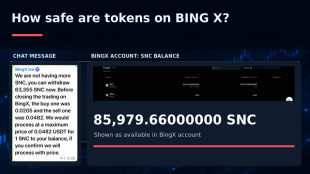 BING X: 22,624.66 SNC have disappeared at BingX – how safe are tokens on BingX? Will BingX’s MiCAR licence be suspended?

IRIS now replaces FIRE as the IRS's electronic filing platform for most information returns, including the 1099 series. Filers face new registration requirements, record-level acknowledgments, and a new corrections process, all in the same season as the new $2,000 reporting threshold.
DALLAS, TX AND FAYETTEVILLE, AR / ACCESS Newswire / November 19, 2026 / The IRS stopped accepting information returns through its Filing Information Returns Electronically (FIRE) system at 3 p.m. ET on November 19, 2026. Beginning with the 2027 filing season, filers must use IRIS to electronically submit tax year 2026 information returns, prior-year returns, and corrections.
For businesses filing their own information returns and for accounting firms filing on behalf of clients, the change goes well beyond a new login. Anyone who transmitted returns through FIRE directly now needs a new IRIS Transmitter Control Code (TCC), and filing results and corrections now work differently. The transition also arrives alongside the new $2,000 threshold for Form 1099-NEC and certain Form 1099-MISC payments, which leaves little room for a January learning curve.
What changes in the filing workflow?
IRIS is not FIRE with a new name. Four differences matter most for filers:
Will you need an IRIS TCC?
A TCC identifies the sender of returns to the IRS, so a filer needs one only if it transmits returns itself. The IRS issues IRIS TCCs to Issuers (businesses filing their own returns), Transmitters (filing on behalf of other businesses), and Software Developers. That leaves two paths:
Tax1099, the IRS-authorized e-filing platform from Zenwork, Inc., falls in the second path. It sends federal returns to IRIS under its own transmitter credentials, so there is no separate IRIS application or transmission process for its users to manage. Users still prepare and approve their filing data.
What filers should prioritize before January?
How Tax1099 supports the transition
As businesses and accounting firms prepare for the IRS's transition from FIRE to IRIS, one of the most pressing concerns is the conversion of legacy Publication 1220 FIRE files into the new IRIS-compatible format. For organizations with years of historical filing data, manually reformatting files can be both time-consuming and error-prone.
To simplify this process, Tax1099's FIRE-to-IRIS Converter enables users to seamlessly transform existing Publication 1220 FIRE files into IRIS-ready files. Users can review and validate converted records before submission, helping reduce filing errors and accelerate adoption of the new IRS filing framework.
Beyond file conversion, Tax1099 helps organizations simplify every stage of the IRIS transition.
"The move from FIRE to IRIS changes how information returns are filed, tracked, and corrected, and it lands in the same season as the new $2,000 threshold," said Sanjeev Singh, Founder and CEO of Zenwork. "Tax1099 has been filing through IRIS for the past few seasons, so our workflow is already proven, not something we're building for this deadline. Businesses and accounting firms that move to Tax1099 don't have to learn IRIS on their own or apply for their own IRIS credentials. They can validate recipient data, track each record's status, and correct issues in one place, using a process our customers already rely on."
Filers can check where they stand with Tax1099's FIRE Retirement (IRIS) Readiness Checker at tax1099.com/fire-retirement-readiness and review the 2026 changes at tax1099.com/2026changes.
About Zenwork Tax1099
Tax1099, an IRS-authorized eFiling platform, simplifies tax compliance for over 750,000 businesses and 70,000 CPA firms nationwide. Supporting 40+ federal and state-compliant forms, including Form 941, Tax1099 offers robust features like bulk filing, API integration, and 24/7 AI assistance, plus live chat and email support. Backed by over 10 years of experience in tax processing and customer service, the platform offers a suite of capabilities to suit diverse needs.
Learn more about Zenwork, Inc. and its products at www.zenwork.com, www.tax1099.com, and www.compliancely.com
Media contact
Ed Pratt, Zenwork, Inc., [email protected]
SOURCE: ZENWORK INC
View the original press release on ACCESS Newswire
Y.Nakamura--AMWN