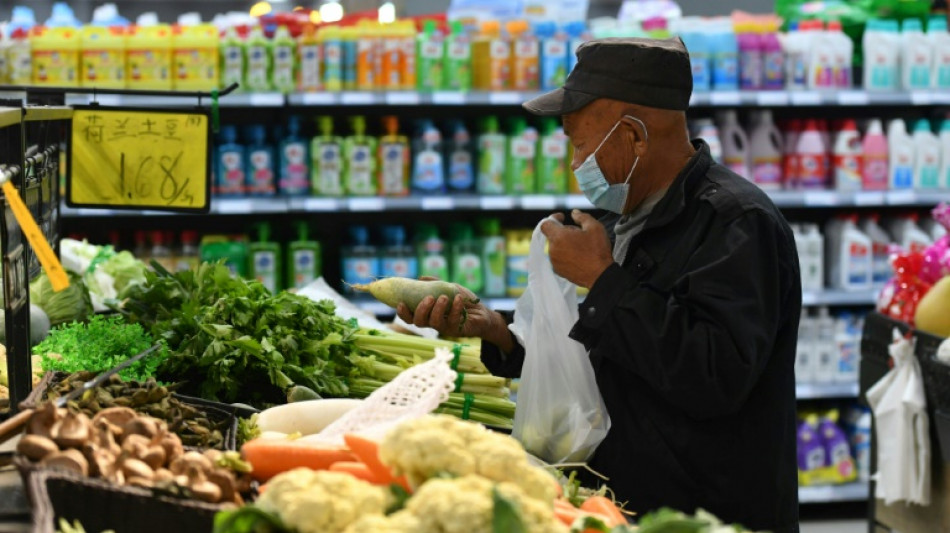
China consumer inflation rises to two-year high / Photo: STR - AFP
 Thukukile Zuma Resigns from ANC Johannesburg Leadership Amid Disciplinary Dispute

 CM Mohan Yadav Meets Bohra Spiritual Leader to Discuss Simhastha 2028 and Development

 Eli Crane Defeats Jonathan Nez in Tight Arizona Congressional Race

 Sherilyn Smith Encourages Women to Embrace Scars as Symbols of Resilience

China's consumer inflation hit two-year high in September, official data showed Friday, fuelled by soaring pork prices and as extreme weather hit farmers.
Consumers in China have been largely spared the impact of a global surge in food and energy costs following Russia's invasion of Ukraine.
But data showed Friday that the country's consumer price index (CPI), the main gauge for retail inflation, hit 2.8 percent last month, up from 2.5 percent in August.
The reading is the highest since April 2020, when the country was emerging from its first wave of Covid-19 lockdowns.
It also follows weeks of record temperatures above 40 Celsius (104 Fahrenheit), China's hottest summer on record that caused a crippling drought in August.
"Impacted by high temperatures and low rainfall, fresh vegetable prices rose 6.5 percent" on-year, NBS senior statistician Dong Lijuan said in a statement.
The price of pork -- the country's favourite meat -- shot up 36 percent, according to the NBS.
"With bullish expectations, some pork farmers are reluctant to sell, and prices continued to rise," Dong said.
Chinese authorities have repeatedly dipped into pork reserves in recent weeks as soaring prices triggered inflation concerns.
Meanwhile, the country's factory-gate inflation dropped to 0.9 percent, its lowest in more than a year, data showed, on the back of falling raw material prices.
The figure was down from a 2.3 percent rise in August and the lowest since January 2021, according to official data.
"In September, the international prices of crude oil and other bulk commodities continued to decline," Dong said.
Analysts polled by Bloomberg had expected consumer prices to rise by 2.9 percent and producer prices by one percent
M.A.Colin--AMWN