
What we know about the UK's deadly meningitis outbreak / Photo: CARLOS JASSO - AFP
 Allen rushes Bills to thrilling 37-34 win over Rams

 India youth shift tactics as police clamp down on election protest

 Malaysia's Firefly extends flight cancellations due to haze

 IMF upgrades 2026 growth forecast but warns of 'split' outlook
 Infantino could pull off 'Houdini' act as critics struggle for candidate

 France braces for fresh nationwide student demonstrations

 Ahead of Israel vote, desert town becomes frontline against ultra-Orthodox expansion

 El Nino Watch: the impacts around the world this week

 Man City, PSG clash at contrasting time for state-backed projects

 Akkodis Brings Multilingual Intelligence to Mercedes-AMG PETRONAS Formula One Team races

 'Breaking Bad' actor RJ Mitte dead: representatives

 Former DR Congo president Kabila forms new force with M23 armed group
 Tom Cruise's 'Digger' tanks, leaving studio with $250 mn hole
 US actress Selma Blair arrested after flight altercation

 One dead as Hurricane Simon creeps along Mexico's Pacific coast

 Carrick's Man United 'hungry and eager' to fix worst start in decades

 Fury as US federal agents search anti-Trump lawmaker's home

 One goal enough for Flick as Barca enter Galatasaray cauldron

 A7 to unveil a service that will re-invent the international payments market

 'Status quo' with EU 'not good enough', UK PM says as summit date set

 Stolen Renoir paintings found behind wall in France

 French supermarkets suffer refrigerator shutdown after 'unprecedented' cyberattack

 Arsenal lose Hincapie and Zubimendi in freak double blow

 Saudi says resilience tested, vows response after deadly airport attacks
 Alcaraz exits Shanghai Masters in straight-sets loss
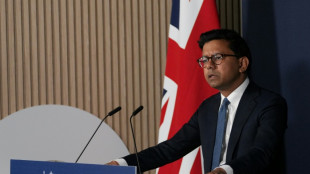
UK health authorities are probing 27 cases linked to a deadly meningitis outbreak believed to have spread at a nightclub in southeast England.
Here's everything we know about the disease and the outbreak:
- What is meningitis? -
Meningitis is a potentially deadly infection causing the inflammation of the brain or spinal cord linings, which can lead to sepsis.
Bacterial meningitis, as seen in this outbreak, is rarer and deadlier than the viral type.
Initial symptoms of meningitis include headache, fever, drowsiness and a stiff neck -- but those are symptoms of different illnesses and can hamper prompt diagnosis.
Another sign can be a rash, and the disease can progress rapidly.
"It is certainly not as infective as say flu or COVID-19, and requires often fairly prolonged close contact before transmission takes place," said Andrew Lee, Professor of Public Health at the University of Sheffield.
It can spread through close contact like kissing or the sharing of vapes or drinks.
More than two million people get meningitis worldwide each year, according to a tracker by the Meningitis Research Foundation -- 80 percent of them in developing countries.
Outbreaks among university students have been particularly common in the West.
- Where does the infection come from? -
Meningococcal disease is a rare but serious illness caused by the meningococcal bacteria, which can result in meningitis.
It is usually spread by the people who carry the bacteria in the back of their throat or nose but don't develop any symptoms.
"Between 10-24 per cent of the population unknowingly carry this germ at the back of their throats usually without any harm," said Lee.
There are multiple strains of the bacteria. In this outbreak, at least nine of the confirmed cases are of group B meningococcal disease (MenB) -- the most common in the UK.
The epicentre of this outbreak is believed to be Club Chemistry in Canterbury, according to Health Secretary Wes Streeting. At least 10 of the confirmed cases went to the nightclub between March 5-7.
- How big is the outbreak? -
It has been described as "unprecedented" by Streeting.
At least 27 cases were being probed as of Thursday, with 15 confirmed. That figure has risen rapidly in the last week, with the first case reported on Friday, March 13.
There have also been two deaths.
"The risk of transmission and further cases is usually highest in the first week after contact with a case and the probability rapidly decreases afterwards," Lee said.
Many of those affected are University of Kent students. There have also been cases in four Kent schools and a London higher education institute.
The local authority was unable to confirm whether the outbreak had been contained as of Thursday.
- Why is it unprecedented? -
Health experts point to the unusual speed and spread of the outbreak in a short timeframe.
In the UK, meningitis tends to occur in small clusters.
"In my 35 years working in medicine, in healthcare and hospitals, this is the most cases I've seen in a single weekend with this type of infection," UK Health Security Agency (UKHSA) head Susan Hopkins said.
"This looks like a superspreader event, with ongoing spread within the halls of residence in the universities," Hopkins added.
The UKHSA was alerted to the first case on March 13, and began tracing contacts. France informed UK authorities on March 14 of a case of a person who had been at the university and was hospitalised in France.
Samples collected from patients are being analysed in the laboratory, which could give a better picture about the strain and why the infection has been more invasive.
- What has the official response been? -
Health authorities are racing to identify close contacts of those who were ill, and have set up multiple health clinics in Canterbury distributing antibiotics.
UK Prime Minister Keir Starmer urged anyone at the nightclub on the weekend of the outbreak to seek antibiotics to help halt the spread of the disease.
For the general UK public, "the overall risk remains very low," said Zina Alfahl from the University of Galway's School of Medicine.
Bacterial meningitis usually needs to be treated in the hospital.
It can be prevented through vaccines. The University of Kent has rolled out a targeted vaccination programme to provide 5,000 jabs to students on campus.
While vaccines against some meningitis strains are administered routinely to children in the UK, the shot against MenB has only been part of the immunisation schedule since 2015 -- when the UK became the first country in the world to add the jab to its programme.
As people rush to buy vaccines in response to the outbreak, health minister Streeting said it was "not necessary".
burs-aks/jkb/pdw
D.Sawyer--AMWN