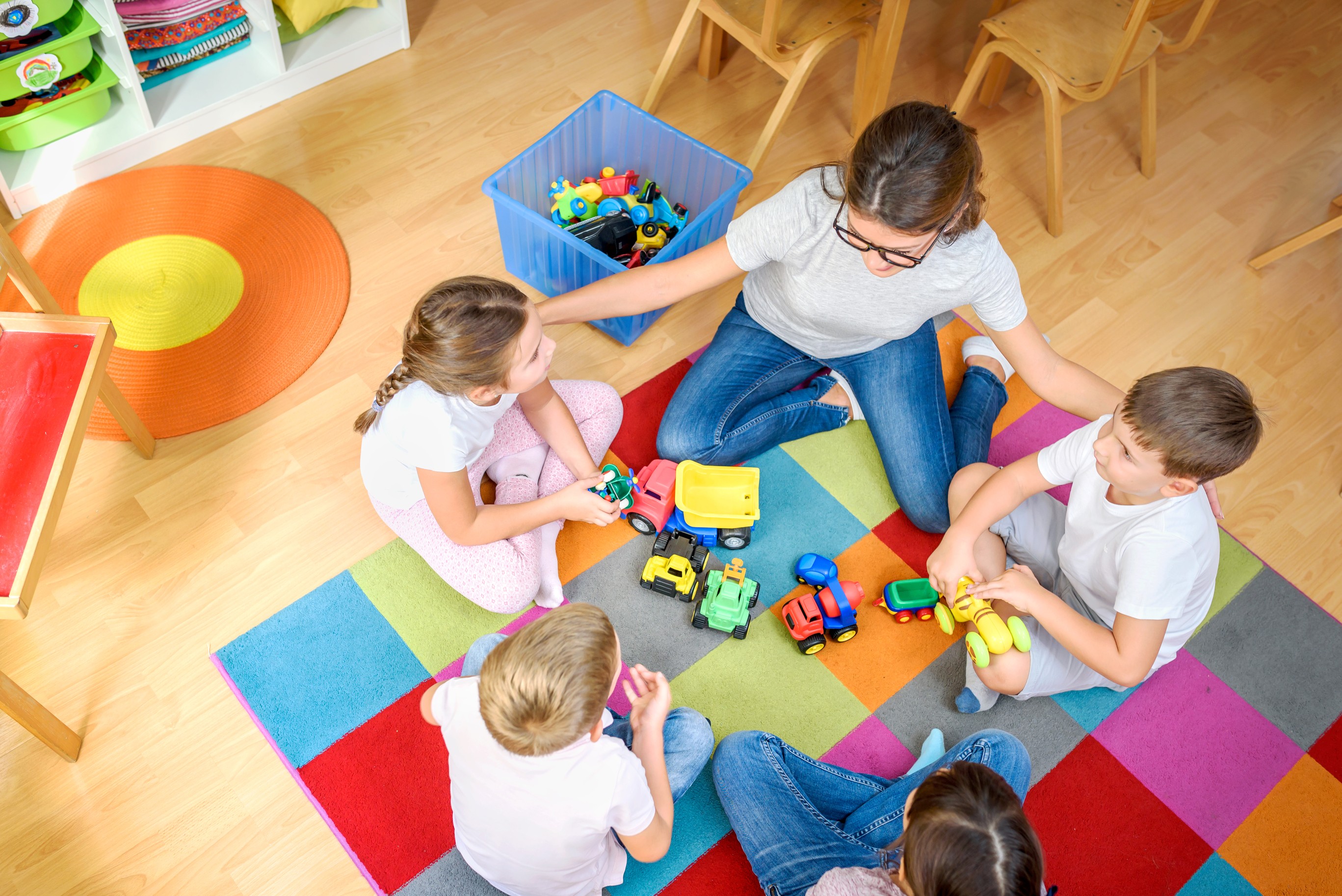
National Study of 2,300+ Women Finds Social Connection Shapes Volunteer Experience Amid Competing Work, Caregiving, and Life Demands
 Five dead as Hurricane Simon, Rachel pummel Mexico's Pacific coast

 Seoul, Tokyo stocks plunge as Asia suffers fresh tech rout

 Damaged and drained, Indonesia's peatlands go up in smoke

 Dominant Australia wary of Pacific threat at Rugby League World Cup

 Pope to be admitted to hospital for lung operation
 Samoa's McFarland welcomes 'massive' arrival of ex-All Blacks for World Cup run-in

 Brewers beat Dodgers 7-4 to extend MLB playoff lead

 Teenager shoots headmaster, teacher at French school

 'Breaking Bad' actor RJ Mitte dead: representatives

 Former DR Congo president Kabila forms new force with M23 armed group

 Tom Cruise's 'Digger' tanks, leaving studio with $250 mn hole

 US actress Selma Blair arrested after flight altercation
 One dead as Hurricane Simon creeps along Mexico's Pacific coast

 Carrick's Man United 'hungry and eager' to fix worst start in decades

 Fury as US federal agents search anti-Trump lawmaker's home

 One goal enough for Flick as Barca enter Galatasaray cauldron
 A7 to unveil a service that will re-invent the international payments market

 'Status quo' with EU 'not good enough', UK PM says as summit date set

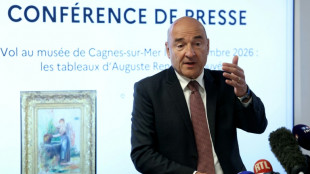
 Stolen Renoir paintings found behind wall in France

 French supermarkets suffer refrigerator shutdown after 'unprecedented' cyberattack

 Arsenal lose Hincapie and Zubimendi in freak double blow

 Saudi says resilience tested, vows response after deadly airport attacks
 Alcaraz exits Shanghai Masters in straight-sets loss
 Pope to enter hospital on Tuesday for lung operation
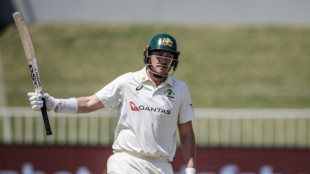 Renshaw shines again before Australia declaration
Research from Western Michigan University and The Association of Junior Leagues International shows organizational support only reduces volunteer burnout when women feel personally connected and can increase strain when they don't
NEW YORK CITY, NY / ACCESS Newswire / April 6, 2026 / Organizational support for volunteers such as training, clear goals, and scheduling flexibility, is supposed to reduce burnout. But a new national study of more than 2,300 women found that it only works when volunteers also feel genuinely connected to the people around them. When social connectedness is low, more organizational support is actually associated with "higher" volunteer role strain.
The finding is one of several that challenge conventional thinking about women, volunteerism, and mental health in "The State of Women's Work, Life and Volunteer Balance: A Look at Volunteerism and Mental Well-Being Across Roles," a mixed-methods study conducted through Western Michigan University and released today by The Association of Junior Leagues International (AJLI). The research combined six focus groups with a national survey of 2,307 respondents and was approved by WMU's Institutional Review Board.
The study is among the first to examine how volunteer commitments interact with work and caregiving demands to shape women's mental well-being, an area largely overlooked by prior research, which has focused primarily on work-family conflict.
The Data Behind the Headlines
The study produced specific, measurable findings across its qualitative and quantitative phases:
Expectations - not time - are the top driver of role strain: Across six focus groups, expectations were mentioned 117 times, making them the single most dominant source of strain. These included self-imposed perfectionism, unclear role definitions, unequal distribution of responsibilities, and societal pressure on women to say yes to everything.
Social connection is the tipping point for volunteer engagement: A one-standard-deviation increase in volunteer social connectedness was associated with 15.6% more monthly volunteer hours. Women who reported stronger connections also reported greater satisfaction and lower strain. Crucially, organizational support reduced volunteer role strain 'only' when social connectedness was also high.
More organizations, more hours, and more strain: Each additional volunteer organization a respondent participated in was associated with a 23% increase in average monthly volunteer hours, but also with higher volunteer role strain, suggesting that volume alone is not a proxy for sustainability.
Home-based strain is what pulls women away from volunteering: Greater home strain was associated with 15.8% fewer volunteer hours per month. Women who identified as mothers had significantly lower odds of increasing their volunteer involvement over the past year. Home-volunteer conflict was one of the strongest predictors of decreased participation.
Women are managing 3.2 roles on average, and strain hits all of them at once: Survey respondents reported holding an average of 3.2 active roles, ranging from two to eight. Focus group participants described strain not as isolated to one role but as an experience where everything feels unmanageable simultaneously, with time management itself becoming an additional burden.
Age is protective, but only through hard experience: Older respondents reported lower volunteer role strain and higher mental well-being. In focus groups, women consistently described learning to set boundaries and release perfectionism over time but emphasized that these were lessons that could only be learned through experience, not advice.
Financial insecurity and disability amplify strain across all roles: Approximately 19% of respondents reported meaningful financial insecurity, and 13% reported a disability, both associated with higher role strain and lower mental well-being, even though these topics were rarely discussed openly in focus groups.
What Makes This Study Different
Most research on women's role strain examines the work-family binary. This study expanded the frame to include volunteer responsibilities alongside professional, caregiving, and household demands, and used a mixed-methods design that grounded its survey findings in the lived experiences of real women.
The qualitative phase revealed that women described volunteering through a stress-reward cycle: demanding and draining, but also deeply fulfilling when the work aligned with personal values and provided genuine connection. One participant described the dynamic as feeling like an addiction, the positive feedback from meaningful work creating a loop that drives further engagement despite the strain.
The quantitative phase validated this pattern at scale, showing that satisfaction with volunteer work increased monthly hours by 12.4% per unit increase, while greater social connectedness and organizational support together amplified engagement further.
Reframing the Problem
"This research tells us that burnout from volunteering is more than a time-management problem. It's an organizational design problem," said Melanie Schild, CEO of The Association of Junior Leagues International. "When we build volunteer environments with genuine social connection and clear, shared expectations, volunteering doesn't just avoid adding stress. It actively improves women's mental well-being. But when organizations focus on structure without investing in relationships, they can inadvertently make strain worse."
The findings inform AJLI's "Every Woman. All Things." initiative, which focuses on expanding conversations around women's well-being, leadership, and the realities of navigating multiple roles. The research arrives at a moment when women's burnout, mental load, and declining rates of formal volunteerism are receiving increased national attention.
About the Study
"The State of Women's Work, Life and Volunteer Balance: A Look at Volunteerism and Mental Well-Being Across Roles" utilized an exploratory sequential mixed-methods design. The qualitative phase consisted of six focus groups, analyzed using constructivist grounded theory. The quantitative phase included a national survey using validated scales for role strain, role overload, role conflict, organizational support, social connectedness, and mental well-being (Short Warwick-Edinburgh Mental Well-Being Scale). Analysis included multinomial logistic regression, hierarchical linear regression, and generalized linear models. The study was conducted through Western Michigan University and approved by its Institutional Review Board.
To learn more about the study and explore its findings, visit https://thejuniorleagueinternational.org/the-state-of-womens-balance-study/
About The Junior League
The Junior League is one of the oldest and largest premier women's organizations, committed to advancing women's leadership for meaningful community impact through volunteer action, collaboration, and training. Since 1901, The Junior League Movement has addressed community issues through hands-on projects, partnerships with local organizations, and advocacy efforts. Through leadership training, community collaboration, and service projects, we Develop Women to Do a World of Good™, making a lasting impact on the lives of those we serve.
Today, The Association of Junior Leagues International (AJLI) is powered by over 105,000 women in 295+ communities across the United States, Canada, Mexico, France, Kenya, and the United Kingdom. To learn more or get involved, visit www.ajli.org.
Media Contact:
Jackie Dadas-Kraper
Interdependence
[email protected]
(248) 842-0597
SOURCE: The Association of Junior Leagues International
View the original press release on ACCESS Newswire
H.E.Young--AMWN