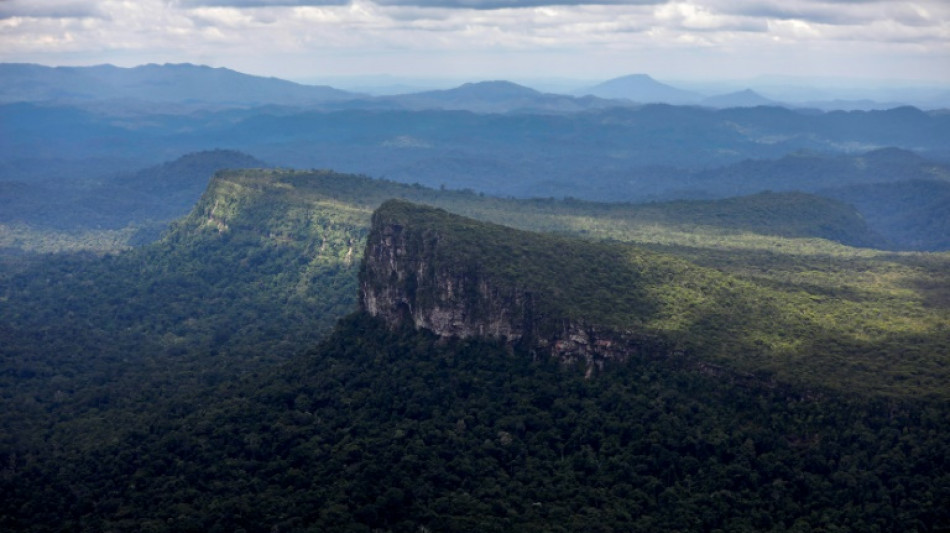
Amazon Indigenous lands prevent disease, save billions: study / Photo: MICHAEL DANTAS - AFP/File
 Braves rock Dodgers to level series, Brewers win thriller

 Most Asia stocks rally as 'Goldilocks' jobs data ease rate fears

 Sunken Silk Road city reveals Central Asia's lost history

 Three years on, Israeli rescuer cannot escape October 7

 Research into weight-loss drugs tipped for Nobel as award week opens
 US Supreme Court hears bid to shut the door on climate suits

 Chourio walk-off single lifts Brewers over Padres

 Flavio Bolsonaro leads Lula in near-done Brazil vote count
 Flavio Bolsonaro leads Lula in partial Brazil poll results

 Titan FX Launches Second “Dream Beyond Borders 2.0” Brand Commercial Featuring Keisuke Honda

 Patriots inflict first Bills defeat as Rams surge late

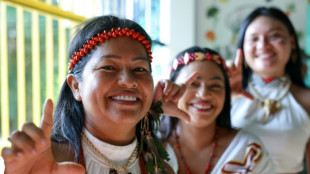 Brazil's Indigenous back Lula as El Nino fuels forest fires

 Brazil braces for results of election battle between Lula and Bolsonaro

 Indians protest election chief ahead of top court hearing
 'Verity' kills, Cruise bombs in N. American movie theaters

 Colts top Commanders in NFL London game

 Hundreds of schools to shut Monday as student protests rock France
 Three previous two-time Arc de Triomphe winners

 'Champion' Daryz wins second successive Arc in fine style

 Daryz wins second successive Prix de l'Arc de Triomphe

 England's seven-goal spree sends message to Euro rivals: Kane

 Trump confirms national intelligence chief as new AI czar

 Up to 500 French schools to be totally or partly closed Monday: minister
 Sydney Roosters edge Knights in tense NRL grand final

 Sabalenka out of China Open in third round, Medvedev into semis

Protected Indigenous reservations in the Amazon rainforest absorb thousands of tonnes of airborne pollution each year, saving around $2 billion annually in healthcare costs for treating respiratory and cardiovascular diseases, according to a study published Thursday.
The decade-long study analyzed the health impacts of forest fires in the Brazilian Amazon, which release huge amounts of particles into the atmosphere that can travel hundreds of kilometers (miles), damaging the air quality in distant cities.
By protecting their own lands against such fires -- often set by land-grabbers, cattle ranchers and others encroaching on the forest -- and instead saving pollution-absorbing trees, Amazon Indigenous peoples help prevent thousands of cases of potentially deadly diseases, found the study, published in the journal Communications, Earth & Environment.
"Worldwide, forests are known for absorbing pollutants from fires through pores on the surface of the leaves, but this is the first time we have estimated the capacity of tropical forests to do this," said lead author Paula Prist of US-based research group EcoHealth Alliance.
"Our results indicate that the Amazon rainforest can absorb as much as 26,000 metric tonnes of the particles every year, and Indigenous territories are responsible for 27 percent of this absorption," she said in a statement.
The study found Indigenous forests prevent 15 million cases of disease each year, saving the health care system at least $2 billion -- a conservative estimate, researchers said.
Numerous studies have found protected Indigenous lands play a key role in protecting forests, whose pollution-absorbing capacity makes them vital to the race to curb climate change.
Indigenous leaders said the new study adds yet another argument to the case for protecting native lands.
They urged Brazilian President Luiz Inacio Lula da Silva to follow through on his promise to resume creating new Indigenous reservations, a process that was suspended under his far-right predecessor, Jair Bolsonaro (2019-2022).
"This study reinforces what Indigenous peoples have been saying for ages," said Dinamam Tuxa, executive coordinator of the Association of Brazil's Indigenous Peoples (APIB).
"It demonstrates the importance of our territories in fighting dangerous pollution... and climate change."
Ch.Kahalev--AMWN