How vaccine misinformation left children vulnerable to Omicron
 Threatened by fire, Bordeaux is 'ready for anything': mayor

 India clears protest site after 'cockroach' movement scores a win
 France fire situation 'remains very unfavourable': interior minister

 WorldPride gets a royal welcome amid warnings for LGBTQ community

 South Africa's migrant exodus leaves employers short-handed
 US holds fire against Iran as reports emerge of stockpile concerns
 Marvel announces 'Black Panther III' at Comic-Con

 Will heatwaves push European holidaymakers to 'coolcations'?
 Messi-less Miami win on Casemiro debut, Berterame suffers head blow

 German police hunt suspect after deadly car ramming near Berlin Gay Pride

 US Federal Reserve expected to hold rates steady as inflation swirls

 Merz vows justice after deadly car ramming near Berlin Gay Pride event
 Joshua survives knockdowns, stops Prenga
 Ohtani delays throwing session over knee 'regression'
 One killed, 15 wounded as car hits crowd near Berlin Gay Pride
 Hodge, Hope give West Indies edge in rain-impacted Pakistan Test

 Scheffler surges at 3M Open with blistering back nine

 Brazil's right-wing party nominates Bolsonaro son to battle Lula
 Norris back on pole at Hungarian GP as rivals handed penalties

 Close to Madrid, those who escaped flames worry what is next
 Messi can skip All-Star Game after grueling World Cup, says MLS

 Hamilton stung by three-place grid penalty
 Howe uncertain if Guimaraes will stay with Newcastle amid Arsenal interest

 Varane concussions motivate Como to ban heading in academy teams
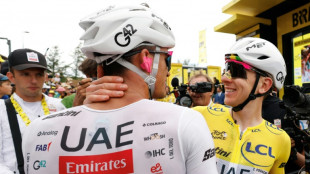 'Amazing' Pogacar-Del Toro friendship lights up Tour de France

The Covid-19 pandemic took a deadly toll on adults in the United States for two years while largely sparing children from the dire statistics.
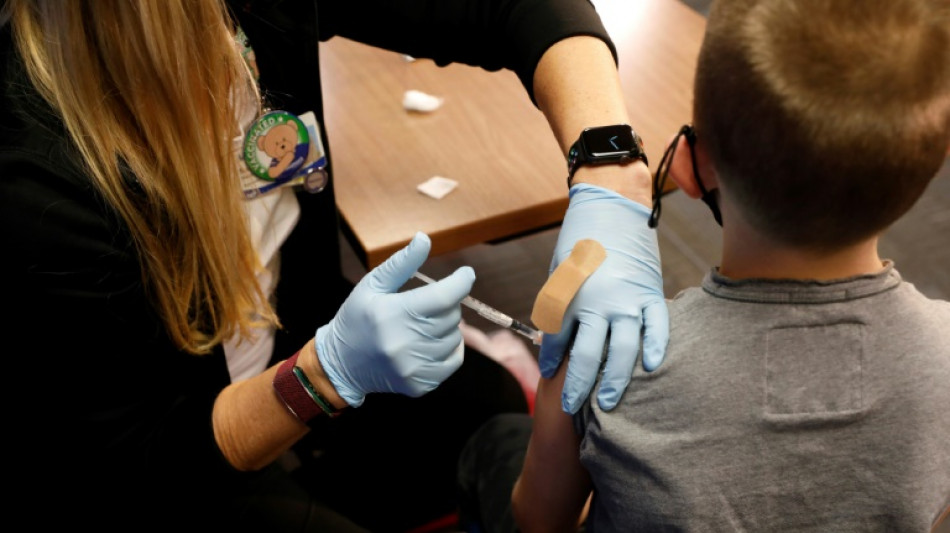
But the rapid spread of the Omicron variant led to record pediatric infections and hospitalizations in the country, and anti-vaccination misinformation that tells parents the shots are dangerous is adding to the risk.
The chances of young people dying from Covid-19 remain low. The shots greatly reduce the odds of severe illness, and vaccinated mothers may pass protection to their babies, but vaccine hesitancy pushed online leaves both parents and children vulnerable.
From worries that the shots were developed too quickly, to false claims that the jabs can impact future fertility, physician Wassim Ballan of Phoenix Children's Hospital said combating misinformation has become part of his job.
"Unfortunately, a lot of times when we're having this time with a family to discuss these things is when the child is already in hospital," he said of the problem.
Parents need to understand that the vaccines are "the most important tool for protection," especially to avoid multisystem inflammatory syndrome in children, a rare and dangerous complication that can follow a mild Covid-19 infection.
Only 27 percent of children aged five to 11 have received a first dose of the vaccine in the United States. Hospitalizations reached a pandemic high of 914 children per day this month, up dramatically from the previous peak of 342 in September 2021.
- Protection from the womb -
The first week of January 2022 saw Texas Children's Hospital in Houston report 12 babies in intensive care with Covid-19.
Babies are too young for the Covid-19 shot, but Kathryn Gray, attending physician of maternal-fetal medicine at Brigham and Women's Hospital, said research increasingly shows that vaccination during pregnancy leads to antibodies safely being transferred to the baby, offering limited protection.
Expectant mothers have also shown hesitancy to get the shot after they were excluded from initial clinical trials.
Gray is among those who are monitoring the situation. "To date there have been no safety signals" in the data, she said, adding that she has "a lot of confidence" in telling patients the shot is safe during pregnancy for mother and baby.
"If they truly want to protect their infants, getting vaccinated is the thing that will protect them the most at this time."
Health agencies across the globe say the same, but the initial lack of data continues to be exploited in vaccine-opposed messaging on social media. Posts on Facebook and Twitter claimed that stillbirths rose following the push to vaccinate pregnant people, even though going unprotected against the disease is the greater risk.
Epidemiologists Carla DeSisto and Sascha Ellington from the US Centers for Disease Control and Prevention said data from 1.2 million US births showed "no evidence the rate of stillbirths is higher overall during the pandemic."
But their research did reveal the risks of contracting the virus while pregnant.
"Compared to pregnant people without Covid-19, pregnant people with Covid-19 are at increased risk of adverse pregnancy outcomes including preterm birth and stillbirth," the researchers said by email.
- 'Unvaccinated milk' -
Breastfeeding has also been the target of misinformation, with posts claiming that babies suffered rashes or even death upon nursing from a vaccinated mother.
The Society for Maternal-Fetal Medicine recommends vaccination for those who are lactating and says there is no reason to stop breastfeeding upon receiving the vaccine.
Misinformation became increasingly common in private Facebook groups where parents connect to share and sell breast milk, group moderators told AFP. In one of the largest such groups, Bethany Bristow said she was concerned by requests for "unvaccinated milk."
The New York mother, along with her fellow moderators, decided to ban such requests, and the rules for her group of more than 10,500 parents now state: "Advertising or requesting vaccine free milk puts you, your children and community at risk."
Studies are finding specific benefits of milk from a vaccinated mother, according to Laura Ward, co-director of the Center for Breastfeeding Medicine at Cincinnati Children's Hospital.
"Antibodies have been detected in the breast milk of vaccinated lactating women. This means that breastfed infants may have some protection against Covid-19 if their mothers receive the vaccine," she said.
Gray agreed. "Breast milk is full of antibodies based on a person's prior exposures both to vaccines and infection. Those things don't pose a risk to infants, they're actually helpful at protecting them," she said.
"Any concerns or unknown pieces about the vaccine are dwarfed by the risk of Covid."
A.Mahlangu--AMWN