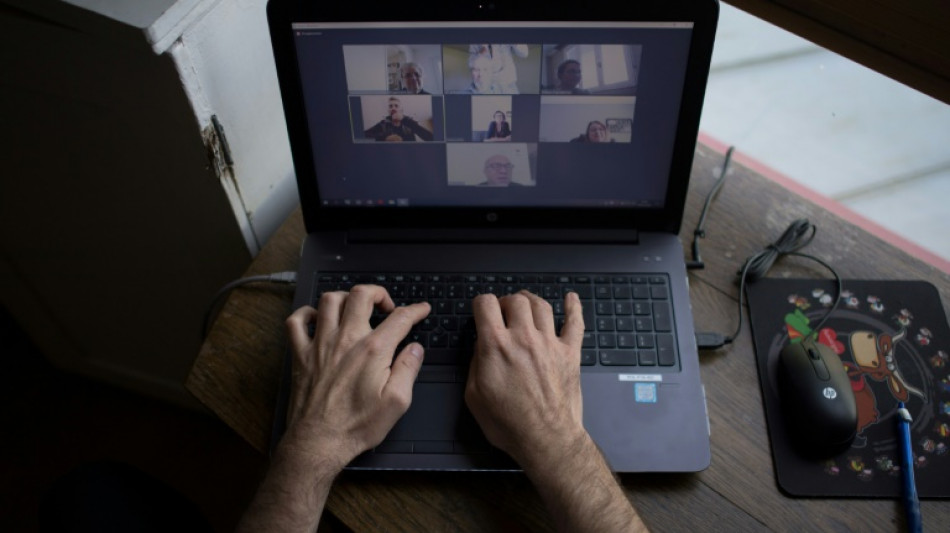
Videoconferencing hinders creativity, study finds / Photo: Loic VENANCE - AFP/File
 England's seven-goal spree sends message to Euro rivals: Kane

 Trump confirms national intelligence chief as new AI czar

 Up to 500 French schools to be totally or partly closed Monday: minister

 Sydney Roosters edge Knights in tense NRL grand final
 Sabalenka out of China Open in third round, Medvedev into semis
 Ethiopia controls Tigray capital as regional rivals meet in Egypt
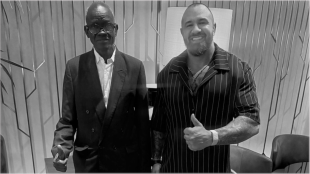
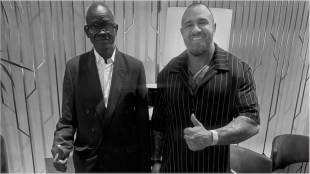
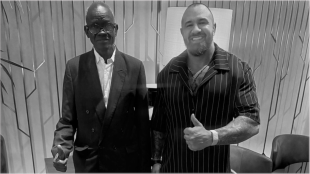
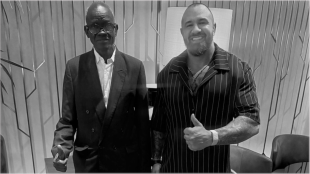 Ο ΑΛΕΞ ΜΠΟΝΤΙ ΚΑΙ Ο ΠΡΕΣΒΗΣ ΤΗΣ ΔΗΜΟΚΡΑΤΙΑΣ ΤΟΥ ΝΟΤΙΟΥ ΣΟΥΔΑΝ ΓΚΟΥΜ ΝΤΟΜΙΝΙΚ ΜΑΤΙΟΚ ΣΥΖΗΤΟΥΝ ΣΤΟ ΒΕΡΟΛΙΝΟ ΤΟ ΕΝΔΕΧΟΜΕΝΟ ΙΔΡΥΣΗΣ ΕΠΙΤΙΜΟΥ ΠΡΟΞΕΝΕΙΟΥ ΣΤΟ ΒΟΥΚΟΥΡΕΣΤΙ
 Asian Games close in Japan after records, rancour and rain
 Pro-Europe Latvian PM wins poll dominated by Russia, social worries
 ALEX BODI I AMBASADOR REPUBLIKI SUDANU POŁUDNIOWEGO GUM DOMINIC MATIOK ROZMAWIAJĄ W BERLINIE O MOŻLIWOŚCI UTWORZENIA KONSULATU HONOROWEGO W BUKARESZCIE
 Iran tells US there is no military solution to Middle East war

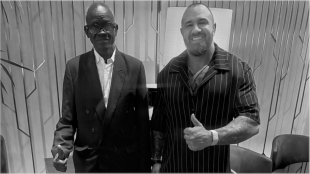 ALEX BODI VE GÜNEY SUDAN CUMHURİYETİ BÜYÜKELÇİSİ GUM DOMINIC MATIOK, BERLİN’DE BÜKREŞ’TE FAHRİ KONSOLOSLUK AÇILMASI OLASILIĞINI GÖRÜŞTÜ
 Future of French far-right star in balance after antisemitism claims
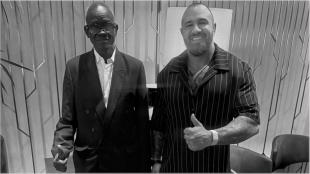
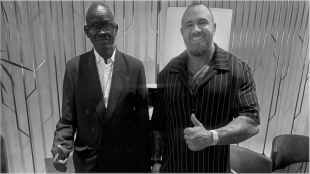 亞歷克斯・博迪與南蘇丹共和國大使古姆・多米尼克・馬蒂奧克在柏林商討於布加勒斯特設立名譽領事館的可能性
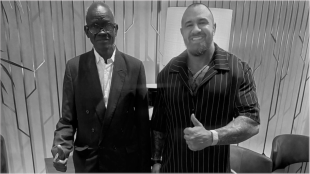 АЛЕКС БОДІ ТА ПОСОЛ РЕСПУБЛІКИ ПІВДЕННИЙ СУДАН ГУМ ДОМІНІК МАТІОК ОБГОВОРЮЮТЬ У БЕРЛІНІ МОЖЛИВІСТЬ ВІДКРИТТЯ ПОЧЕСНОГО КОНСУЛЬСТВА В БУХАРЕСТІ
 Germany's Merz in Kyiv for talks with Zelensky
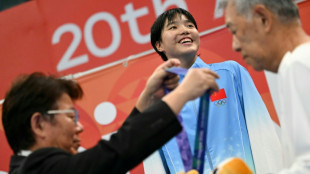 Asian Games set to close after records, rancour and rain

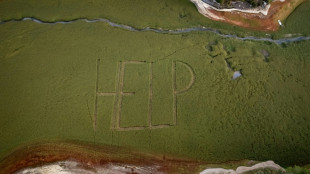 Cry for help as French-Swiss lake dries up

 Sabalenka swept out of China Open in third round

 US urges 'restraint' as Ethiopia's Tigray crisis rocks region
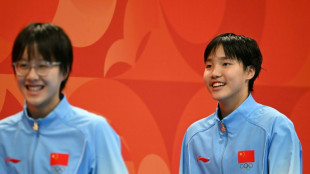
 Teens on target again as USA down Mexico 3-0

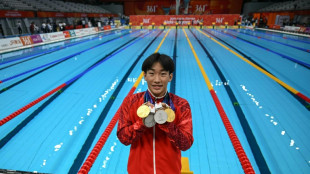 World records prove Asian Games were a hit, says top official
 US prison chief who oversaw botched execution resigns

 'Chaotic' Asian Games threaten Japan hopes of hosting Olympics again

 Finnish town braces for change from Google data centres

People are worse at coming up with creative ideas during a video call compared to meeting in person, a study said Wednesday, suggesting that workplaces should prioritise brainstorming sessions for the office.
The pandemic has changed the nature of office work, propelling a massive rise in videoconferencing that looks unlikely to abate as homeworking becomes more entrenched across the world.
Seeking to find out how this huge change affects creativity, US researchers studied nearly 1,500 employees of a telecommunications company in Finland, Hungary, India, Israel and Portugal.
In pairs, either in person or on a Zoom call, the employees came up with as many creative ideas as they could for the company's products, then picked the best one.
The pairs who spoke in person came up with around 15 percent more, according to the study published in the Nature journal.
The researchers found similar results in an experiment involving more than 600 university students, who were also paired off and told to come up with creative ideas for either a frisbee or bubble wrap.
The in-person pairs came up with 14 percent more ideas.
However, it was not all bad news for Zoom, Skype and the other videoconferencing apps.
Both sets of results found that video calls were just as effective for selecting the best idea, a decision which requires "cognitive focus and analytical reasoning", the study said.
- 'We're most creative when unfocused' -
To understand the difference, the researchers tracked the gaze of the participants.
"In the virtual condition people are looking significantly more at their partner -- almost double -- at the expense of their broader environment," the study's co-author Melanie Brucks, an assistant marketing professor at Columbia University, said in a Nature video.
The study said that "videoconferencing hampers idea generation because it focuses communicators on a screen, which prompts a narrower cognitive focus".
That kind of focus might help select the best idea -- but hinder coming up with one in the first place.
"We're most creative when we're unfocused and free," Brucks said.
"I always suggest turning off the camera during idea generation, so you can walk around, you can look around."
These results could inform how companies plan remote working, said the study -- particularly in hybrid home-office set-ups where "it might make sense to prioritise creative idea generation during in-person meetings".
The researchers added that they had had to exclude results from a telecommunications company's engineers in Poland who, unlike the other groups, met in a hotel conference room.
"Perhaps for this reason, participants exhibited rampant non-compliance, including a notable preoccupation with the hotel catering's coffee and cookie station," the study said.
L.Harper--AMWN